
Why stories written for children hold up as listening practice
Most graded listening material is built for the classroom, and it sounds like it. A conversation about ordering coffee, a weather report read at half speed, a dialogue about renting a flat. All useful, none of it easy to stay with for twenty minutes.
Children's novels work the other way round. They were written to be read aloud by a parent at bedtime, which means short sentences, a small set of recurring words, and a plot that actually moves. L.M. Montgomery, Frances Hodgson Burnett and Anna Sewell all built chapters around a single scene, so a listener can stop anywhere and pick the thread up the next day. The vocabulary is narrow on purpose. A chapter of Black Beauty returns to the same handful of nouns (horse, field, master, stable) often enough that meaning sticks without a dictionary.
Length is the second advantage. These books run for hours. One subscription gives a learner weeks of material instead of ten minute episodes that run out by the weekend.
Three narration styles, three kinds of practice
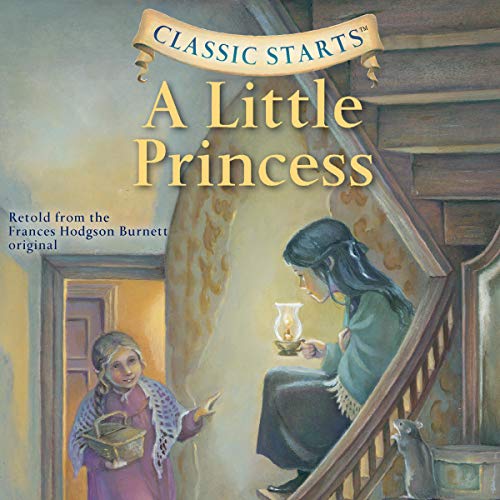
The six shows below are not produced the same way, and the difference changes how a learner should use them.
Chapter by chapter readings, the style used for A Little Princess, Black Beauty and Gulliver's Travels, follow the printed book exactly. Episode titles such as "01 - Sara" or "03 - My Breaking In" line up with chapter numbers, which makes reading along simple.
Cast readings, like the Anne of Green Gables production from Mary Kate Wiles and friends, put several performers in the same scene. Dialogue is easier to follow when each character has a distinct voice, and the listener gets practice at turn taking rather than a single narrator's rhythm.
Full length audiobook uploads, such as the Pigeon Publishing House edition of Little Women, arrive as three long parts. Those suit a commute or a long walk more than a study session.
Anne of Green Gables
Difficulty: A2 to B1. Theme: small town life, family, an orphan who talks too much.
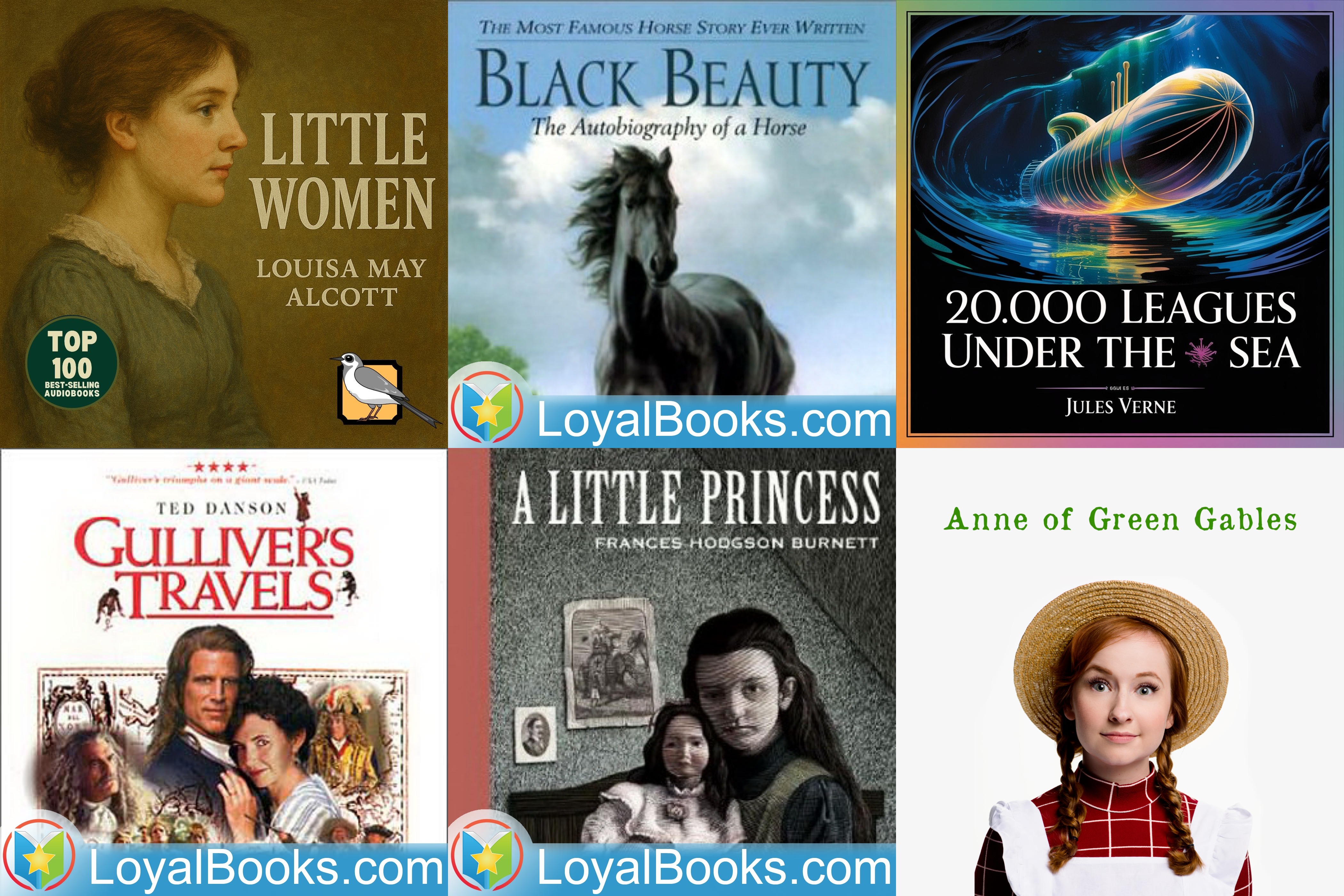
Mary Kate Wiles and friends read L.M. Montgomery's novel in order, and the chapter titles carry the navigation: "Chapter Thirty-Eight - The Bend in the Road" sits beside "Chapter Thirty-Seven - The Reaper Whose Name is Death". Because a group performs it, Anne's long speeches are answered by other voices, and the listener hears conversation instead of recitation. The feed also announces Anne of Avonlea and Anne of the Island, which gives a reason to finish the first book.
Inside ListenLeap the episodes carry bilingual subtitles that switch on and off mid sentence, and a tap on any word opens its meaning without leaving the player. Playback speed drops for a first pass and returns to normal for a second.
20.000 Leagues Under the Sea: Adventures with Captain Nemo
Difficulty: B1. Theme: sea voyage, science, obsession.
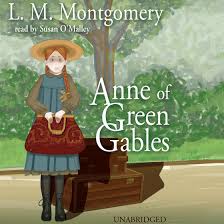
This adaptation opens with a trailer and an introduction before the story starts, so a new listener gets the premise twice before any plot arrives. Professor Pierre Aronnax sets out to hunt a sea monster and ends up aboard the Nautilus with Captain Nemo, a man the description calls brilliant yet troubled. The production keeps the underwater scenery in focus: sunken treasure, unknown creatures, and the shadow of Nemo's past.
The trailer and introduction make a low pressure first listen. A learner can play those two episodes, decide whether the voices work, and only then commit to the numbered parts. On ListenLeap the whole series sits behind one list, so the trailer plays straight into Part 1 without a search.
A Little Princess
Difficulty: A2 to B1. Theme: boarding school, money and class, a child who keeps her manners.
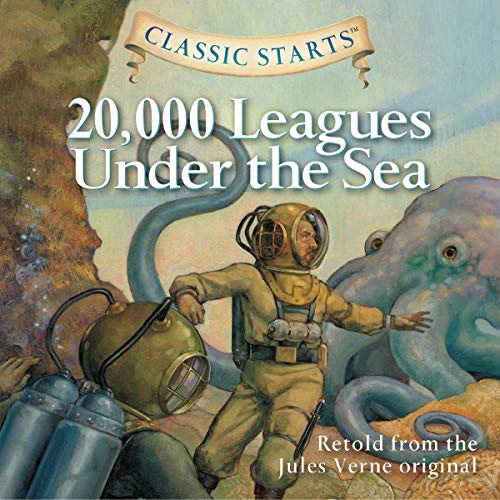
Frances Hodgson Burnett's novel begins with seven year old Sara Crewe arriving at a boarding school from India, rich, pampered, and friendly to everyone. The headmistress dislikes her, and when Sara's father dies on a business trip, the girl is sent to the attic to work for her keep. The episodes follow that arc closely: "01 - Sara", "02 - The French Lesson", "03 - Ermengarde", "04 - Lottie", "05 - Becky".
That list is a small gift for learners. Each title names a person or a scene, so the plot is easy to hold in memory, and the domestic settings keep the vocabulary concrete: attic, servant, lesson, blanket, bread. Short chapters also make a natural stopping point.
Black Beauty
Difficulty: B1. Theme: animals, work, kindness and cruelty.
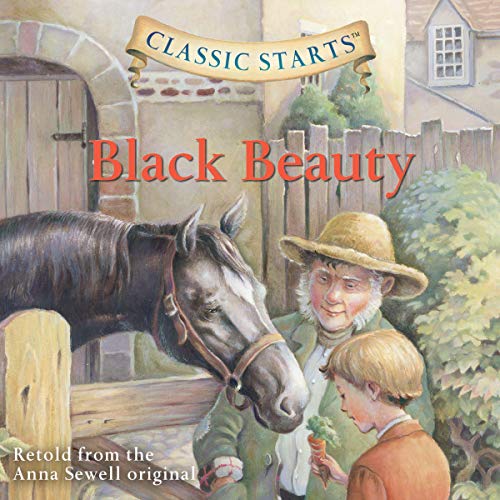
Anna Sewell published this in 1877 and died a few months later. The book has sold more than fifty million copies since, and the original title page claimed it was translated from the original Equine, a joke that tells the reader what to expect: a horse narrates his own life. Chapters are titled "My Early Home", "The Hunt", "My Breaking In", "Birtwick Park", "A Fair Start".
First person narration from a non human voice is unusual practice. The grammar stays simple, but the listener has to track who owns the horse, where he lives, and why the household changes, which trains attention on possessives and prepositions. Emotional scenes also give the vocabulary somewhere to attach.
Inside ListenLeap the text layer can stay visible during a first pass and be hidden for a second, so the same chapter serves as reading and then as pure listening.
Gulliver's Travels
Difficulty: B2. Theme: travel, satire, invented societies.
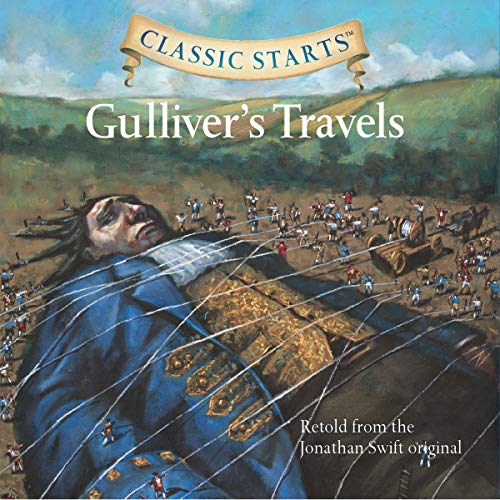
Jonathan Swift's book runs in four parts, and it follows Lemuel Gulliver, an educated ship's surgeon, through shipwrecks, desertions and a series of societies of the small, the giant, the scientific and the eccentric. The description notes that the narration stays in first person, so Gulliver's reactions carry the story.
This is the hardest title on the list. Nautical vocabulary appears early (surgeon, voyage, vessel, crew), and the satire means the literal meaning and the intended one drift apart. The reward is a large amount of repeatable structure: each part resets the scene, describes a new society, and then breaks it down. Listeners who finish Part 1 will find Parts 2 to 4 easier than expected because the pattern repeats.
Little Women
Difficulty: B1 to B2. Theme: four sisters, work, growing up during a war.
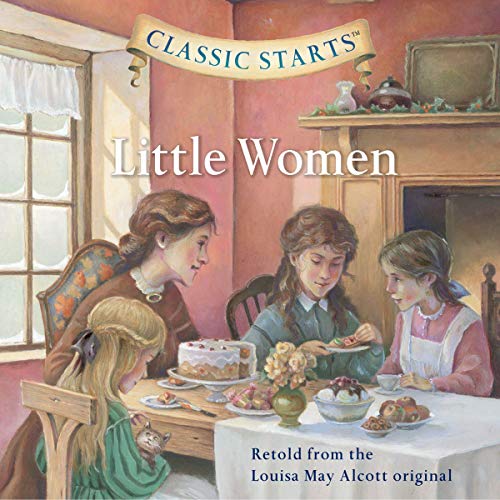
Louisa May Alcott's novel arrives here as a Pigeon Publishing House production, split into three parts and labelled as a full audiobook. Pigeon Audiobooks describes its catalogue as classics of finance, philosophy and personal development, narrated at a steady pace for listening on the move. That description fits this release: one voice, no music, no interruptions between chapters.
Three long parts change the study plan. Instead of one chapter a day, a learner picks a fixed stretch of twenty minutes inside a part and marks the spot. The family scenes give plenty of everyday dialogue, arguments between sisters, household instructions, small jokes, and the plot is easy to summarize afterwards, which makes it useful for shadowing.
On ListenLeap the position is remembered between sessions, so a long part can be resumed days later at the same sentence.
A four week routine that uses the chapter list
Week one, pick one title and listen to the first two chapters with subtitles on, at 0.9 speed, without pausing.
Week two, replay the same chapters with subtitles off and stop only when a sentence fails twice. Save five words per chapter, no more.
Week three, move forward one chapter a day and keep the saved words in a short list. Read that list before the next episode starts.
Week four, return to the first chapter at normal speed and notice how much arrives without effort.
The chapter titles make this easier than it sounds. A learner can see exactly where a week ended and where the next one begins.
A note on difficulty labels
The labels above are rough. A Little Princess is gentler than Gulliver's Travels not because the sentences are shorter but because the situations are familiar. Anne of Green Gables sits in the middle: long speeches, simple grammar, a large cast of neighbours whose names return often. Anyone unsure where to start can open a chapter in ListenLeap, read the first paragraph, and judge from that rather than from a level tag.
Six shows, one narrator per chapter in most cases, and a few hundred hours of material. That is enough listening for a year, and none of it was written with a language exam in mind.



Comments
No comments yet.
Leave a Comment