
ListenLeap Language Hub

Learn Real English with Podcasts & Videos — Understand the World, One Episode at a Time

Latest Posts

Top 5 Kids Podcasts to Boost English and Curiosity

Top 5 Kids Podcasts to Boost English and Curiosity

A calm and screen-free route to English for young children: five gentle podcasts about bedtime stories, school life, reading, leadership, and technology. Each show is paired with the ListenLeap bilingual subtitles, difficulty grades, and tap-to-define words that help every episode land, and the guide closes with simple, practical ideas for building a daily listening routine that a busy family can actually keep at home or on the road. It suits parents who want a screen-free way to grow a child's vocabulary through stories, voices, and play.


ListenLeap vs Cake vs LingQ vs RedKiwi for Learning English Through Real Audio in 2026

ListenLeap vs Cake vs LingQ vs RedKiwi for Learning English Through Real Audio in 2026

Choosing an English listening app in 2026 means picking between very different philosophies. Cake turns short YouTube and film clips into daily lessons, LingQ rewards massive comprehensible input across more than forty languages, and RedKiwi drills listening accuracy through dictation and quizzes. This comparison looks at how each app handles real audio, transcripts, vocabulary, speaking practice, and long term progress, then explains where ListenLeap fits by turning any podcast or video into an interactive study session. Rather than declaring a single winner, it maps each app to the learner it serves best.

Why You Understand Slow English but Not Natural Speed

Why You Understand Slow English but Not Natural Speed

Many learners reach for the speed slider the moment a podcast sounds too fast, yet slowing every clip trains recognition while starving the processing speed that real conversation demands. This article explains why slowed audio does not transfer to natural speech, how comfort practice hides the growing gap, and how to rebuild training around real timing with short segments, targeted slowing, shadowing, and recall. A four-week plan shows how to make the speed control a repair tool instead of a crutch, so the ear finally learns to keep pace with speech as it actually arrives.

Top 6 Storytelling Podcasts for Kids and Families to Learn English

Top 6 Storytelling Podcasts for Kids and Families to Learn English

The easiest way for a child to pick up English is to hear it often inside a story worth finishing. This guide gathers six story podcasts built for families, from first-word sound adventures for babies to folk tales and kid-sized news for older children. Each entry explains what the show covers, how hard the English is, and why it helps young listeners. It also shows how ListenLeap adds bilingual subtitles, difficulty levels, and tap-to-look-up words, so a single episode can work as both story time and English practice.

ListenLeap vs EWA vs Miraa vs PodWise for English Listening and Speaking in 2026

ListenLeap vs EWA vs Miraa vs PodWise for English Listening and Speaking in 2026

Choosing an English learning app in 2026 means sorting through EWA, Miraa, PodWise, and ListenLeap, four tools that overlap but solve different problems. This feature-by-feature comparison breaks down content libraries, bilingual subtitles, speaking practice, AI personalization, offline access, and pricing. Instead of declaring one winner for everyone, it maps each app to the learner it serves best, so a podcast fan, a movie lover, and a self-directed importer can each pick the option that fits how they actually study every day.

ListenLeap vs EWA vs LingQ vs PodWise for Working Professionals Learning English in 2026

ListenLeap vs EWA vs LingQ vs PodWise for Working Professionals Learning English in 2026

Working professionals rarely fail at learning English because of motivation. They fail because the tools they pick do not fit a schedule built around meetings, commutes, and deadlines. This comparison looks at four apps that busy adults commonly try in 2026, namely ListenLeap, EWA, LingQ, and PodWise, and it examines how each one handles short study windows, career-focused listening material, speaking practice, difficulty support, pricing, and offline access. Each product has real strengths, and the aim here is to show which one suits which kind of working learner.

Podcast

Top 5 Kids Podcasts to Boost English and Curiosity

Top 5 Kids Podcasts to Boost English and Curiosity

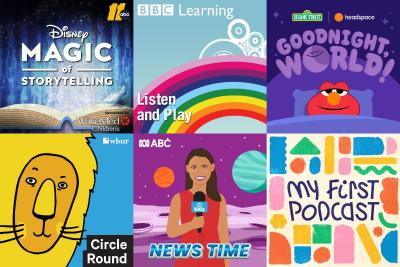
A calm and screen-free route to English for young children: five gentle podcasts about bedtime stories, school life, reading, leadership, and technology. Each show is paired with the ListenLeap bilingual subtitles, difficulty grades, and tap-to-define words that help every episode land, and the guide closes with simple, practical ideas for building a daily listening routine that a busy family can actually keep at home or on the road. It suits parents who want a screen-free way to grow a child's vocabulary through stories, voices, and play.
Top 6 Storytelling Podcasts for Kids and Families to Learn English

Top 6 Storytelling Podcasts for Kids and Families to Learn English

The easiest way for a child to pick up English is to hear it often inside a story worth finishing. This guide gathers six story podcasts built for families, from first-word sound adventures for babies to folk tales and kid-sized news for older children. Each entry explains what the show covers, how hard the English is, and why it helps young listeners. It also shows how ListenLeap adds bilingual subtitles, difficulty levels, and tap-to-look-up words, so a single episode can work as both story time and English practice.

Top 6 English Podcasts for Every Level and Goal

Top 6 English Podcasts for Every Level and Goal

Podcasts make English practice fit into time that already exists, from the commute to the lunch break. This guide gathers six shows that cover slow beginner lessons, practical vocabulary, natural conversation, professional writing, and IELTS preparation, so learners at any level can find a starting point. Each entry explains the difficulty, the theme, and the reasons the podcast works, drawing on the shows' own descriptions. It also shows how ListenLeap turns casual listening into steady progress with bilingual subtitles, graded difficulty, and instant word lookup, making every episode easier to understand and easier to revisit.

Learning Methods

Why You Understand Slow English but Not Natural Speed

Why You Understand Slow English but Not Natural Speed

Many learners reach for the speed slider the moment a podcast sounds too fast, yet slowing every clip trains recognition while starving the processing speed that real conversation demands. This article explains why slowed audio does not transfer to natural speech, how comfort practice hides the growing gap, and how to rebuild training around real timing with short segments, targeted slowing, shadowing, and recall. A four-week plan shows how to make the speed control a repair tool instead of a crutch, so the ear finally learns to keep pace with speech as it actually arrives.

How to Understand Connected Speech in English Listening Practice

How to Understand Connected Speech in English Listening Practice

Fluent English does not arrive one word at a time. Words link, shrink, and reshape, and that is exactly why a listener who reads comfortably can still lose the thread of a podcast. This guide explains the three habits of connected speech, linking, reductions, and flapping, then lays out a four-step routine that turns those rules into reflex. It also maps a practical two-week practice schedule, covers how to pick audio that makes the patterns audible, and explains how to tell real progress from a comfortable illusion.

How to Use Dictation to Train English Listening Accuracy

How to Use Dictation to Train English Listening Accuracy

Dictation is one of the few listening exercises that makes every gap visible. This guide explains why writing down spoken English exposes the exact sounds a learner keeps missing, then lays out a four-pass routine that runs in about thirty minutes a day. It covers sentence-by-sentence capture, transcript comparison, shadowing with speaking feedback, how to track error types, and the habits that quietly waste practice time, so an hour of audio turns into measurable progress on real conversation at normal speed.