
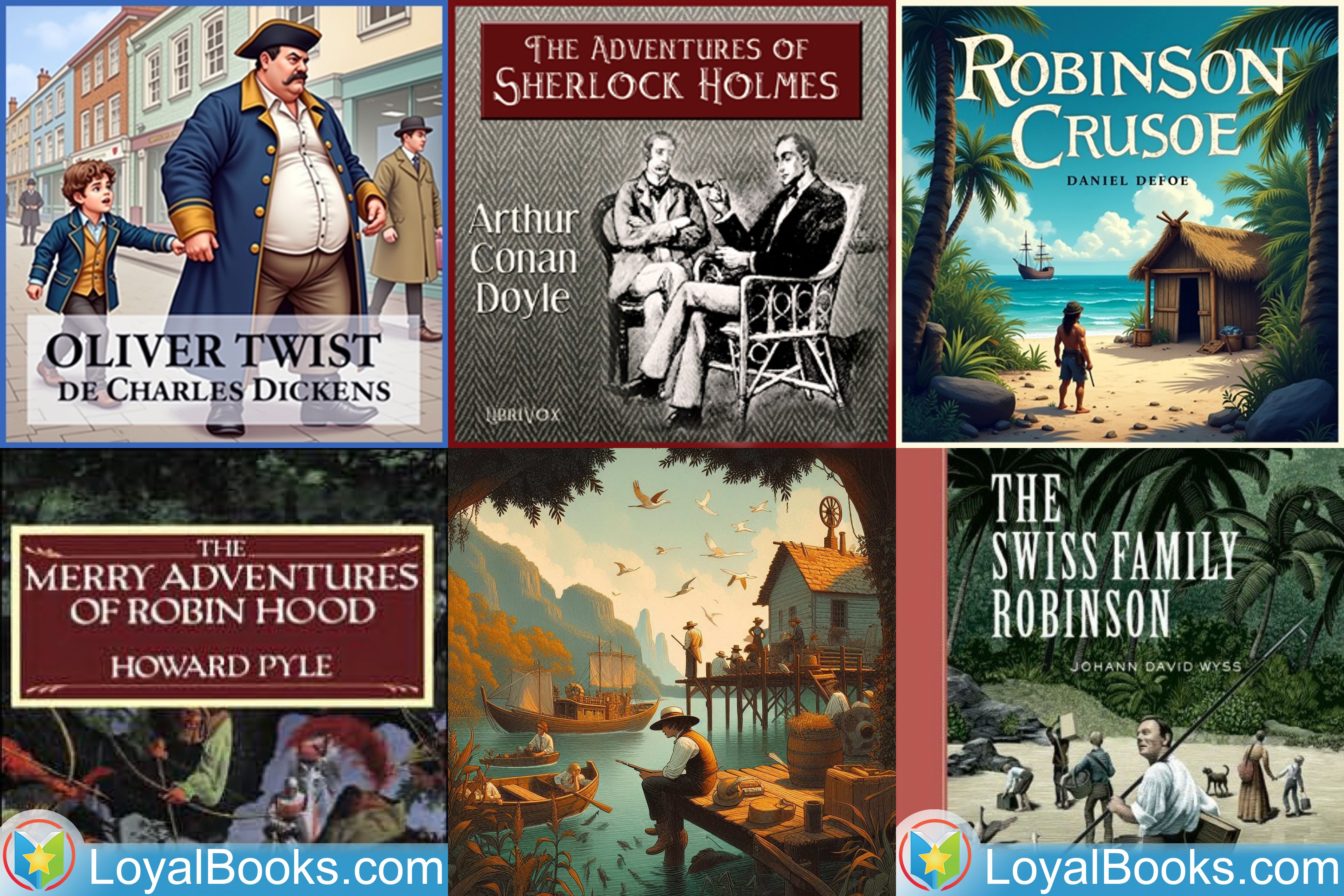
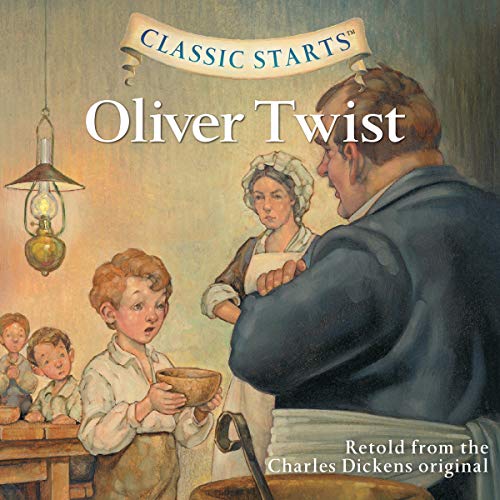
Classic adventure novels were written to be read aloud. Dickens published in monthly instalments and later toured with public readings of his own work, Howard Pyle stitched Robin Hood together from ballads that were sung before they were printed, and Defoe wrote for readers who expected a story to keep moving. That origin still shows when the text is spoken. Chapters are short, scenes turn quickly, and the narrator keeps something at stake.
For someone learning English, the structure does more than entertain. A serialized novel repeats its own vocabulary across dozens of chapters, so a word met in chapter three returns in chapter nine with more context around it each time. The plot carries a listener past the point where a textbook dialogue would have been abandoned. Because the books are old, the grammar is also unhurried: full sentences, clear subjects, few of the clipped fragments and overlapping voices that make modern interview podcasts so hard to parse at speed.
The six podcasts below sit on that same shelf. Each one is a free, chapter by chapter narration of a classic novel, each episode runs roughly twenty to forty minutes, and none assumes the listener has read the book before. They differ in difficulty and in mood, and that difference matters more than most recommendation lists admit. A listener who finds Dickens heavy can spend a month with Robin Hood first and come back to Oliver Twist with better footing.
What ListenLeap adds to a serialized novel
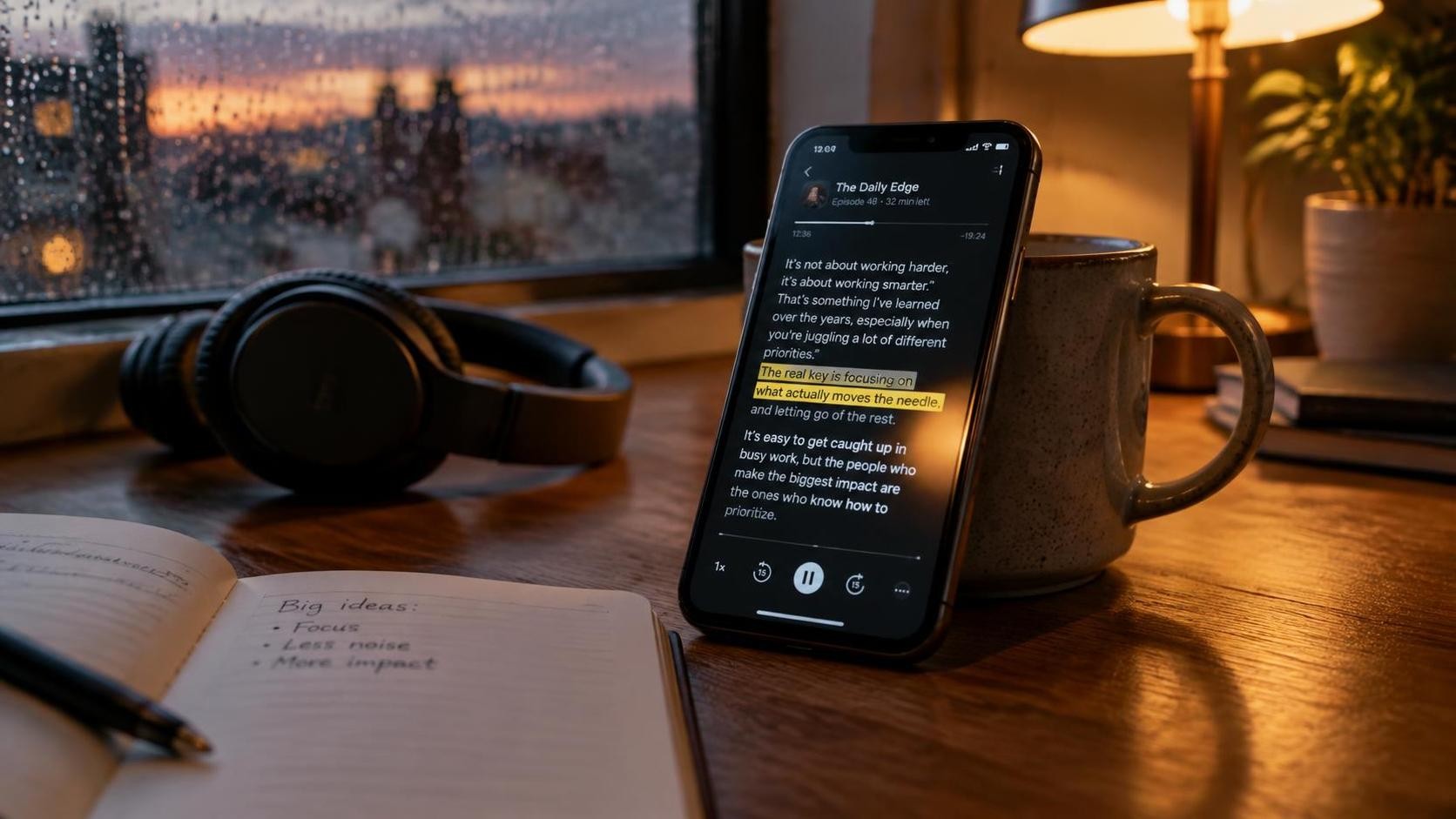
Forty minutes of Victorian prose is a long stretch of unfamiliar syntax, and a single unclear sentence can end a listening session. ListenLeap runs bilingual subtitles underneath the audio, so a sentence can be checked without leaving the player, and any word can be tapped for a definition in place. Playback speed moves in small steps, which helps with the long periodic sentences Dickens favors. Episodes also carry difficulty grades, so the move from Pyle to Defoe to Dickens becomes a decision with some evidence behind it instead of a guess.
The app keeps the listening position, which matters for books built out of fifty short chapters. A chapter interrupted by a commute resumes where it stopped, and a second device picks up the same place. For fiction in particular, that continuity is what separates a habit from an abandoned experiment.
Six classic adventures worth the listening hours

Oliver Twist
Difficulty sits at the upper intermediate end and climbs toward advanced in the courtroom chapters. The theme is poverty, crime and an orphan's stubborn survival in nineteenth century London. The narration follows the novel chapter by chapter under Dickens' original headings, which run long enough to work as a preview before each listen. Oliver escapes the workhouse, is taken in by Fagin's crew of young pickpockets, then spends the rest of the book being argued over by people who want to use him and people who want to rescue him. The plot is easy to follow. The difficulty lives in the sentences, which stretch, qualify and double back the way Victorian prose does.
Inside ListenLeap, tapping a word in the middle of one of those sentences is the difference between losing the thread and keeping it. Dropping playback to 0.9x through the Fagin dialogue scenes is worth trying before giving up on the book.
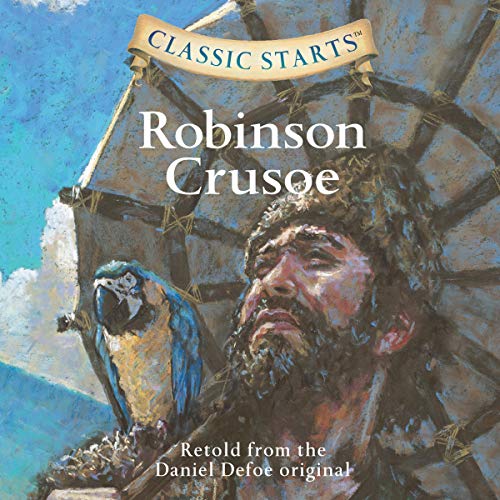
Robinson Crusoe
This one is intermediate. The theme is shipwreck, solitude and the slow construction of a life on an empty island. Defoe's narrator is practical to a fault: he lists what he salvaged from the wreck, how he built a fence, how he baked bread without an oven. That plainness makes the book unusually friendly to learners, because the vocabulary is concrete and the sentences report rather than perform. The episodes follow the novel's own breaks, from the first voyage and the wreck through the years alone and the arrival of Friday.
Most unknown words in this book turn out to be objects rather than abstractions, which makes the word lookup inside ListenLeap unusually productive here. A listener ends up with a working vocabulary for tools, weather and shelter.
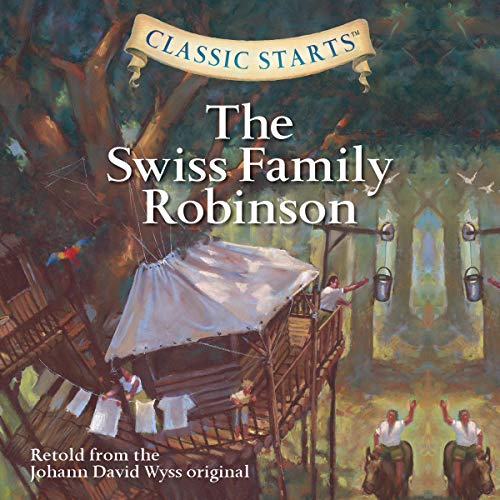
The Swiss Family Robinson
Difficulty drops to lower intermediate. The theme is a family rebuilding a household after a shipwreck, with an emphasis on practical invention rather than danger. Wyss wrote the book as a teaching story for his own children, and it shows on every page: the father explains each plant, animal and tool the family meets, which produces a lot of repetition in a form learners can use. Episodes are labeled by chapter number alone, so a title never spoils what happens next.
The calm tone suits listening at night, and the graded difficulty marking in ListenLeap makes this a reasonable first full novel for someone who has finished a few short story podcasts.
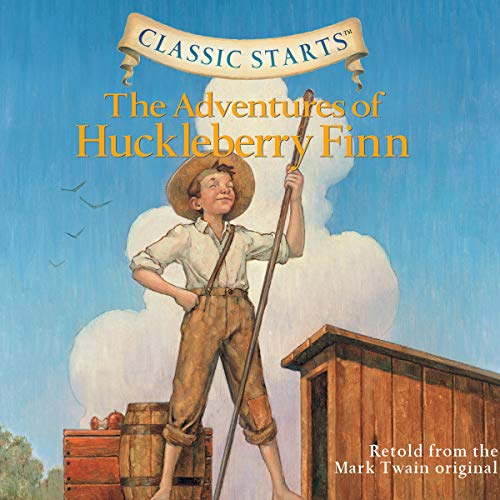
The Adventures of Huckleberry Finn
Advanced, and the most demanding item on this list. The theme is a boy and a runaway man traveling the Mississippi, and the moral choice sitting at the center of that journey. Twain wrote the narration in Huck's own voice and gave several characters dialect spellings, which is exactly what makes the audio both rewarding and hard: the ear has to do work the eye normally does. Episodes run chapter by chapter from the opening scenes with the Widow Douglas, through Huck's escape and the raft.
Reading the subtitle alongside the audio helps with the dialect passages inside ListenLeap, where the spelling looks strange on the page but the sound is plain once it is spoken.
The Adventures of Robin Hood
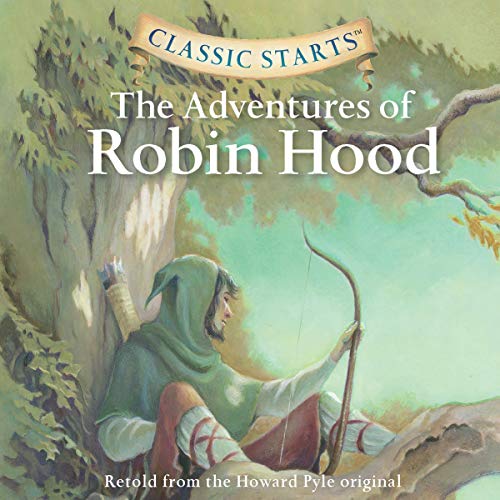
Intermediate, and the easiest entry point for anyone new to serialized fiction. The theme is outlawry, loyalty and a band of men carving out their own justice in Sherwood Forest. Howard Pyle assembled the book from old ballads, and the result is episodic in the best sense: archery contests, disguises, rescues, a sheriff who keeps losing and keeps coming back. Each episode stands alone as an adventure, so a week away from the podcast costs nothing.
Because episodes are independent, a listener can jump to a later and simpler one inside ListenLeap when a busy day calls for something short, then return to the sequence without losing the plot.
The Adventures of Sherlock Holmes
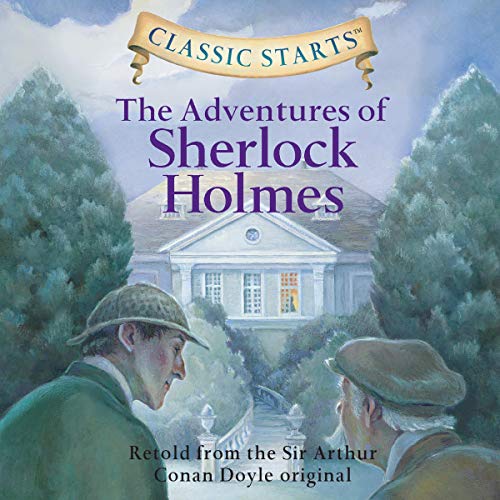
Upper intermediate. The theme is deduction, observation and twelve closed cases. Conan Doyle published these stories individually in the Strand Magazine between July 1891 and June 1892, so each one stands alone and ends with an explanation, which is a useful shape for learners: the final pages restate what happened in plainer language than the middle did. The podcast opens with A Scandal in Bohemia and continues in publication order through The Red-Headed League and the cases that follow.
The case by case structure pairs well with the difficulty grading in ListenLeap, since a shorter case fits a short commute and the subtitle view keeps the clues straight when the reasoning speeds up.
Getting past the first three chapters
Most listening plans fail in the opening week, and the cause is usually a book chosen for its reputation rather than its fit. A better sequence starts with The Swiss Family Robinson or Robin Hood for two weeks, moves to Robinson Crusoe and Sherlock Holmes once twenty minute episodes feel comfortable, and only then attempts Huckleberry Finn or Oliver Twist. Each step adds one kind of difficulty: dialect, then sentence length, then irony.
A few habits help more than any app setting. Listen to a chapter once without subtitles and let the shape of the scene register, then listen again with the subtitles on and note five words worth keeping. Twenty minutes a day beats a two hour session on Sunday, because serialized fiction rewards regularity over intensity. Skipping a boring chapter is allowed. These books were published in instalments for readers who did exactly that.
Where this shelf leads
The six podcasts cover roughly two hundred hours of listening, which is more than most learners need before the transition to unadapted modern audio becomes possible. The vocabulary built through Defoe and Pyle is concrete and reusable, the sentence patterns from Dickens and Twain are the ones that still appear in edited English prose, and the habit of finishing a long book in a second language is worth more than any single word list.
The order above is a suggestion. The book that gets finished is the right one to start.



Comments
No comments yet.
Leave a Comment