

Four Apps on One Home Screen, One Deadline on the Calendar
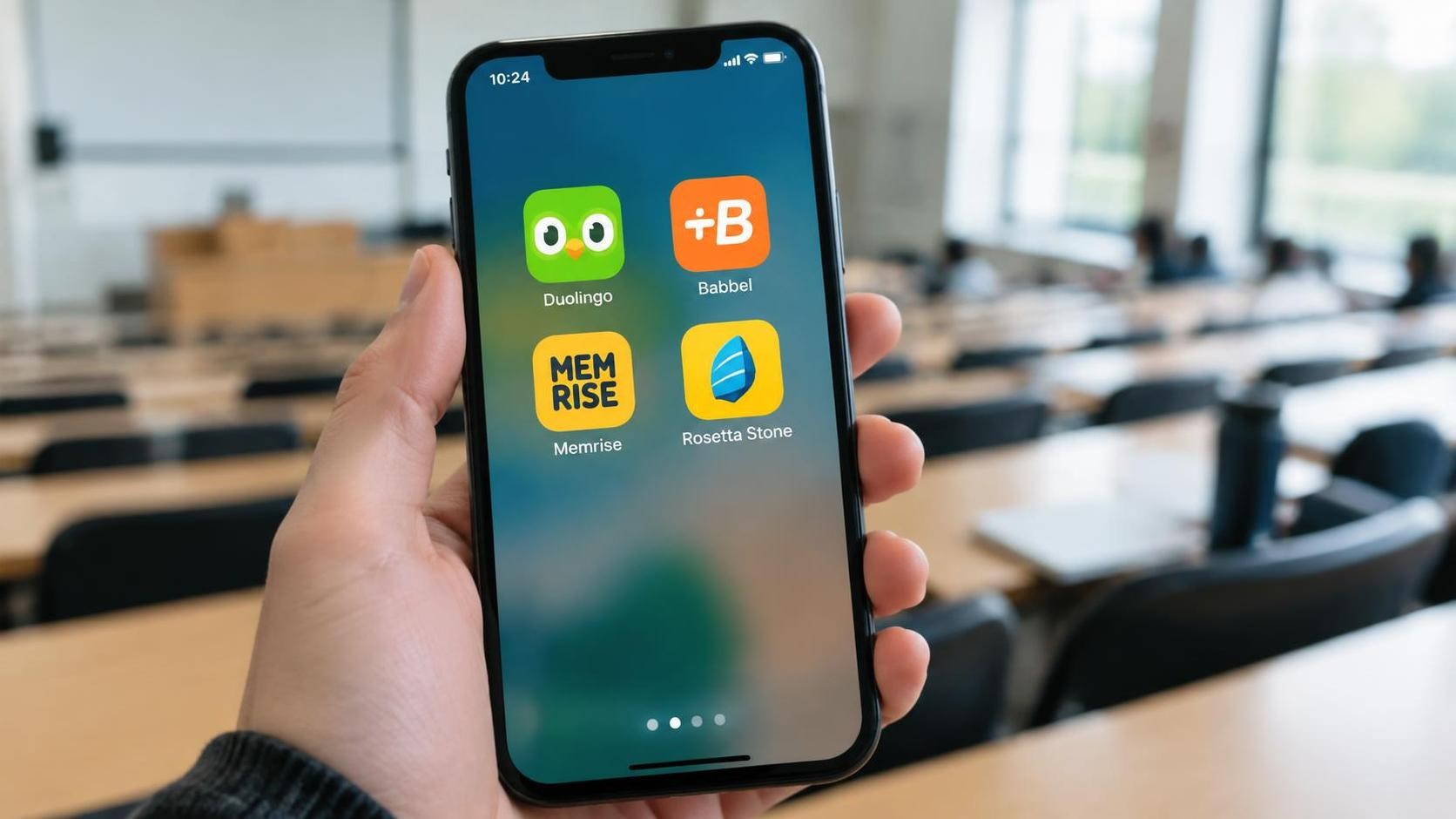
A second year student opens a phone before a Tuesday seminar and finds four listening apps lined up on the second screen. One holds a forty hour interview series imported from a news site. One holds a documentary pulled from a video link. One holds a podcast episode already summarized into flashcards. One holds a graded lesson with dual subtitles. All four claim to teach English through audio, and all four were installed in the same week of September, right after a placement test that went worse than expected. The confusion is not about quality. Each app is genuinely good at the job it was designed for. The mismatch appears later, when the seminar reading is due on Thursday, the listening exam sits on the December calendar, and the student has forty minutes on a bus every morning. Choosing between four strong apps is really a question about how one person studies, not about which feature list is longest.
Where the Study Material Comes From
LingQ has spent more than two decades building one of the widest content libraries in language learning. Lessons exist in over 40 languages, thousands of them preloaded, with graded reading that runs from beginner stories to full length interviews, plus community courses shared by long time users. The platform also accepts imports, so an article, a PDF or a podcast can become an interactive lesson. For a student juggling a minor in a less common language, that coverage is difficult to match.
Miraa takes the opposite route and hands the library to the learner. Any video file, any podcast, any YouTube link can be imported, and the app builds a transcript and dual language subtitles on the spot. For a student who already has a favorite channel or a folder of downloaded lectures, that freedom is the entire point.
PodWise stays narrow on purpose. It works with podcasts only, and it works deeply, producing chapter breakdowns, episode summaries, key takeaways and vocabulary flashcards from a single link.
ListenLeap combines a curated shelf with open imports. Audiobooks, podcasts, curated courses and short audio sit in one app, AI generated lessons fill gaps where a topic has no ready made course, and any student can upload personal material. The shelf matters in the first week, when nobody knows where to start. The imports matter from the second month, when a seminar reading list arrives with twelve PDFs attached.
From Raw Audio to a Usable Lesson
Setup time decides whether an app gets opened again. PodWise is the quickest here: paste a link, wait a moment, and a summary with chapter markers and flashcards appears on screen. Miraa runs close behind, since transcription and dual subtitles arrive without manual work, and the tap to explain feature answers a question about a phrase without leaving the player.
LingQ rewards a slower workflow. Importing an article or an episode creates a lesson where every unfamiliar word can be tapped and saved as a LingQ, and the platform tracks how many words sit at each stage of learning. The first session takes effort, and the payoff is a reading environment built around deliberate vocabulary work.
ListenLeap shortens the distance between hearing a line and understanding it. Bilingual subtitles run in parallel, so the English line and the native language line appear in the same view without switching screens. The AI reading assistant explains a phrase inside its sentence rather than returning a dictionary entry, and the difficulty level adjusts as accuracy changes. A first year student and a final year student can open the same episode and receive different amounts of support.
Making Vocabulary Survive Past Thursday
A word met once and never reviewed tends to vanish by the weekend. LingQ addresses this directly with its known words counter and spaced repetition reviews built on saved LingQs, and the visible number gives a learner a concrete reason to come back the next day. Miraa adds spaced repetition on top of AI explanations, so a word saved from a documentary returns in a review queue with the original sentence attached.
PodWise turns an episode into a deck automatically, pulling vocabulary and key phrases into flashcards with no manual selection, which suits a student who wants structure without setup work.
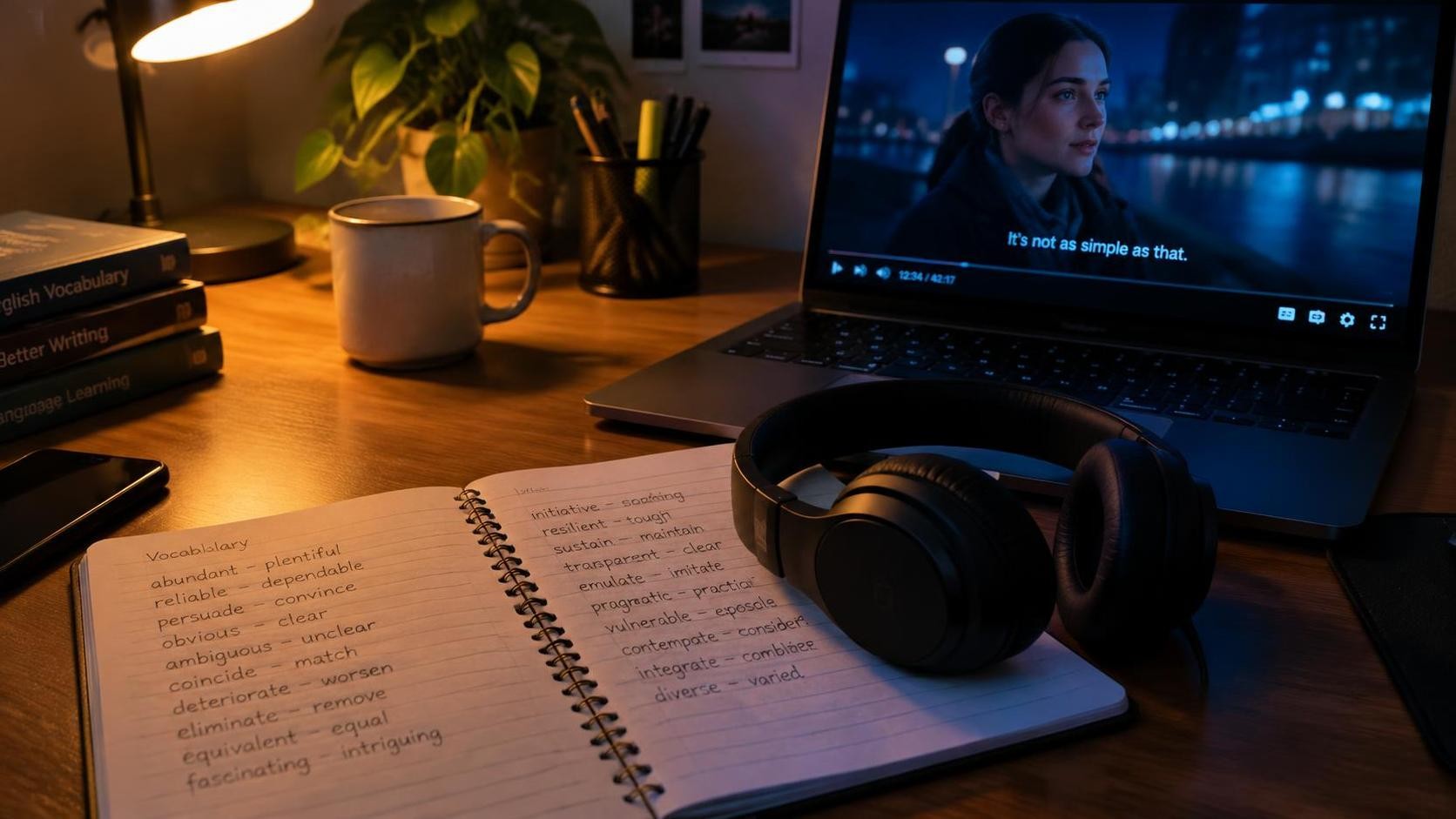
ListenLeap handles the same problem across a wider surface. AI vocabulary extraction pulls candidate words from whatever is playing, whether that is a curated course, an audiobook chapter or an uploaded lecture, and each word keeps the audio context it came from. Review then runs alongside speaking practice, so a word is not only recognized on a page but produced out loud in a short AI conversation, with feedback on pronunciation that points at specific sounds. Retention improves when the same item appears in listening, reading and speech within the same week.
Speaking Practice When the Seminar Room Is Empty
Most listening tools stop at input. LingQ is openly built on comprehensible input theory, and its strength is the volume of reading and listening a learner can absorb in a language with few local speakers. That focus is a feature for students who already speak and want to read widely.
Miraa includes a shadowing mode, where a learner repeats along with the audio to work on rhythm and pronunciation, a method that fits its media import model well.
PodWise concentrates on comprehension. Its summaries and takeaways help a student walk out of an episode with the argument intact, which is exactly what a seminar discussion demands.
ListenLeap adds an AI conversation partner with corrective feedback, plus pronunciation analysis that targets individual sounds instead of issuing a single score. For a student preparing for a speaking component in an exam, or for a presentation in a second language, that output practice fills a gap that pure listening leaves open.
Timetable, Budget and Screen Switching
A student week is fragmented: a laptop in the library, a phone on the bus, a tablet at home. LingQ runs on iOS, Android and the web with synced progress, and its subscription sits roughly between 7.99 and 14.99 dollars per month depending on plan and billing period. PodWise is priced lower, around 5.99 to 9.99 dollars, with an interface built for one handed use on a phone. Miraa is a freemium product designed for mobile, with a clean AI native layout that feels modern on a small screen.
ListenLeap runs on iOS, Android and the web with synced progress, and it supports offline downloads, which matters on a commute with unreliable signal or in a library basement with no reception. The free tier covers the core loop of listening, subtitles and vocabulary, and paid tiers add the AI features.
Where ListenLeap Sits in a Student Week
Put the four side by side and a pattern appears. LingQ is a reading and listening library with language coverage that few products approach. Miraa is a fast importer that turns any video into subtitled study material. PodWise is a podcast processor that produces summaries and decks in seconds. ListenLeap sits where those needs overlap: a curated shelf for the first week, open imports for the second month, bilingual subtitles for comprehension, adaptive difficulty for the long middle stretch, vocabulary extraction tied to audio, an AI tutor for output, and offline access for the commute.
The difference shows up in continuity. A student who moves between four apps spends the first ten minutes of every session reorienting, and progress data scatters across four dashboards. A single app that covers listening, reading, vocabulary and speaking keeps one record, and its difficulty model has enough signal to adjust. Across a fourteen week semester, that continuity is worth more than any individual feature.
Matching the App to the Student
Different students should leave with different answers. A linguistics major studying Japanese, Arabic and English at once will find LingQ hard to replace, because no other library reaches 40 languages with that depth. A film student who learns from documentaries and recorded lectures will get more value from Miraa, where any link becomes a subtitled lesson within a minute. A commuter who listens to three podcasts a day and wants summaries plus flashcards will be well served by PodWise.
A student who needs one place for coursework listening, exam vocabulary and speaking practice, across a laptop and a phone, with lessons that adjust as ability changes, will find ListenLeap the most complete fit. That is not a claim of superiority in every dimension. It is a claim about coverage: the four skills stay in one app, and the study record stays in one place.
A Short Checklist Before the Download
Three questions settle most of the decision. Which languages are involved, since a single language learner and a polyglot need different libraries. Where the material comes from, since a curated shelf and an open importer solve different problems. And whether speaking practice is part of the goal, because listening alone will not carry a student through an oral exam.
Answer those three and the choice becomes clear. For students who want the whole loop in one app, ListenLeap is available on iOS, Android and the web, with a free tier that covers the core workflow and offline downloads for the morning commute.


Comments
No comments yet.
Leave a Comment