
The Loop That Feels Like Practice but Is Not
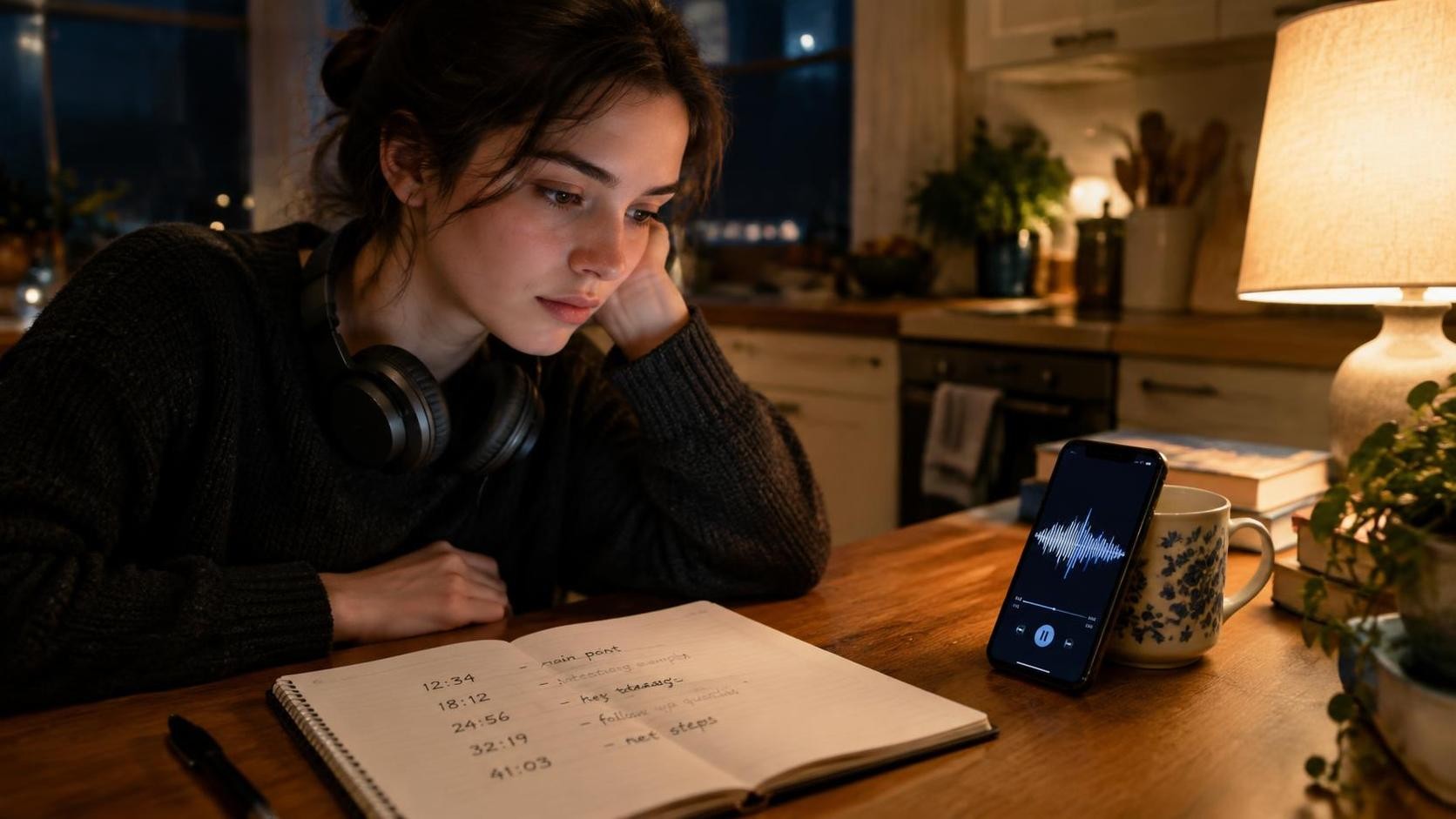
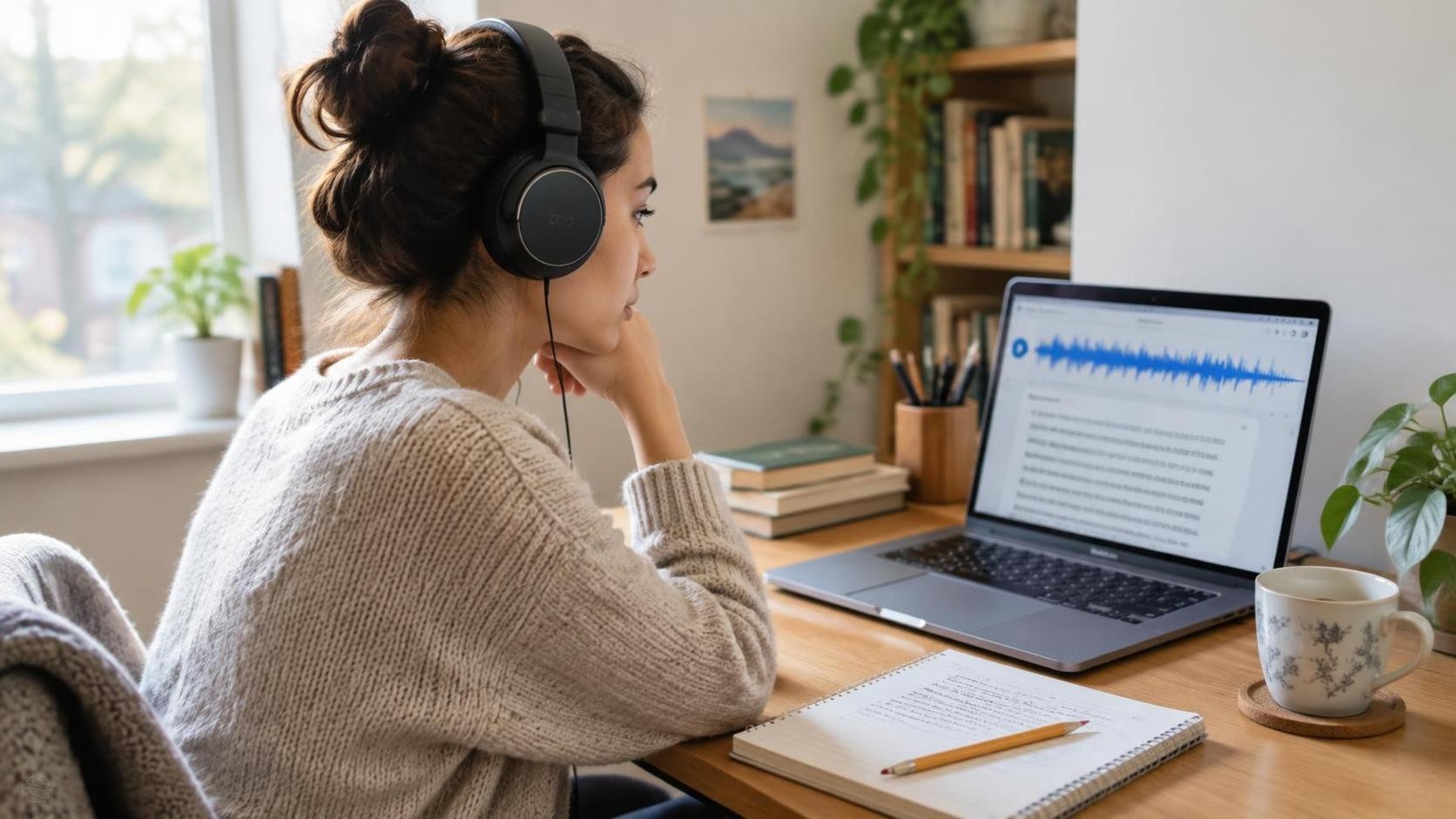
Most learners who feel stuck at the same level describe the same habit. A podcast starts, forty seconds pass, two words go missing, the slider gets dragged back, and the same forty seconds play again. The two words go missing again. After six passes the clip is no longer speech, just texture.
The effort is real, which is why the habit survives. Something is being repeated, attention is high at the start, and progress seems to be happening somewhere inside the process. Then the episode ends and the learner cannot say what it was about.
Repeating audio is not the problem. Repetition is how listening improves. The problem is what gets repeated and what the learner does while it repeats.
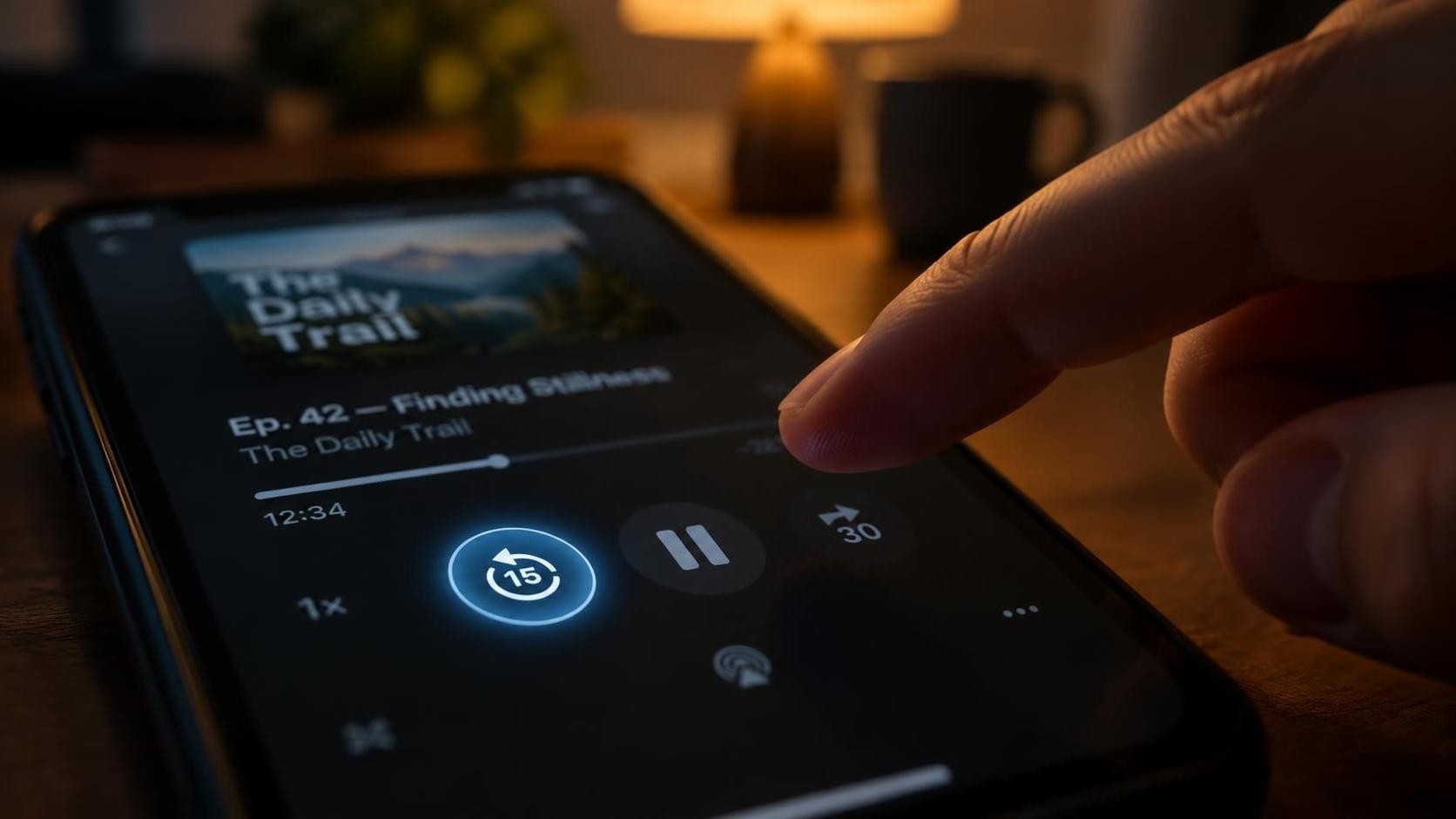
Three signs separate a useful repeat from a loop that has replaced practice. The melody of a sentence can be hummed, but its content cannot be restated. The transcript surprises the reader every time it opens. And the missing words are always the same words, lined up in the same places, week after week.
When all three appear together, more repeats will not help. The clip has stopped being information and become background.
What a Second Listen Is Actually For
Listening is not a recording device that captures every sound and files it away. It is a prediction engine. The brain uses the topic, the speaker's tone, the opening words of a sentence, and the situation to guess what comes next, then checks the guess against the signal that arrives.
That is why a familiar topic is easier to follow than an unfamiliar one at the same speed, and why a missed word at the start of a sentence costs more than a missed word at the end. In the first case the guess has nothing to stand on. In the second the sentence has already delivered its shape.
A replay only adds value when the guess changes. Play the same clip with the same expectation and the brain produces the same prediction, hits the same gap, and learns nothing new. Play it with a specific question, a narrower target, or a fresh guess about a mumbled phrase, and the audio becomes a test instead of a rerun.
The distinction sounds small. It decides whether twenty minutes of looping produces a skill or a mood.
Three Changes That Turn a Replay Into Training
Give the second pass a job
Before touching the rewind button, write one question. What price did the guest quote? Why did the host disagree? Which city came up first?
Then replay only long enough to answer it. The question does two things at once. It tells the brain which part of the stream matters, and it turns a vague feeling of not understanding into a result that can be marked pass or fail. A learner who answers moves on. A learner who cannot answer now knows exactly which seconds need work.
Cut loops at clause boundaries
Single words are the worst unit to repeat. English words change shape when they sit next to each other. Final consonants attach to the following vowel, t and d soften, whole syllables disappear. A word looped alone often sounds nothing like the same word inside a sentence, so practice on it teaches the wrong sound.
Loop three to eight seconds instead, one clause or one short sentence, ending where the speaker pauses or where the meaning closes. That length keeps connected speech intact and still fits inside working memory, which holds only a few seconds of sound at a time.
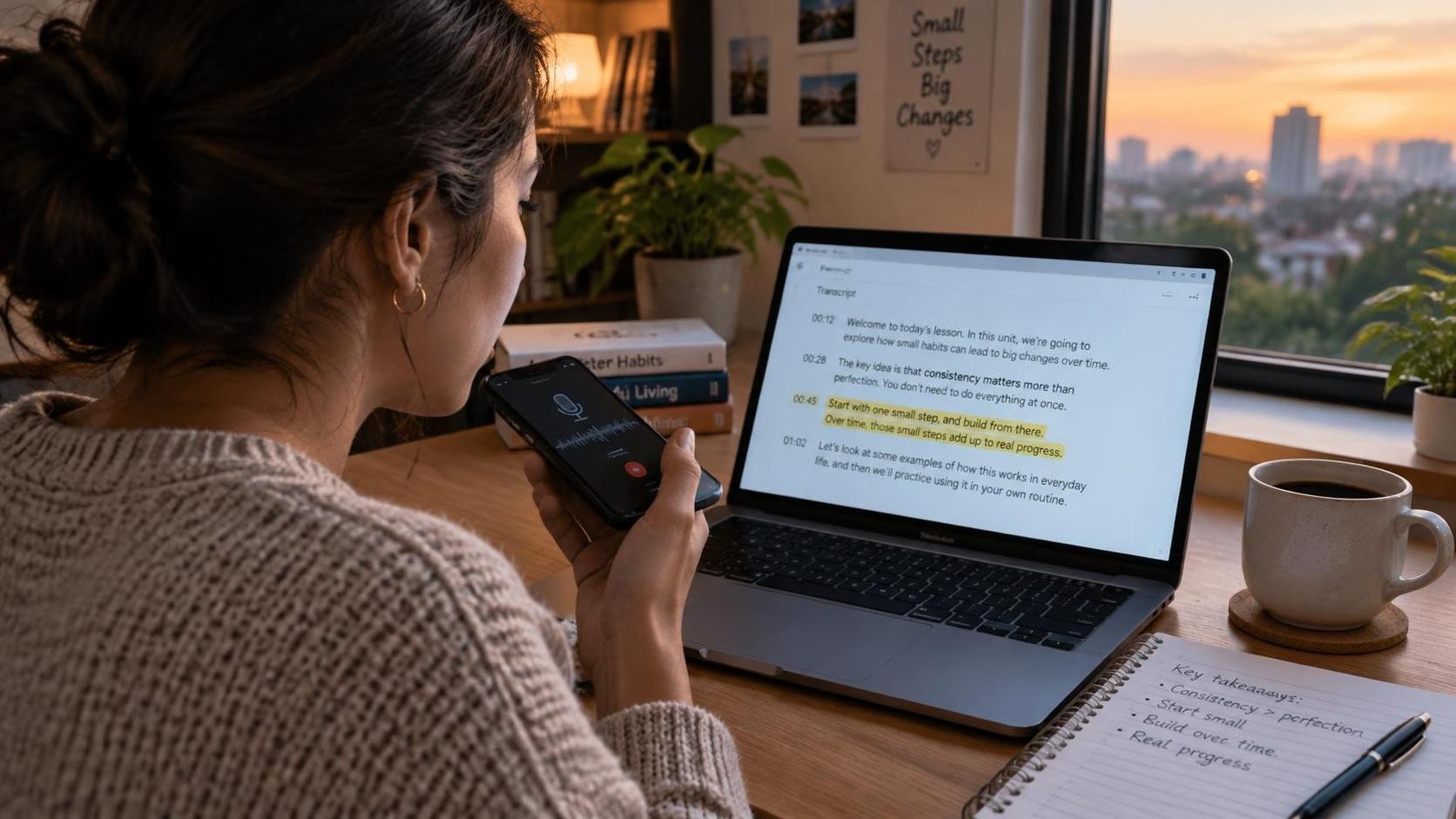
This is where a sentence level player earns its place. In ListenLeap each transcript line can be tapped and looped on its own, so a clause repeats without hunting for timestamps, and the speed can drop for one pass and return to normal for the next. The loop stays at the size the ear can actually hold.
Say the line before reading it
After two or three listens, imitate the line out loud, then open the transcript.
Speaking exposes errors that listening hides. A learner can hear a line, feel confident about it, and still produce it with the wrong stress or a missing syllable, which is proof the sound map was never accurate. Reading first hides the same error, because the eyes supply what the ears missed.
Recorded imitation closes the gap fastest. ListenLeap records the attempt and returns a score across three parts, sound accuracy, rhythm, and completeness, so a line that felt correct but scored badly on rhythm points to a specific problem instead of a general feeling of difficulty.
Park the unknown word
One unknown word can eat a whole session. The learner stops, looks it up, loses the thread, restarts the paragraph, and repeats the cycle at the next unfamiliar term.
A timestamp and one written word are enough. Note both, keep listening, and come back after the block ends. Most parked words turn out to be unimportant, and the few that matter are easier to learn once the surrounding meaning is already in place.
A Fourteen Day Protocol
Days one to three. One clip of about three minutes per day. Three passes with the rules above: a question, a clause loop, a spoken line. Write down the missed words and mark whether each one was unknown, blurred by connected speech, or simply too fast.
Days four to seven. Two clips per day, one new and one from the previous days. The old clip gets one pass only, with no transcript, as a check on whether the earlier work held.
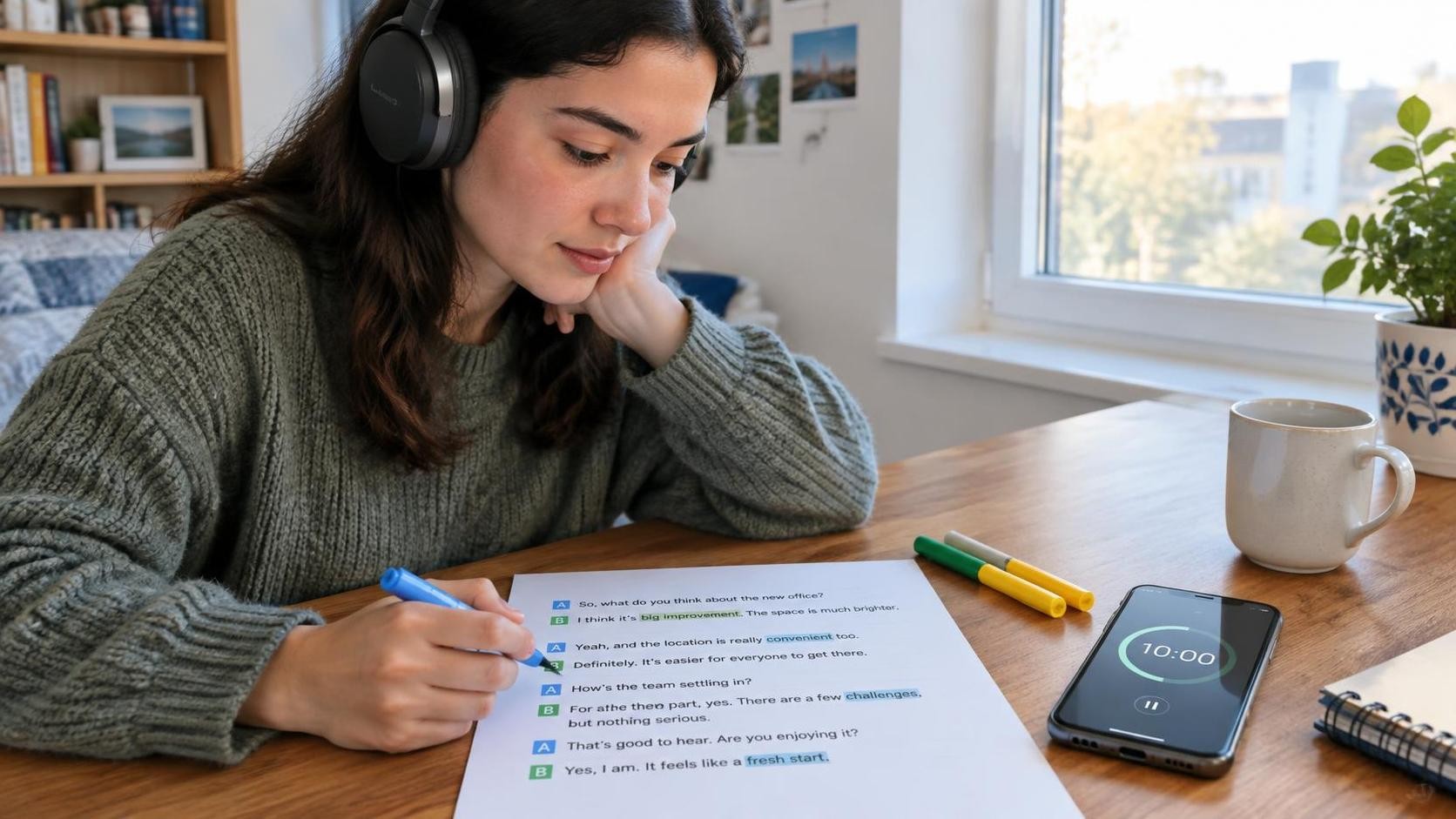
Days eight to fourteen. Lengthen the clips to six or eight minutes. Keep the transcript closed until the third pass, then read it once and mark every place where the heard version and the written version disagreed. Those disagreements are the actual curriculum.
Total time is fifteen to twenty minutes a day. The protocol is deliberately plain. Plain is what lets a habit survive a busy week.
Deciding When One More Pass Is Worth It
Not every missed sentence deserves another listen. The decision takes about five seconds once the cause is named.
An unknown word will not appear through repetition. Look it up, note it, move on.
A phrase blurred by connected speech deserves a loop and an imitation, because the ear needs to hear the boundary dissolve more than once.
Speech that was only fast deserves a single pass at reduced speed, then an immediate return to normal speed. Staying slow turns a temporary aid into a permanent crutch.
Everything else can be left alone. A podcast is not a puzzle that yields to force. It is a sample of real speech, and the useful question is never how many times it has been played, but what the listener was trying to find out on the last pass.

Comments
No comments yet.
Leave a Comment