
The Gap Between the Word List and the Ear
A learner can hold six thousand English words in memory, read a news article without pausing, and still lose the back half of a podcast sentence at normal speed. Nothing about that situation is unusual. The words are present. The ear has never been trained to catch them.
Most people diagnose this as a vocabulary shortage. The fix looks obvious: learn more words. Three months and two thousand flash cards later, the same forty second clip still collapses into a blur, and the frustration sharpens because the effort was real.
The problem sits somewhere else. Fluent speech compresses, links, and drops sounds in patterns that written English never shows. A learner who meets words only on a page stores a spelling and a meaning. Listening needs a third piece, the sound, and that piece has to arrive fast enough to survive a single pass at one hundred and sixty words per minute.
What follows is the version of listening practice that builds that third piece, using short podcast segments, dictation, transcript comparison, and shadowing, in a loop that fits into twenty minutes a day.
What the Ear Handles in Real Time
Three jobs, one pass
When speech arrives, the brain runs three jobs at once. It decodes a stream of sound into recognizable word shapes. It matches each shape against stored audio forms. It builds meaning from the words it has matched and predicts what comes next.
Reading lets those jobs run in sequence. The eye can stop, back up, and re-enter a sentence. Speech offers one attempt. If decoding takes four hundred milliseconds instead of two hundred, the next three words have already passed, and meaning building starts from a gap.
A large vocabulary only helps the third job. When the first two jobs run slow, extra words wait in storage while the sentence moves on.
Sound boundaries disappear
English does not pronounce words one at a time. Common phrases reshape themselves in predictable ways.
- Want to becomes wanna in casual speech.
- Going to becomes gonna.
- A lot of becomes a lotta.
- And reduces to a short unstressed syllable.
- For and him lose their vowel sounds almost entirely.
- An apple sounds like a napple because the consonant slides onto the next word.
None of this is sloppy speech. It is the normal surface of the language, and it appears in interviews, documentaries, and every podcast recorded without a script. Stress timing adds another layer: content words get full vowels, function words get squeezed, so the loud parts of a sentence carry meaning while the quiet parts carry grammar. A learner who has never studied these shapes hears a wall of sound and assumes the speaker is simply too fast.
The transcript shows where the gap lives
There is a clean test for separating a vocabulary problem from a sound problem. Play ten seconds of speech, write down every word that can be caught, then open the transcript and compare.
Misses fall into three groups. In the first, a word was never heard as a word at all, even though it is familiar on paper. That is a decoding gap. In the second, the word was recognized but arrived late, after the speaker had moved on. That is an automaticity gap. In the third, the word is genuinely unknown. Only the third group belongs to a word list.
Most learners find the first two groups far larger than expected, which explains why more flash cards produce so little change.
A Loop That Trains Sound
Start with half a minute at the edge of comfort
Choose a podcast clip of thirty to sixty seconds where roughly seventy percent is understood on the first pass. Too easy and nothing gets stretched. Too hard and the session turns into decoding noise.
In ListenLeap, the speed control and the sentence by sentence playback make this manageable. Slow the clip to eighty percent for the first pass, then return to normal speed. Playing one sentence at a time keeps the task small enough to finish.
Write before reading anything
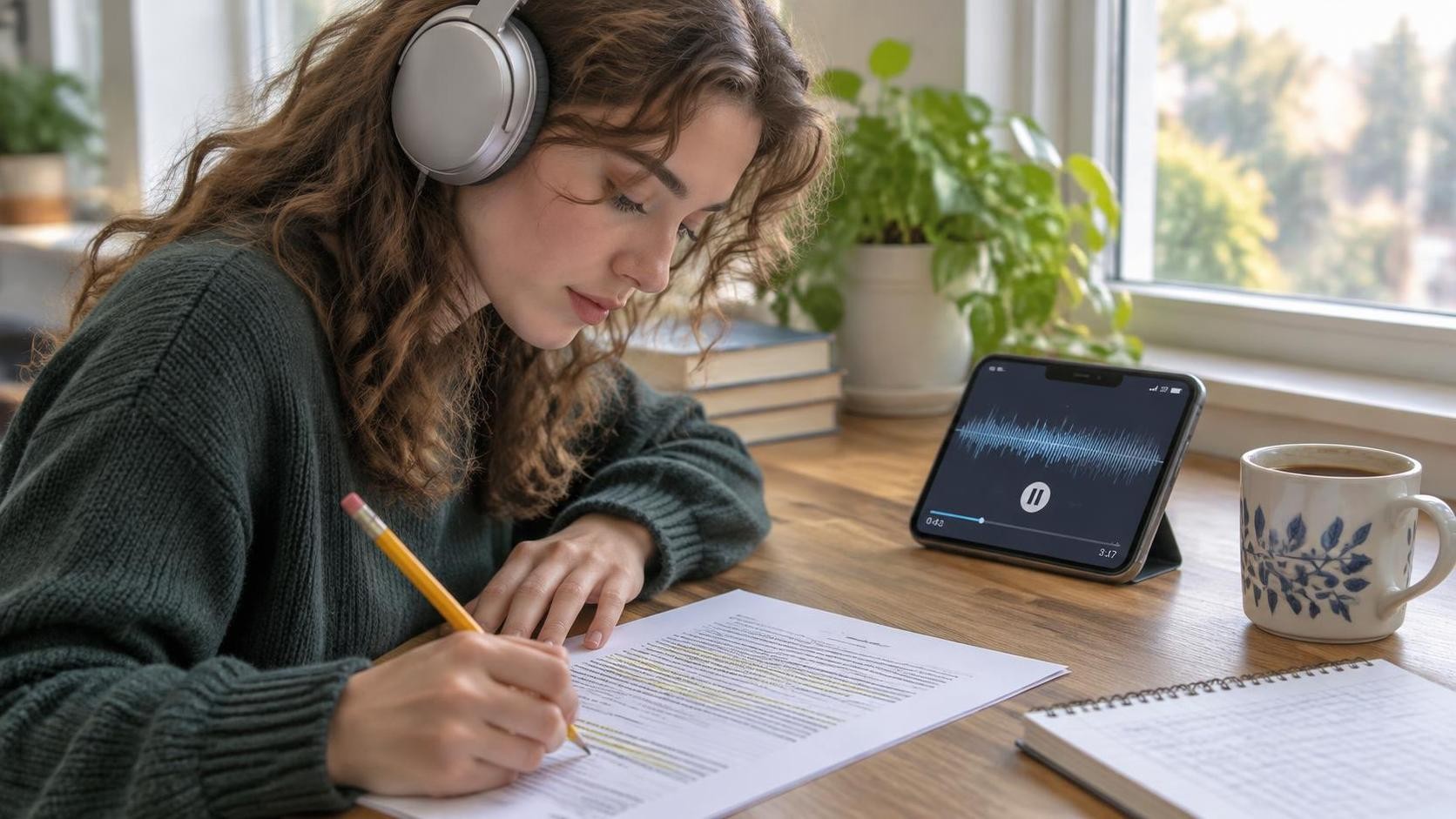
Dictation is the core of the loop because it forces the ear to commit. Play five to ten seconds, pause, and write what was heard. Allow three replays, no more. Guessing is part of the work.
The sentence level repeat in ListenLeap suits this rhythm: one line, three attempts, next line. No transcript yet.
Compare, then mark the reason
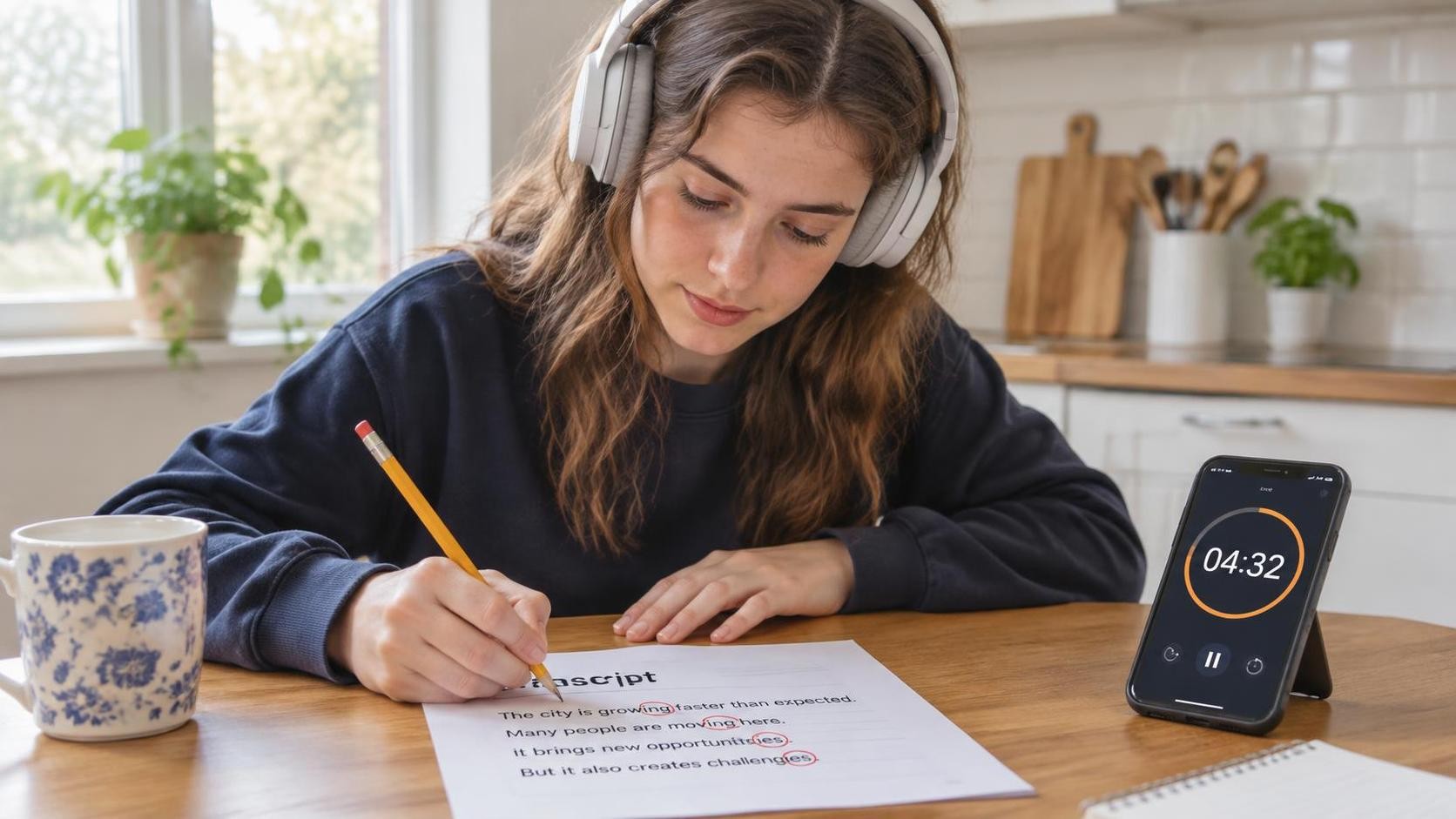
Open the transcript and compare it to the handwriting. The correction matters less than the reason behind each miss.
A simple marking system works:
- L for a linked phrase that ran together.
- W for a weak form that lost its vowel.
- A for a word recognized too slowly.
- N for a word that is genuinely new.
After ten minutes the notes show a pattern. Learners who miss weak forms need sound work. Learners who miss whole clauses need shorter segments and slower speed. The marks turn a vague complaint about speed into a specific task for the next session.
Shadow the lines that failed
Shadowing closes the loop. The same sentences get spoken aloud while the audio plays, matching rhythm, stress, and the places where sounds join.
ListenLeap records the attempt and returns a score across pronunciation, fluency, and completeness. The numbers matter less than the direction they point. A low completeness score usually means words were skipped. A low fluency score usually means the rhythm was rebuilt from spelling rather than copied from the audio.
Repeat each failed line four or five times, then play the original once more. The second listening almost always sounds slower, and that change is the point.
Keep a sound log, not a word dump
The last step turns misses into review material, but the format decides whether it works. A plain word list loses the sound. A sound log keeps it.
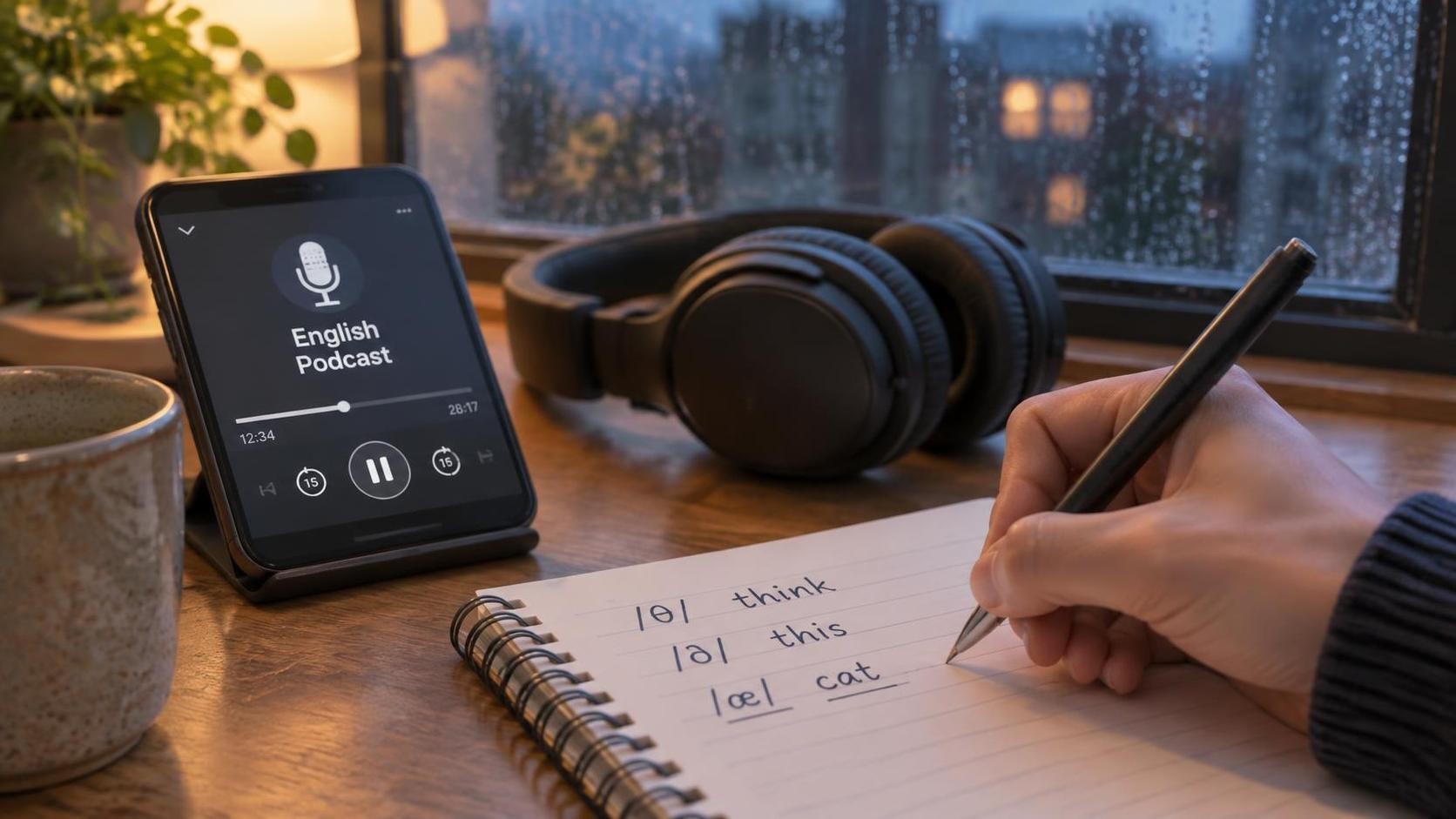
Two columns are enough. On the left, the phrase as it was actually heard, written in rough phonetics. On the right, the standard spelling and meaning. Review happens by listening to the saved clip, not by reading the list. In ListenLeap, words saved from a transcript keep their place in the audio, so review means hearing the phrase again inside the sentence where it caused trouble.
Two Weeks, Twenty Minutes a Day
The schedule below assumes one short clip per session and no extra study time.
Days one to five: ten minutes of dictation on a fresh clip, five minutes of shadowing the failed lines, five minutes adding three phrases to the sound log.
Day six: no new clip. Replay the week of clips at normal speed and count how many sentences now land on the first pass.
Day seven: one full episode with no pausing, no transcript, and no notes. The aim is stamina rather than accuracy.
Week two repeats the pattern with two changes. The transcript opens only after a full pass through the clip, and one session uses a speaker with a different accent or a faster delivery.
Three numbers are worth tracking across the two weeks: replays per minute of audio, function words caught on the first pass, and the share of a clip transcribed correctly before the transcript is opened. All three move before overall comprehension feels different. That lag is normal, and the numbers keep the work honest while the feeling catches up.
Where Vocabulary Still Fits
None of this argues that words do not matter. A podcast about economics still requires the vocabulary of economics. The claim is narrower: word learning and ear training are separate skills that need separate practice, and the order matters.
Words met inside audio stick faster because they arrive with a sound, a stress pattern, and a context. A learner who pulls new words out of a transcript, saves them with the clip, and reviews by listening gets decoding practice and vocabulary work from the same twenty minutes.
The ear learns what the eye cannot teach. A hundred more flash cards will not slow a fast speaker down, but a month of short, marked, repeated listening will make that speaker sound ordinary.

Comments
No comments yet.
Leave a Comment