

The Split Second Before Words Land
Most listening trouble shows up as a blank spot. A sentence runs past, the meaning arrives a beat late, and the mind scrambles to rebuild what it missed. The gap rarely sits in vocabulary. It sits in the moment before the words, when a fluent listener is already guessing what comes next while a struggling listener is still waiting for perfect clarity.
Prediction is the quiet engine behind that difference. Fluent listeners do not hear every sound with equal accuracy. They hear enough to narrow the options, and the narrowing carries the rest of the meaning. Training that narrowing is a practical exercise, not a talent handed out at birth.

What Guessing Does While Sound Is Still Arriving
Speech reaches the ear as a stream, and the brain processes it with a delay of a fraction of a second. Inside that window, meaning is partly built from expectation. A speaker says the problem with the plan is, and a listener who has heard hundreds of similar sentences already expects a complaint, a reason, a contrast. The actual words then confirm or adjust the guess.
This is why one missed word often costs nothing while one missed transition costs the whole sentence. Transitions carry logic, and logic is predictable. Anyone who learns to expect the shape of an argument can lose sounds and still follow the thread.
The skill also lowers effort. When the brain has a rough idea of what is coming, it spends less energy decoding and more on holding meaning. A thirty minute episode stops feeling like a wall of noise and starts feeling like a conversation with a rhythm that can be followed.
There is a second benefit that shows up later. Prediction turns listening into a form of active rehearsal. Each guess is a small test of the sound system the ear has built, and each correction is feedback. Passive exposure builds recognition. Prediction builds the reflex that recognition needs in order to keep up with natural speed.
A Three Pass Routine for a Single Episode
The routine works best on one short clip, four to six minutes, played three times with a different job each round. A single well chosen episode is worth more than an hour of scattered samples, because the second and third passes depend on familiarity with the same voices.
Pass one, stop at the seams
Listen once without the transcript and pause at natural seams: after a question, before a list, at the shift into a new topic. Before pressing play again, say out loud what the speaker will probably do next. A complaint usually comes with a reason. A question usually earns an answer that opens with a short word. A list usually starts with a number or a phrase such as first or the main thing.
The guessing feels clumsy at the start, and that clumsiness is the exercise. Each guess forces attention onto structure rather than individual sounds.
In ListenLeap, sentence by sentence playback makes the pausing simple, since each tap stops at a clean boundary instead of the middle of a word. The same control allows a quick replay of one line without hunting for the spot by hand.
Pass two, finish the sentence in the head
Play the same clip again and pause a few words before the end of a sentence. Complete it mentally, then let the audio run. Compare the guess with the real ending. Most misses are small: a different verb, a swapped noun, a shorter phrase. Those small misses are useful data, because they show which patterns the ear has not stored yet.
Write down the sentences that ended differently from the guess. Three or four per session is enough. A page of these notes becomes a map of the listener's own expectations, and the map is more useful than a general note that listening is hard.
Pass three, check against the transcript
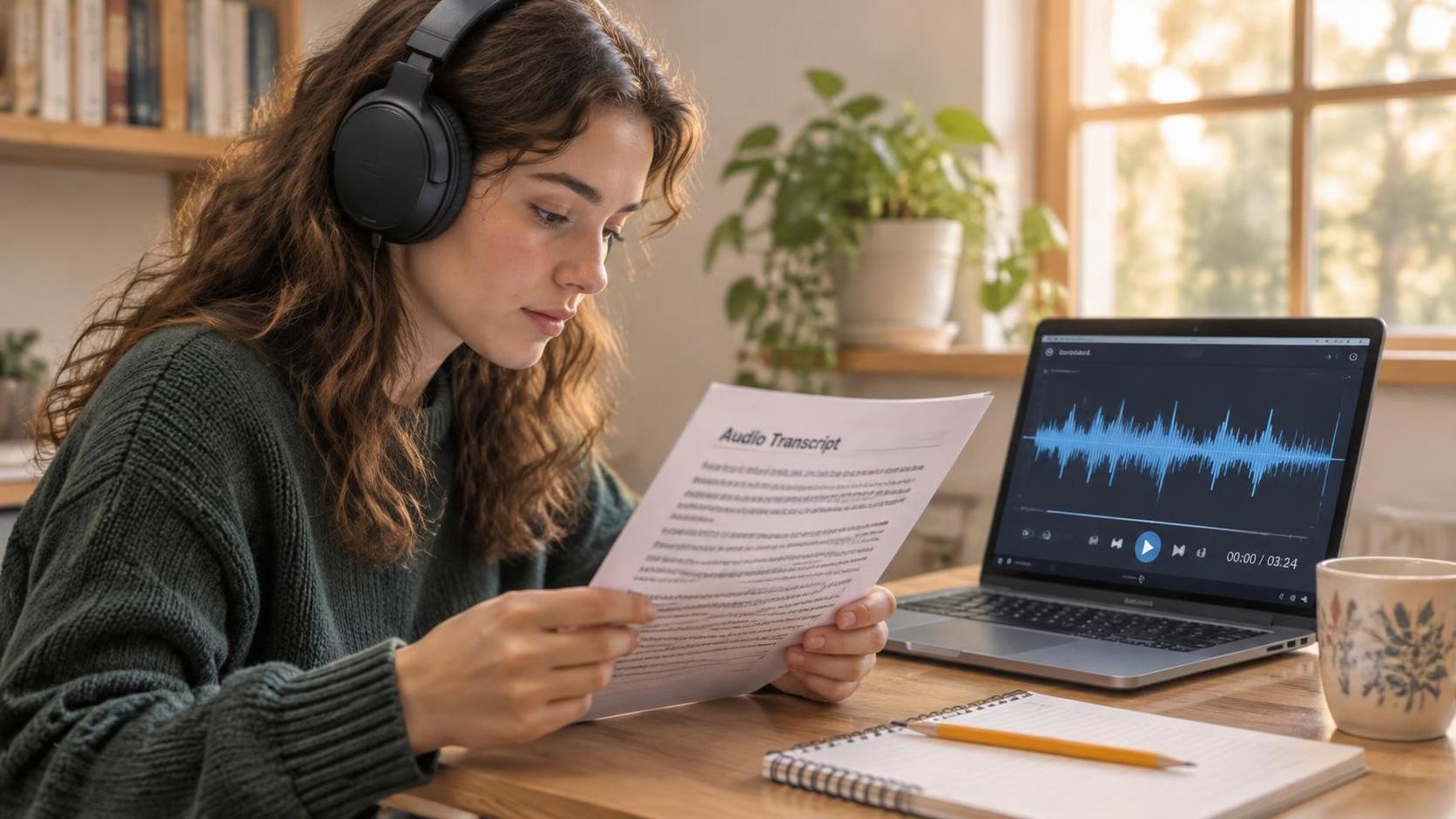
Only now open the transcript. Read along while the audio plays and mark the places where the guess and the recording split. ListenLeap highlights each line as it plays, so the eye follows the text without losing its place in the audio. Tapping a word brings up a quick definition without leaving the episode, which keeps the flow of the pass intact.
The marked lines fall into two groups. Some were misheard because of connected speech, where words blend at their edges and a final consonant attaches to the next word. Others were misjudged because the speaker took an unexpected turn. The first group calls for a slow replay at reduced speed. The second group calls for wider listening in the same topic, so the brain has more patterns to draw on the next time.
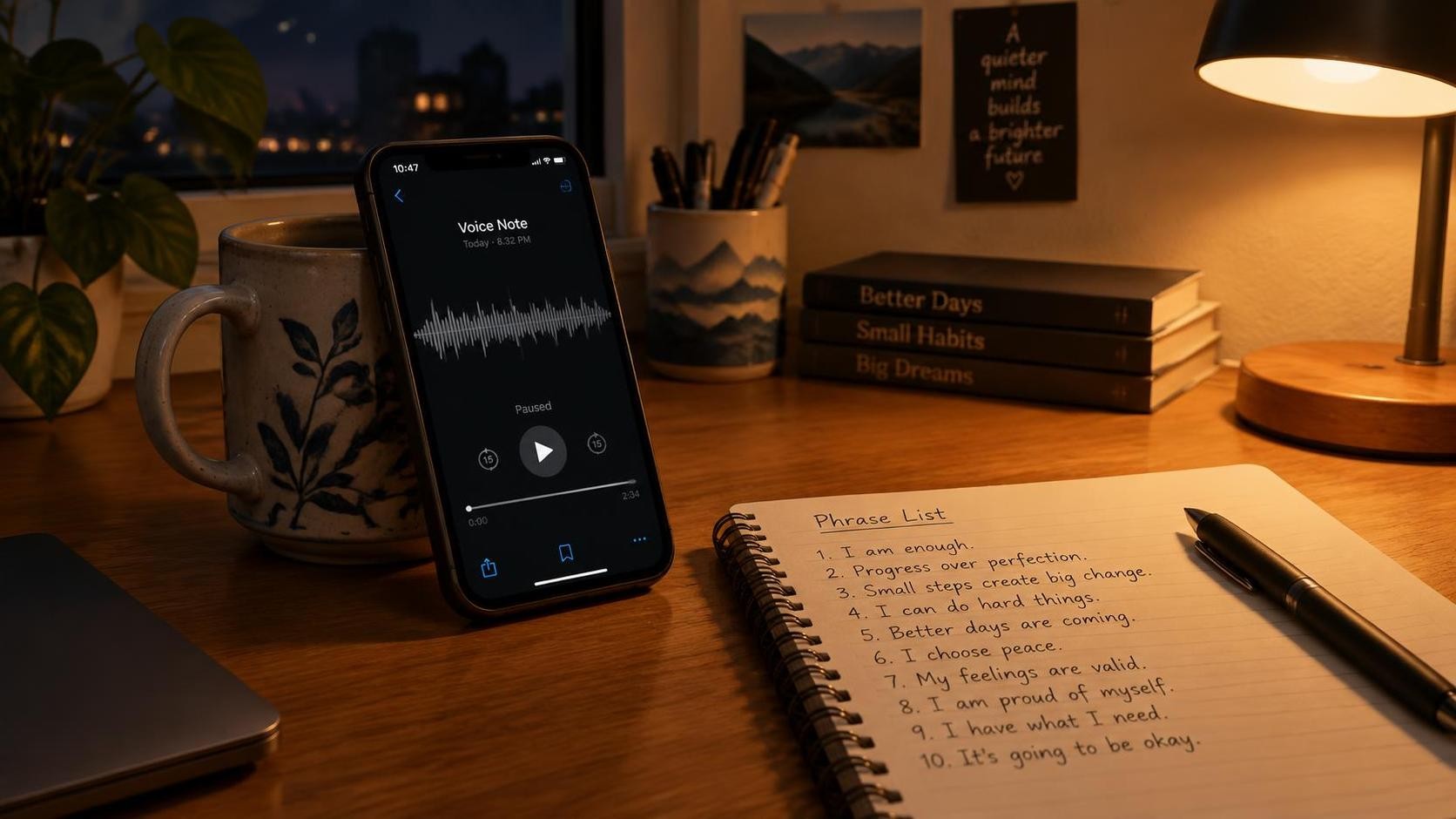
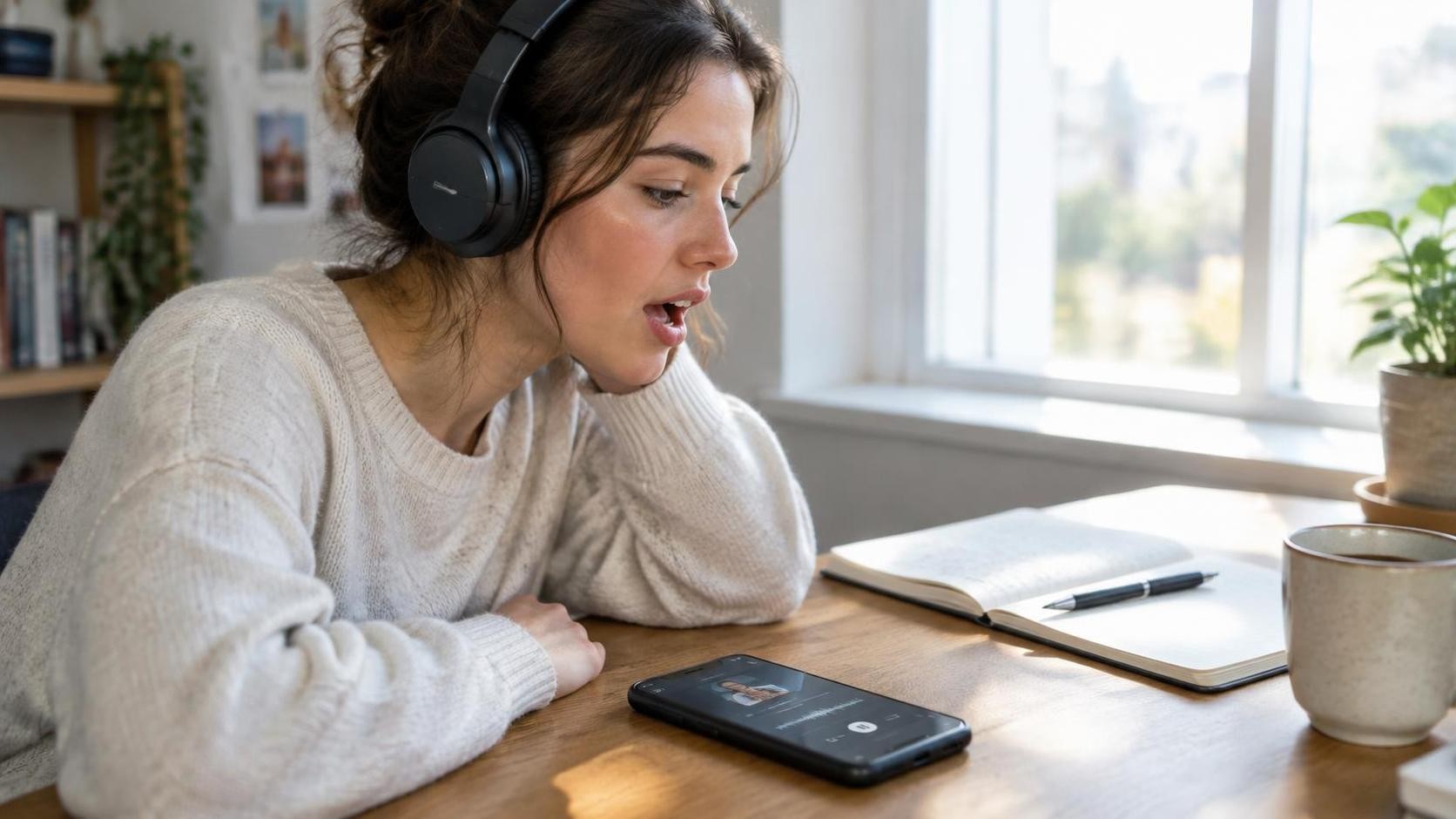
One more step locks the phrase in. Repeat the corrected line with the microphone on and check whether the rhythm matches the original. If the reproduction drifts, the phrase was recognized but not yet internalized, and a few more repetitions will close the gap.
Guessing That Stops Listening
Prediction has a failure mode worth naming. A listener who decides in advance what a speaker means stops hearing the correction. The guess becomes a filter, and the filter throws away the words that matter most.
The fix is a simple rule: every guess must be checked against the actual sentence before the next one is made. A guess that is never tested is just imagination. A guess that is tested becomes a pattern. The distinction matters most with accents that differ from the ones a learner hears every day, where confident wrong guesses can survive for months.
A second trap is predicting from topic knowledge alone. Knowing that a podcast episode is about housing costs makes it easy to assume the next sentence is about rent. Sometimes it is about transport, or a policy detail, or a personal anecdote. Topic knowledge narrows the field, but sound still has to confirm the pick.
Fitting the Routine into a Real Week
Three sessions a week is enough to build the habit. Each session takes about twenty minutes at the start and drops to twelve once the pausing becomes automatic.
A workable arrangement:
Monday, one clip from a news podcast, focused on question and answer patterns.
Wednesday, one clip from an interview, focused on opinion markers such as the thing is, to be fair, or in my experience.
Friday, one clip chosen for speed, played at full rate after two slower passes.
Keep the clips in one folder and return to them after two weeks. The second visit is faster, and the guesses land closer, which is the clearest sign that the routine is working rather than merely filling time.
For listeners who commute, the first pass fits a bus ride and the transcript pass fits ten minutes at a desk. Splitting the passes across a day does not weaken the method, because the point is repeated contact with the same material, not a single uninterrupted block.
Reading the Signs of Progress
Improvement in prediction appears in small ways before it appears in test scores. Guesses start arriving earlier in the sentence. Fewer pauses are needed to follow a paragraph. The urge to rewind drops, because a missed phrase no longer breaks the thread.
Another sign is a change in what sounds wrong. A sentence that once felt like a blur starts to feel like a set of familiar pieces with one odd joint. That shift means the ear is hearing structure, not just noise.
Speed becomes less intimidating as well. A clip played at natural rate sounds faster than a slowed version, yet the gap between the two shrinks as patterns accumulate. Listeners often notice this on a second pass days later, when a line that needed three replays the first time goes by in one.
Where the Habit Stops Being a Drill
After a few weeks, prediction stops needing a dedicated session. It slips into ordinary listening: a podcast on a walk, a video during lunch, a call with a colleague. The pause button stays untouched, and the mind fills the gaps on its own.
At that point the routine has done its job. The ear no longer waits for perfect clarity before it starts to understand. It leans forward, expects, and adjusts, which is what fluent listening has been doing all along.


Comments
No comments yet.
Leave a Comment