

Public domain fiction is the least advertised and most dependable source of English listening practice. Nobody packages it for learners, nobody curates it, and yet it offers something a studio conversation show cannot: dozens of hours of one voice, one story, and one cast of characters, with no advertising breaks and no subscription. A single nineteenth century novel, read one chapter at a time, can cover an entire season of study.
The six podcast series below all work that way. Each takes a well known book and publishes it as a serial, roughly a chapter per episode. The narrators are volunteers, audiobook readers, or stage actors, and the pacing sits closer to a bedtime story than to a news bulletin. That combination is what makes the material teachable: a learner can follow the plot without catching every sentence, and the plot keeps the ear working when a paragraph turns difficult.
Why a Novel Beats a Conversation Show
A conversation podcast trains the ear for interruption. Two hosts talk over each other, laugh, mention the week's news, and the listener has to keep up with all of it. That is a real skill, but it is not the first one. A novel read aloud offers something narrower and, for the first few hundred hours, more useful.
- One voice, one accent. The listener spends forty minutes with the same speaker and absorbs that speaker's rhythm, instead of resetting every eight minutes.
- Repetition without boredom. Character names, place names, and turns of phrase return in every chapter, so hard words get met five or six times in context.
- Complete sentences. Nineteenth century narration rarely trails off. Clauses arrive in order, which makes the grammar audible.
- A natural stopping point. Every episode ends at a chapter break, so a session has a shape and a finish line.
The trade off is vocabulary from another century. Wells writes about a dinner party and a machine; Grahame writes about a river bank. Some words are old, some are dialect, and a few chapters will feel slow. Story context carries most of that weight, and the rest is a two second lookup away.
Where ListenLeap Fits Into This Kind of Listening
Long narration raises one practical problem. A forty minute chapter with no subtitles is easy to abandon at minute twelve. ListenLeap pairs the audio with bilingual subtitles that scroll in step with the voice, and three features of that setup matter for this list.
Bilingual subtitles let the listener check a sentence after hearing it instead of guessing at it, so the story keeps moving at full speed.
Difficulty grading puts a level label on each show, so a B1 listener can open Doctor Dolittle rather than The Three Musketeers and quit in chapter two.
Tap to look up turns an unknown word into a two second detour: the line pauses, the definition appears, the chapter continues.
The player also allows slower playback and saved phrases, which helps on chapters with more new words than usual. Nobody needs to stop at every line. The useful habit is keeping the story at a pace where most of it lands, with the odd word skipped and picked up later.
The Six Podcasts, Ordered by Difficulty
The order below runs from gentle to demanding. A learner can start at the top, finish two books, and move down the list as the ear gets faster. Levels here describe listening load rather than literary value.
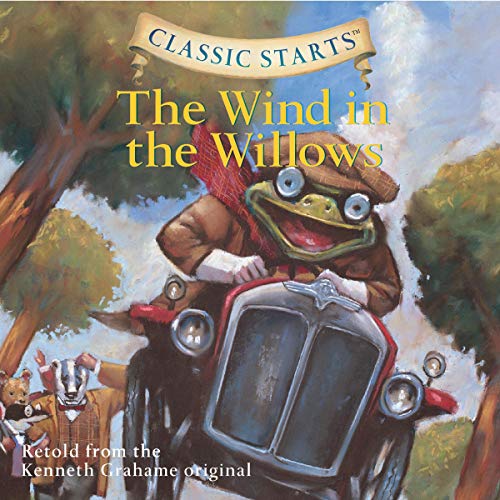
1. The Wind in the Willows (B1)
Difficulty: B1. Theme: friendship, countryside, gentle comedy.
This is a Storyteller Theatre audio adaptation of Kenneth Grahame's classic, performed by stage actors in Oklahoma during a season when theatre doors were closed. Mole, Rat, the infamous Mr. Toad, and Badger travel the English countryside across a limited series of episodes such as The Open Road and Mr. Badger and the Wild Wood. Because it is a play for the ear rather than a straight reading, the dialogue is acted, with music and room tone behind it, which makes the speakers easy to tell apart.
The vocabulary stays domestic and concrete: river banks, picnic baskets, caravans, court rooms. Sentences are short, and the humour is broad enough to survive a missed adjective. For a learner who has never finished an English audiobook, this is the softest entry on the list.
On ListenLeap, the chapters are short enough for a commute, and the subtitles make the fast exchanges between Toad and Badger readable in real time.
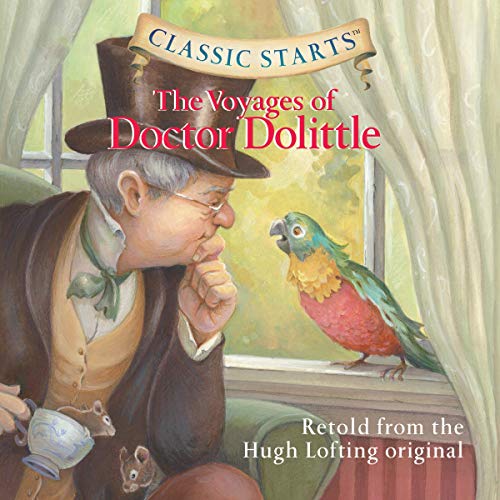
2. The Voyages of Doctor Dolittle (B1)
Difficulty: B1. Theme: adventure, animals, travel.
A Librivox recording of Hugh Lofting's novel, read by Karen Savage, follows Doctor Dolittle and his friends as they sail to South America to meet the greatest naturalist in the New World. Episodes are short and episodic, with titles such as The Cobbler's Son, The Doctor's Home, and The Wiff-Waff, so each sitting covers one small event rather than a long arc.
Two things make it good practice. The chapters are built on dialogue between the doctor and the animals, which means simple questions and answers repeated in slightly different shapes, and the plot is linear enough that a missed page costs nothing. The recording also opens with an honest note: the book was written in a different era and contains language that reads badly today. That note is worth keeping in mind, and it makes the series a useful example of how old texts carry old assumptions.
On ListenLeap, the short runtime per episode suits a fifteen minute session, and tapping a word such as "porpoise" or "naturalist" takes a second without losing the thread.
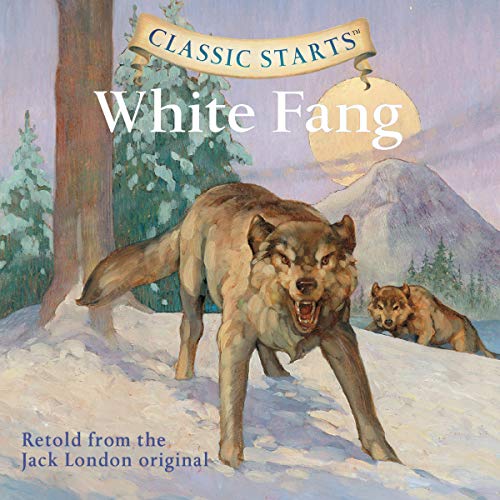
3. White Fang (B1 to B2)
Difficulty: B1 to B2. Theme: survival, nature, the Klondike.
Jack London wrote White Fang as the companion book to The Call of the Wild, and this serialised reading keeps the original structure, with episodes such as The Trail of the Meat, The She-Wolf, and The Hunger Cry. The story is told through the eyes of a creature who is half dog and half wolf, moving from a harsh wilderness into the hands of a young man who offers kindness the animal does not yet understand.
The listening load comes from description rather than dialogue. London spends paragraphs on cold, hunger, and the way a body reads a trail, and that vocabulary repeats across chapters, so words like "fangs", "lair", and "trail" become familiar fast. Chapter titles also do useful work: a listener who loses the thread can look at the episode name and recover the scene.
On ListenLeap, the slower playback option helps with the long descriptive passages, and saved phrases make it easy to collect survival vocabulary for later review.
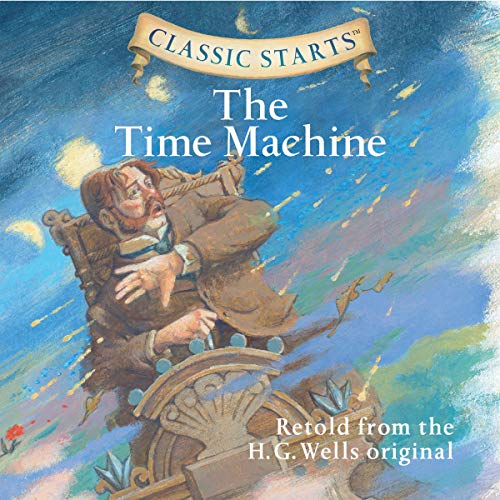
4. The Time Machine (B2)
Difficulty: B2. Theme: science fiction, time travel, social class.
H. G. Wells published this novel in 1895 and, according to the recording notes, gave the world both the first depiction of time travel and the phrase "time machine" itself. The tale opens at a dinner party, where an English inventor explains that time is a fourth dimension, then returns a week later to narrate what happened when his machine carried him to the year 802,701.
The structure is a gift for learners. The first chapters are conversation among guests, which means ordinary dinner table English, and the middle chapters shift into sustained first person narration about the Eloi and the subterranean Morlocks. That shift trains the ear to change register inside one book. Wells also keeps his sentences controlled, and the ideas, evolution, class division, and decline, are abstract enough to stretch a B2 listener without burying the plot.
On ListenLeap, this is a good title for a second pass: the subtitle track can be switched off after one listen and used as a check on the second.
5. Anne of Avonlea (B2)
Difficulty: B2. Theme: small town life, teaching, family.
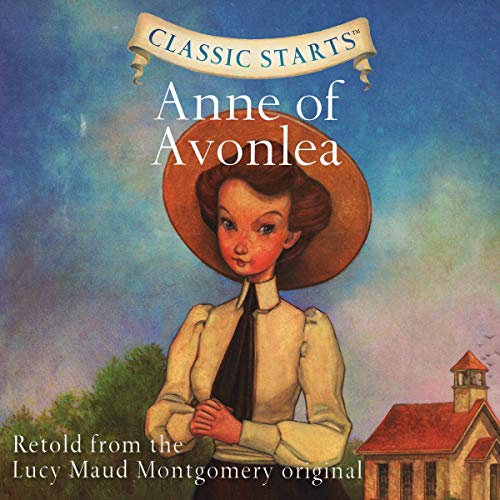
The sequel to Anne of Green Gables finds Anne Shirley teaching at the Avonlea school while continuing her own studies at home with Gilbert Blythe. Lucy Maud Montgomery fills the book with new neighbours: Mr. Harrison and his rude parrot Ginger, the twins Dora and Davy Keith, and Paul Irving. Episodes such as An Irate Neighbor and A Full-Fledged Schoolma'am show how the chapters are built, one domestic incident at a time.
This one trains a skill the other books skip: following several speakers in a single scene. Dinner table arguments, classroom exchanges, and village gossip all arrive in quick turns, with a dry humour that depends on tone rather than vocabulary. The long descriptions of Prince Edward Island also give a steady supply of scenery words: hills, fields, weather, and light, which most learners read far more often than they hear.
On ListenLeap, the difficulty grade and the bilingual track make the humorous asides readable, which is where most of the pleasure in Montgomery sits.
6. The Three Musketeers (B2 to C1)
Difficulty: B2 to C1. Theme: friendship, conspiracy, seventeenth century Paris.
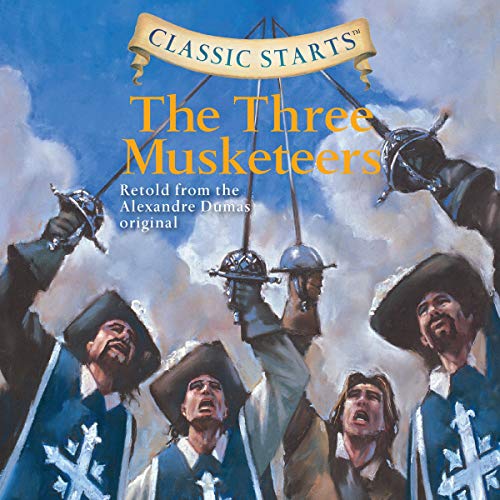
Alexandre Dumas sends the young Gascon nobleman D'Artagnan to Paris to join the king's musketeers, where he falls in with Athos, Porthos, and Aramis. His letter of introduction is stolen before he arrives, and the friendship that follows drags all four into a power struggle among the upper classes, complicated by a beautiful woman who is not what she appears to be. The recording runs chapter by chapter, starting with the author's preface and The Three Presents of M. D'Artagnan the Elder.
This is the hardest title on the list and the most rewarding one. Sentences are long, names are French, and the intrigue moves fast, so a listener has to hold several threads at once. It is also the book that most resembles real conversation among native speakers at speed, with banter, insult, and negotiation in the same scene. A learner who can follow it has moved well past textbook English.
On ListenLeap, the bilingual subtitles carry the historical detail, and the word lookup keeps the French titles and court terms from stopping the story every few minutes.
How to Start Without Burning Out
Long books fail for boring reasons: too many new words, no routine, and a story abandoned at chapter four. A few habits prevent most of that.
- Pick one book, not three. A single series watched to the end teaches more than three series sampled for a week.
- Listen to the first chapter twice. Once for the shape of the story, once with subtitles on and a finger ready to pause.
- Set the session at twenty minutes. A chapter break is a natural end, and a short session is one that happens again tomorrow.
- Collect five words per chapter, no more. A short list gets reviewed; a long one gets forgotten.
- Skip the unknown word that does not block the scene. If the plot still makes sense, keep walking.
- Finish before starting the next. The last three chapters of any novel are where listening stamina actually grows.
What Changes After a Few Months
The first book is slow, and the second one moves, partly because the ear has learned the narrator's habits and partly because Victorian narration reuses its own furniture: the road, the parlour, the letter, the servant, the storm. By the third book, most learners notice that they stop translating in their heads and start hearing scenes, which is the point where listening becomes something closer to reading for pleasure.
The six series here cost nothing, run for years, and never expire. Start with the river bank, end in Paris, and let the chapters do the work.




Comments
No comments yet.
Leave a Comment