
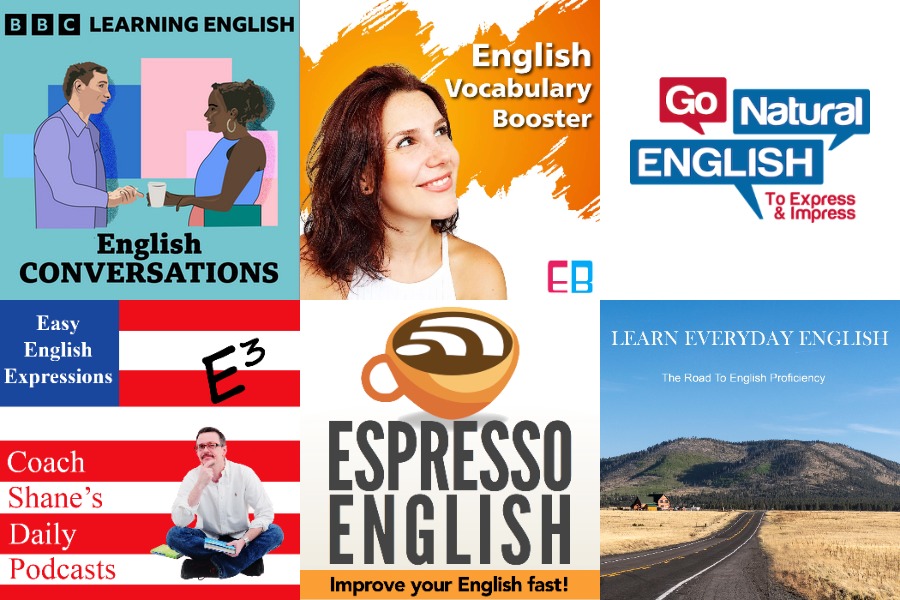
Why short everyday shows beat long lectures
A learner who finishes a twelve minute episode on the bus has done more for their English than one who opens a ninety minute lecture and stops after four minutes. Short shows fit into the gaps of a normal day, and because the host returns to the same format each week, the ear adapts to one voice, one speed, and one set of running jokes. That repetition is where comprehension grows.
Everyday English podcasts also cover the English used in small moments: a bill that arrives earlier than expected, a favour asked of a coworker, a conversation at a dentist's reception desk. Textbook dialogues cover these situations, but they sound scripted. The shows below keep the scripts light and let normal speech habits show through, including the messy parts that learners usually never hear in class.
The six picks here come from one corner of the podcast world, the English learning shelf, and they cover a wide band of levels. A few are built for people who still translate in their heads. Others assume the listener can already follow a fast American conversation and simply wants to sound less like a textbook. Read the level notes first, then choose by the kind of practice that feels missing.
Where ListenLeap changes the listening session
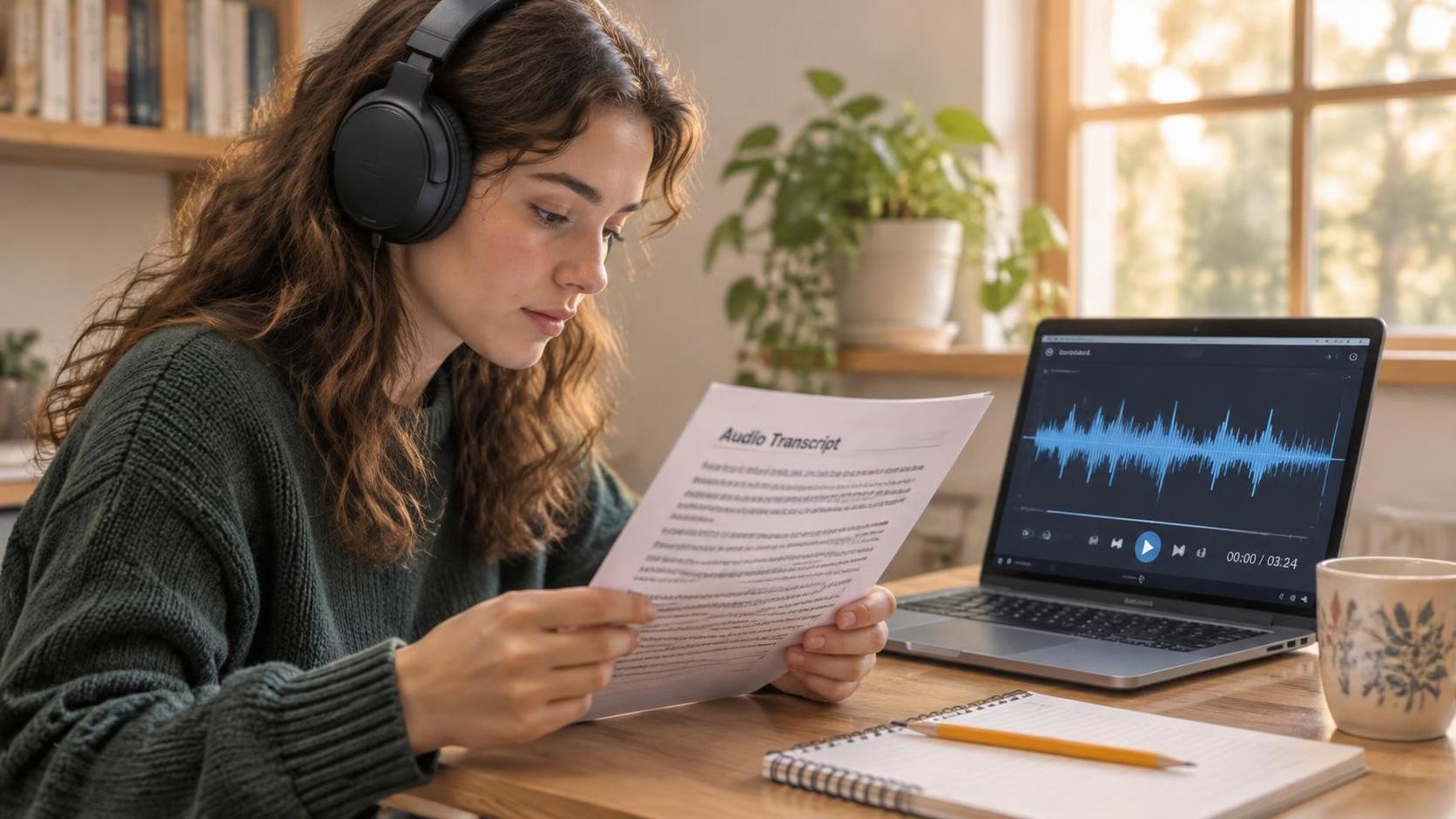
Passive listening has a ceiling. When an unfamiliar phrase slides past, most learners let it go, and the same phrase slides past again the following week. ListenLeap puts a transcript under the audio with bilingual subtitles, so a word can be tapped the moment it causes trouble, and the meaning lands while the sentence is still in the ear.
The app also sorts shows by difficulty, which matters more than most learners expect. An episode far above a listener's level teaches almost nothing, because the brain spends its energy guessing instead of understanding. Slowing the audio for a first pass and returning to normal speed for a second is a few taps inside the player, and saved words stay attached to the episode for review later.
None of this replaces the podcast itself. It just removes the two most common reasons a good listening habit dies: a word that cannot be caught, and a show that turns out to be too hard to enjoy.
Six shows worth a weekly slot
1. English Vocabulary Booster
Level: B1 to B2
Theme: one common word per episode, explored through real examples
Each episode takes a single everyday word and turns it over. Recent titles include Crying, Making a Decision, Support, Physical Space, and Fear. The host works through the situations where the word appears and the phrases it usually travels with, which is closer to how vocabulary actually sticks than a list of definitions. Listeners who know plenty of words but freeze when speaking tend to get the most from the format, because it moves a word from recognition into use.
Inside ListenLeap, the subtitles make word families visible in context, and a tap saves the phrase for later review rather than interrupting the flow of the episode.


2. Learn Everyday English
Level: A2 to B1
Theme: everyday words, phrases, culture, and real life situations
The show describes itself as a road to English proficiency built from everyday words, phrases, cultural information, and real life situations, and the episode list backs that up. A three part series on common phrasal verbs is the easiest place to start, since it stays on one topic long enough for the patterns to feel familiar. Other episodes wander into lighter ground, such as interesting facts about Alaska or a discussion of what belongs on a bucket list.
Sentences stay short, key phrases come back more than once, and the pace leaves room to repeat a line out loud. For a listener moving up from beginner material, that combination is forgiving without being childish.


3. Go Natural English Podcast
Level: B1 to C1
Theme: listening, fluency, and American small talk
Host Gabby built this show for learners who want to sound natural rather than correct. Episode titles read like a list of the problems intermediate learners actually have: Stop Translating in Your Head, 10 Pronunciation Fixes That Instantly Make Your English Clearer, Understand Fast English at Work, and The 5 Biggest Listening Mistakes You're Making. The description points at strategy as much as vocabulary, which is why the show suits people stuck at the stage where they understand their teacher but not a sitcom.
The listening tests in the feed are a useful gauge. A learner who fails one badly has a clear target for the next month, and the explanation that follows shows where the ear gave up.


4. Daily Easy English Expression Podcast
Level: A2 to B2
Theme: idioms and expressions in small daily doses
Coach Shane has been explaining one expression per day for years, and the archive is enormous. Recent episodes cover like putty in my hands, make no bones about it, unplugged, Miller time, and riffraff. Each one gets a plain explanation, a couple of example sentences, and a short repetition drill, which takes about five minutes and asks almost nothing of the listener beyond attention.
That low barrier is the point. Five minutes of idiom practice fits before sleep, during a commute, or while waiting for water to boil, and the phrases that show up in American films and office chat start to register instead of blurring together.

5. Espresso English Podcast
Level: A2 to C1
Theme: grammar and vocabulary in a few minutes
Espresso English takes the opposite approach to a long lesson: pick one small question and answer it fast. Recent topics include the difference between upcoming and incoming, whether to say the letters of an abbreviation or the whole word, forty ways to say yes and no, and the gap between a cook and a chef. The explanations are clear and practical, and the show does not pretend that a five minute episode replaces a course.
What it does well is fix specific doubts. A listener who keeps confusing two similar words can search the archive, hear the distinction once, and move on with a small error removed from their speech.


6. Learning English Conversations
Level: A2 to B1
Theme: everyday expressions and real conversations
This one comes from the BBC Learning English team, and its aim is narrow in a useful way: everyday expressions and real conversations that make daily exchanges easier. Episodes stay short, the language is British, and the hosts explain the phrase in the middle of using it, so the listener hears the expression inside a real exchange rather than as a vocabulary item on a slide.
Learners who have spent months on American material often find this show a useful adjustment, since British rhythm and vocabulary differ more than textbooks suggest. The BBC Learning English site carries extra practice for anyone who wants to go further.

A four week routine that survives a busy month
A plan helps only if it is small enough to keep.
- Week one: pick one show at or slightly below the current level and listen to three episodes without pausing. No notes, no dictionary. The goal is finishing.
- Week two: replay the same three episodes with subtitles open in ListenLeap. Tap every unknown phrase, then keep no more than fifteen of them. Fifteen is a limit, not a target.
- Week three: listen again with subtitles off and shadow one minute of audio aloud, copying rhythm rather than words.
- Week four: move up one show on the list and start over.
Fifteen to twenty minutes a session, four sessions a week, beats a two hour Sunday binge. The same advice applies to show choice: staying with one host for a month builds far more than sampling six shows in a week, because the ear needs the same voice repeated before it stops working so hard.
One habit is worth adding. When a saved phrase appears in real life, whether in a film, a meeting, or a message, the learner should say it out loud once. Retrieval is what moves a phrase from the subtitle list into speech.
What a month of this actually changes
Nobody finishes these shows in a month, and the archives are long enough that finishing is not the point. The changes are smaller and more useful. The first episode of a familiar show stops requiring full attention. A new episode from the same host sounds slower than it did in week one. The panic pause in the middle of a sentence gets shorter.
That is the honest version of progress: not perfect comprehension, but a lower cost per minute of listening. The six podcasts above are a reasonable place to start, and ListenLeap keeps the transcript, the dictionary tap, and the slower playback in the same window, which is usually all a steady habit needs.
Produced for ListenLeap readers.


Comments
No comments yet.
Leave a Comment