

Why classic novel podcasts are a reliable listening habit
Podcasts built around classic novels behave differently from talk shows and news casts. A narrator reads a complete story at a steady pace, sentence by sentence, with no overlapping voices and no sudden topic shifts. For a listener who is still building English stamina, that structure is a gift. Every word is deliberate, vocabulary repeats across chapters, and the grammar tends to be fuller than in casual speech.
There is a second advantage that learners rarely talk about: the stories are known. Millions of people grew up with Heidi, Pinocchio, or the tale of Phileas Fogg. When the listener already knows roughly what happens next, the brain spends less energy on the plot and more on mapping sounds to words. Comprehension rises, and so does the urge to keep going. A third advantage is the format. These shows release chapter by chapter, in episodes that mostly run between ten and thirty minutes, which fits a commute, a lunch break, or the last stretch before sleep.
What this batch of six has to offer
The six shows below sit at different points of the reading spectrum, from a Swiss children's story to one of the hardest novels in American English:
Around the World in 80 Days, the Jules Verne race around the globe.
Heidi, the cheerful Alpine children's classic by Johanna Spyri.
Moby-Dick, Herman Melville's whale, read by a long list of guest voices.
Pinocchio, Carlo Collodi's wooden puppet with the growing nose.
Pollyanna, the orphan who turns a whole town into players of the glad game.
The Prince and the Pauper, Mark Twain's story of two boys who swap lives.
All six are recordings of public domain books, so the feeds stay free and complete, and all six can be found by searching their titles inside ListenLeap.
How ListenLeap changes the listening experience
Hearing a classic once is pleasant. Hearing it with the script in front of you is practice. In ListenLeap, each podcast comes with a transcript that follows the audio, and the text of every line appears as it plays. When an unfamiliar word shows up, a tap opens its meaning, and the word can be saved into a personal list for later review. Listeners can slow the narration to 0.8x for the denser chapters of Moby-Dick or speed it up when the material feels easy, and they can repeat a single sentence as many times as needed. One tap on any line opens the text and the meaning of a word, so a pause never has to end the flow.
The app also separates content by difficulty, so a learner who is not ready for nineteenth century vocabulary can start with the simpler children's classics first and work upward. For shadowing practice, the short, clearly spoken sentences in these audiobook feeds are easier to imitate than the rapid banter of interview shows. The same feed that entertains becomes a lesson the moment a line is paused.
The six classic novel podcasts to try
Around the World in 80 Days
Level: Intermediate. Theme: a Victorian bet that circles the globe.
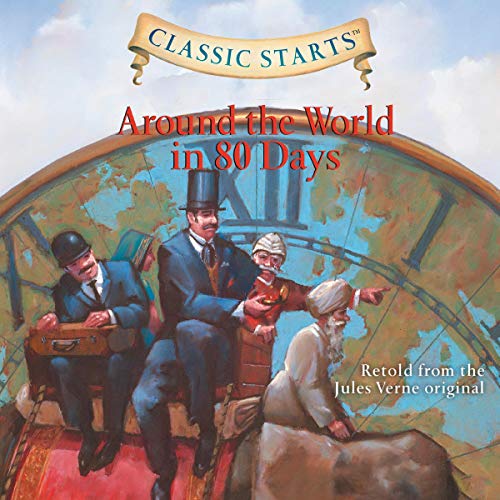
Jules Verne is often called the master of classic adventure tales, and this novel is one of the reasons. Phileas Fogg, a rich man with very precise habits, wagers at his club that he can travel around the world in eighty days, then sets off with his new valet Passepartout by steamer and railroad across the Mediterranean, the Red Sea, the Pacific and the Atlantic. What he does not plan for is a detective who mistakes him for a bank robber and trails him the whole way. The chapters are short, the sentences are clear, and the travel vocabulary of ships, trains, and geography repeats often enough to stick. Inside ListenLeap, the transcript makes it easy to catch the place names and numbers that fly by at normal speed.
Heidi
Level: Pre-intermediate. Theme: childhood in the Swiss Alps.
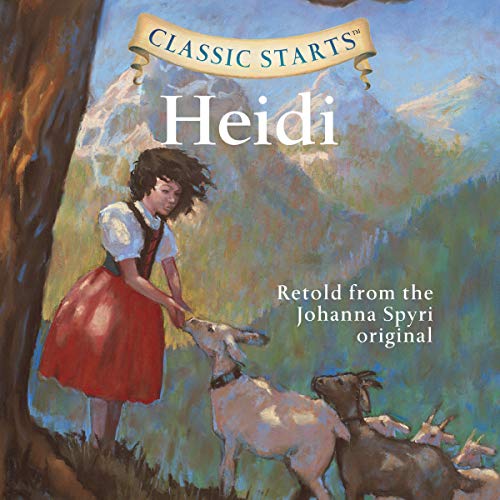
Johanna Spyri's Heidi follows a cheerful young girl who comes to live with her grandfather high in the mountains, where she makes new friends, cares for animals, and explores nature before the story moves on. The narration is warm and the language simple, which makes this feed a natural first audiobook for listeners who are new to full-length stories in English. The description notes that Heidi has delighted children for generations and remains one of the world's most loved children's classics. Episodes are labelled by chapter, from the introduction onward, and each one is short enough to finish in a single sitting, with gentle sentences that suit slower playback and easy shadowing.
Moby-Dick
Level: Advanced. Theme: the American epic of the whale.
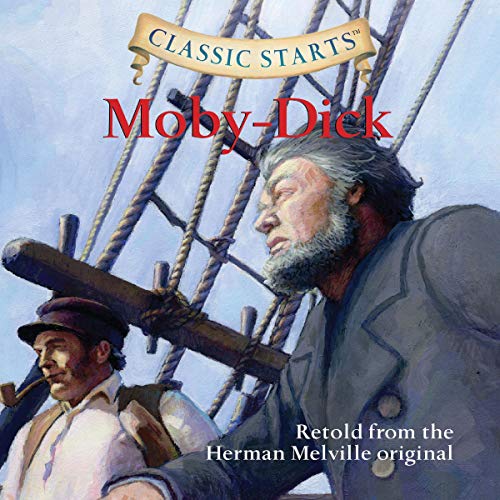
The Moby-Dick Big Read turns Melville's 1851 novel into a public event. Each of its 135 chapters is read aloud by a different voice, mixing the celebrated with the unknown, and the feed originally broadcast one new chapter each day in a sequence of 135 free downloads. The episode list alone is a roll call: the poet Mary Oliver reads the epilogue, James Naughtie reads the final chase, and Roger Allam takes the second day of the chase. The language is demanding, with long sentences and heavy sea vocabulary, so this one belongs to listeners who already handle intermediate audio comfortably and want a real challenge. In ListenLeap, the combination of slower speed and the line-by-line transcript turns Melville's longer sentences into something a learner can actually dismantle.
Pinocchio
Level: Intermediate. Theme: a puppet who wants to become a real boy.
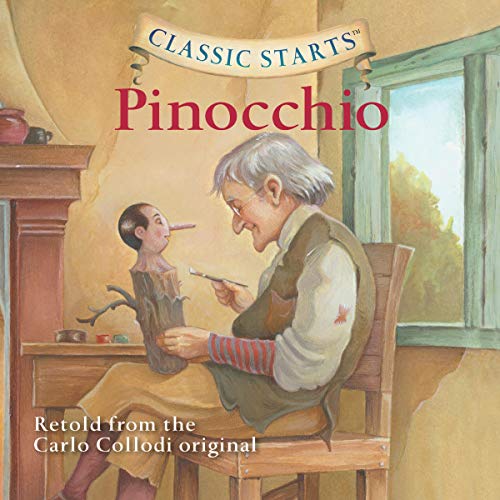
Carlo Collodi's tale, written in Florence in the late nineteenth century, begins when an old carpenter carves a talking puppet from a strange piece of wood and comes to love it like his own son. Pinocchio runs away almost as soon as he learns to walk, then stumbles through one misadventure after another with memorable characters such as the Talking Cricket, the Fox and the Cat, and the Fairy with the Turquoise Hair. Since its first publication in 1883 the book has been translated into more than 250 languages, which the feed notes makes it the most translated book in the world, and the puppet's long nose has become a lasting metaphor for lying. The vocabulary stays accessible while the lessons about honesty and growing up give listeners something to follow between chapters.
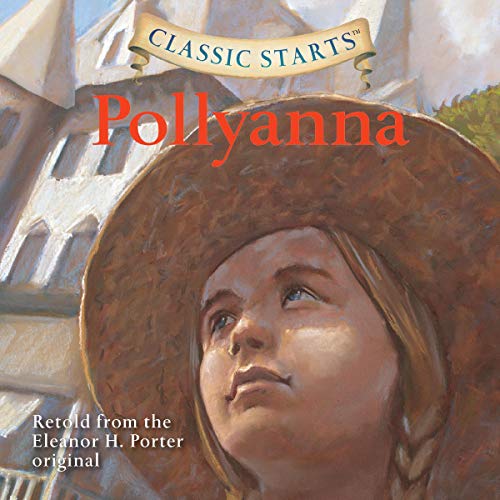
Pollyanna
Level: Intermediate. Theme: an orphan who teaches a town to play the glad game.
When orphaned Pollyanna Whittier comes to live with her stern maiden aunt, the whole town of Beldingsville falls under the spell of the lively eleven-year-old. She stays cheerful, she brightens the lives of everyone she meets, and she explains her method: the glad game, a way of finding something to be glad about in every situation. The story turns when a serious accident nearly costs the town its Glad Girl, and everyone looks for a way to make her happy again. The narration is clear, and the vocabulary of friendship, loss, illness, and recovery is the kind of emotional language that shows up again and again in real conversation, which makes this feed more practical than its gentle reputation suggests.
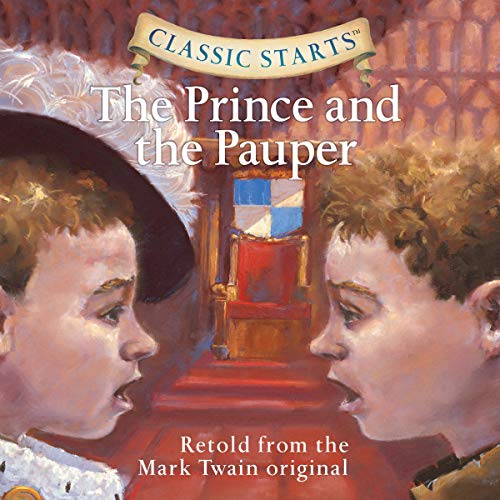
The Prince and the Pauper
Level: Intermediate. Theme: Mark Twain and the swapped lives of two boys.
Mark Twain's classic places two boys from opposite ends of society in each other's clothes: one a prince, the other a pauper, and each discovers the joys and the challenges of the other's world. The story keeps returning to identity, friendship, and the sharp lines between social classes, and the feed's own description invites listeners to think about what it means to walk in someone else's shoes. The language mixes the formal speech of the court with the rougher talk of the street, so one story delivers two registers of English at once. Listeners who follow the transcript can watch how the same boy changes the way he speaks as he moves between the two lives.
A practical way to begin
A workable routine needs no special equipment, just the app and one of these feeds. Start with Heidi or Pollyanna if the goal is comfort, move to Around the World in 80 Days or Pinocchio for steady progress, and treat Moby-Dick as a long-term project of a few chapters a week with the transcript open.
One method that works: play a chapter once without looking at the text, then play it again with the transcript and check the lines that were unclear, then save five new words. Playing a chapter twice, once blind and once with the transcript, does more for listening than a week of background noise. Repeating the same chapter a day later, before moving on, holds onto more than rushing through new episodes.
Classic novels were written to be read slowly, and that is exactly why they suit listeners who want English that is accurate, expressive, and worth remembering. Pick one story, search for it inside ListenLeap, and let the first chapter set the pace.



Comments
No comments yet.
Leave a Comment