
Learning English through textbooks and grammar drills can feel like a chore — but what if the best study tool was already in your ears, making you laugh so hard you forget you are even practicing? Comedy podcasts offer exactly that: real, unscripted conversations packed with idioms, cultural references, and the kind of natural rhythm no classroom can replicate. When the material is genuinely funny, the brain pays closer attention, vocabulary sticks more easily, and the listener actually wants to come back for more.
Understanding humor in a second language is also one of the truest signals of fluency. It requires catching tone, timing, wordplay, and shared cultural knowledge — all of which comedy podcasts deliver in abundance. Whether someone is into dry British wit, sharp American satire, or quick-fire panel-show banter, there is a comedy podcast out there that matches their level and sense of humor. The key is finding shows that are entertaining enough to keep the listener engaged while remaining accessible enough that the language does not overwhelm.
Below are six standout comedy podcasts handpicked for English learners, spanning both American and British humor, plus insights on how ListenLeap turns every punchline into a learning opportunity.
Why ListenLeap Makes Comedy Podcasts a Learning Superpower
ListenLeap is designed specifically to help language learners get more out of real-world audio content. Its core features turn passive listening into active, measurable practice. The platform offers over 10,000 podcasts across 20-plus topic areas — including comedy — from trusted sources like BBC, NPR, and independent creators.
The i+1 difficulty rating system helps learners find comedy shows that sit right in their comfort zone: challenging enough to push progress but not so hard that the jokes fly over their heads. Dual subtitles in Simplified Chinese, Traditional Chinese, Korean, and Japanese make it easy to catch every punchline, while the blind-listening mode lets users test comprehension without visual aids first, then verify afterward. Tap-to-look-up for unfamiliar vocabulary works instantly on any word in the transcript, so no slang or idiom goes unexplained. The AI Q&A feature allows learners to ask questions about cultural references, wordplay, or jokes they did not quite catch, and the shadow-reading tool with pronunciation, intonation, and fluency scoring helps them practice delivering those jokes themselves. Available on iOS, Android, and Web, ListenLeap is the all-in-one platform for turning English comedy podcasts into serious language gains.
The Comedy Podcast Picks
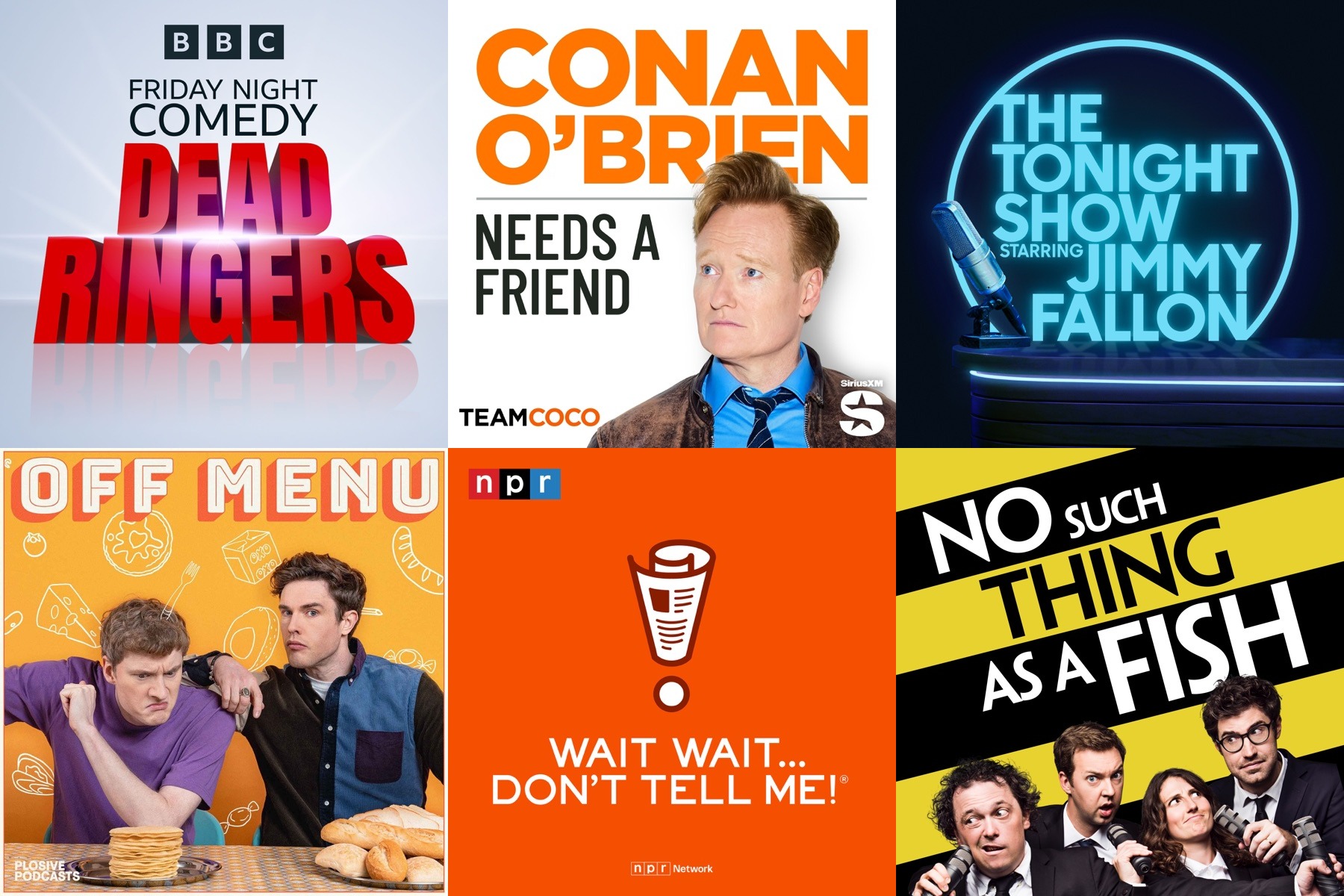
1. Conan O'Brien Needs A Friend
Difficulty: Intermediate to Advanced
Style: Celebrity interview comedy (American)
Conan O'Brien, the longest-serving late-night talk show host in American television history, brings his signature absurd humor and quick wit to this wildly popular podcast. The premise is deceptively simple: after decades of interviewing celebrities, Conan now sets out to find out whether any of them actually want to be his friend. Each episode features a freewheeling conversation where the jokes flow as naturally as the dialogue.
For English learners, the sheer variety of speaking styles is invaluable. Guests come from across the English-speaking world with different accents and speeds. Conan's Irish-American humor blends self-deprecation with sharp improvisation, teaching the art of playful banter through unscripted, relaxed English.
On ListenLeap, learners can slow down rapid-fire quips, tap unfamiliar phrases for instant definitions, and use AI Q&A to unpack cultural references behind the funniest moments.
2. The Tonight Show Starring Jimmy Fallon — Videos
Difficulty: Beginner to Intermediate
Style: Late-night comedy variety (American)
Jimmy Fallon's Tonight Show has been a staple of American comedy television for over a decade, and its podcast-format highlights package the best bits into easy-to-digest episodes. Each installment brings together celebrity interviews, musical performances, comedy sketches, and Fallon's famously goofy games — think "Lip Sync Battle," "Box of Lies," and "Wheel of Musical Impressions."
For English learners, the visual elements provide helpful context clues that support comprehension. Fallon's comedic style leans heavily on physical humor, musical parody, and joyfully silly interactions with guests, making the language more accessible even for those still building core listening skills. The interviews tend to be light-hearted promotional conversations rather than deep dives, which keeps the vocabulary conversational and the tone upbeat. American pop culture references abound, giving listeners a direct window into what people in the U.S. are talking about right now.
With ListenLeap's transcript-based learning, users can follow along word by word through every joke and game segment, using tap-to-look-up for any slang that slips by. The fill-in-the-blank listening exercises turn quick comedy sketches into targeted vocabulary drills.
3. Wait Wait... Don't Tell Me! (NPR)
Difficulty: Upper-Intermediate to Advanced
Style: Comedy news quiz / panel show (American)
Produced by NPR and recorded weekly in Chicago before a live audience, Wait Wait... Don't Tell Me! is America's most beloved radio quiz show — and a masterclass in blending current events with comedy. Host Peter Sagal (and occasional guest hosts like comedian Tom Papa) guides a rotating panel of sharp-witted comedians through a series of games, trivia rounds, and the signature "Not My Job" segment, where a celebrity guest is quizzed on topics completely outside their area of expertise.
The show's real gift to English learners is its density of information wrapped in humor. Every episode covers the week's top news stories — politics, science, entertainment, sports — but through a lens of satire that makes the facts stick. The live audience setting adds energy and authentic reactions, while the panelists' diverse comedic styles (from deadpan to high-energy) expose listeners to a wide range of American comedic voices. The rhythm of a quiz format also naturally repeats key information, reinforcing comprehension without feeling repetitive.
ListenLeap's AI-powered summary feature helps learners digest the news content of each episode, while the smart vocabulary notebook lets users save topical terms and political vocabulary they encounter for later review.
4. No Such Thing As A Fish
Difficulty: Intermediate
Style: Comedy fact-sharing panel (British)
From the researchers behind the long-running BBC panel show QI comes this award-winning podcast, where four quirky fact-hunters — Dan, James, Anna, and Andy — each share their favorite bizarre fact discovered that week. The result is a delightful blend of genuine education and genuine hilarity, as one surprising fact inevitably spirals into tangents, debates, and increasingly ridiculous hypotheticals.
What started as a modest behind-the-scenes project from QI's research team has grown into one of Britain's most successful independent podcasts, with hundreds of episodes, live tours, and even its own BBC television spin-off. The format is wonderfully simple: four smart, funny people riffing on the strangest things they have learned, from the history of mayonnaise to the mating habits of deep-sea creatures. Each episode runs about 40-50 minutes, making it a manageable listening session.
The educational value for English learners is exceptional. The hosts speak clearly in British accents, explain concepts thoroughly as they go, and pepper their conversations with sophisticated vocabulary in a completely natural, unforced way. Because the content jumps between science, history, pop culture, and pure absurdity, listeners build vocabulary across an extraordinarily wide range of domains.
On ListenLeap, the dual-subtitle feature lets learners compare the original English with their native language in real time, ensuring no fascinating fact or clever pun gets lost. The phrase-analysis tool breaks down particularly witty lines to explain the layers of humor at work.
5. Off Menu with Ed Gamble and James Acaster
Difficulty: Intermediate to Advanced
Style: Food-themed comedy interview (British)
In this wildly inventive British podcast, comedians Ed Gamble and James Acaster invite a celebrity guest into their imaginary "Dream Restaurant" — and grill them about their ultimate menu choices. Starter, main course, side dish, dessert, and drink: each pick opens a door into the guest's life story and quirks, while the hosts deploy their razor-sharp comedic instincts.
With over 300 episodes and a bestselling book, the show has become a UK cultural phenomenon. The magic lies in the format's deceptive simplicity: ordering a meal becomes a canvas for absurd tangents and passionate food rants, all wrapped in consistently hilarious British humor.
For learners, Off Menu is a masterclass in British conversational dynamics — the art of teasing, the rhythm of banter, and the subtle tones signaling affection versus mockery. Food vocabulary opens into broader cultural learning, while repeated listening reveals layers of humor missed on the first pass.
With ListenLeap's shadow-reading, learners can practice delivering Acaster's deadpan remarks or Gamble's theatrical indignation, with real-time feedback on pronunciation and fluency.
6. Friday Night Comedy (BBC Radio 4)
Difficulty: Advanced
Style: Political satire / comedy panel (British)
For learners ready to tackle the deep end of British humor, BBC Radio 4's Friday Night Comedy is the ultimate destination. This weekly rotation of the BBC's funniest satirical shows — including The News Quiz, Dead Ringers, and The Now Show — delivers sharp, timely comedy that assumes listeners are already tuned in to British and global current affairs.
The humor here operates at full speed: rapid-fire panel discussions, biting political satire, spot-on impressions, and the kind of wry, understated wit that British comedy is famous for. Episodes are tightly produced at around 30 minutes, packing maximum comedic density into every segment. Panelists and hosts are among the UK's top comedians and satirists, and the writing is consistently sharp.
The challenge for English learners is real — and rewarding. Succeeding with Friday Night Comedy means understanding not just the words, but the layers of irony, the political context behind every joke, and the cultural assumptions embedded in British satire. It is an advanced listening workout that pays off in dramatically improved comprehension of fast, nuanced English.
ListenLeap's i+1 difficulty system can help learners work their way up to this level, starting with easier comedy shows and gradually building toward Friday Night Comedy. The AI-powered Q&A is especially useful here, allowing learners to ask follow-up questions about political references or satirical techniques they might not recognize on first listen.
How to Start Learning with Comedy Podcasts
Jumping into full-speed comedy in a second language can be intimidating, but a few simple strategies make the experience both productive and enjoyable. Start with a show that matches current ability — Jimmy Fallon's accessible humor for beginners, or No Such Thing As A Fish for intermediates. Use short sessions of 10-15 minutes rather than marathon listening, which helps maintain focus and prevents fatigue from constant mental translation.
On ListenLeap, take advantage of the platform's structured approach. Begin by listening in blind-listening mode to test raw comprehension without subtitles. Then replay with dual subtitles to fill in the gaps. Highlight vocabulary that appears repeatedly — comedy shows often have signature phrases and running jokes. Use the shadow-reading tool to practice delivering lines with the same rhythm and intonation as the hosts, and save favorite bits to the vocabulary notebook for spaced-repetition review.
Perhaps most importantly, do not stress about catching every joke on the first pass. Even native speakers miss jokes in fast-paced comedy — that is part of the fun. The goal is exposure to real, unpolished English in its most entertaining form.
The Final Word
Comedy is the secret weapon of language learning. It lowers the emotional barrier, rewards attention with genuine enjoyment, and teaches language the way it is actually used — messy, playful, and deeply human. The six podcasts recommended here cover the spectrum from silly to sophisticated, from American to British, from five-minute highlights to hour-long deep dives. All of them are available on major podcast platforms, and all of them are ready to be transformed into powerful learning tools through ListenLeap's full feature set.
Pick one show that matches the right difficulty level, fire up ListenLeap, and discover what happens when learning English stops feeling like work and starts feeling like hanging out with the funniest friends on the planet.



Comments
No comments yet.
Leave a Comment