

Why office English sounds nothing like the textbook
Most learners can order a coffee, describe a weekend and explain what they do for a living. Then a colleague opens a meeting with "Can I just piggyback on that?" and the conversation moves on before the sentence has been decoded. Workplace English is fast, polite on the surface and full of hedged requests, half-finished clauses and numbers that change meaning depending on tone.
That gap is a listening problem before it is a grammar problem. The vocabulary is usually familiar. What is unfamiliar is the rhythm: how a manager softens a refusal, how a sales lead reads out priorities, how an interviewer pauses before a follow-up question, how a client from another culture phrases a polite no. Textbooks strip those signals out. Podcasts keep them, which is why a commute can be a better classroom than a workbook.
The six shows below were chosen for that specific job. They are all in English, they all deal with work rather than travel-brochure English, and they cover different situations: a learner building stamina at an intermediate level, a candidate preparing for interviews, a salesperson who needs to follow weekly briefings, a manager who freezes under pressure, and anyone who has to meet clients in another country.
What ListenLeap adds to a plain podcast feed
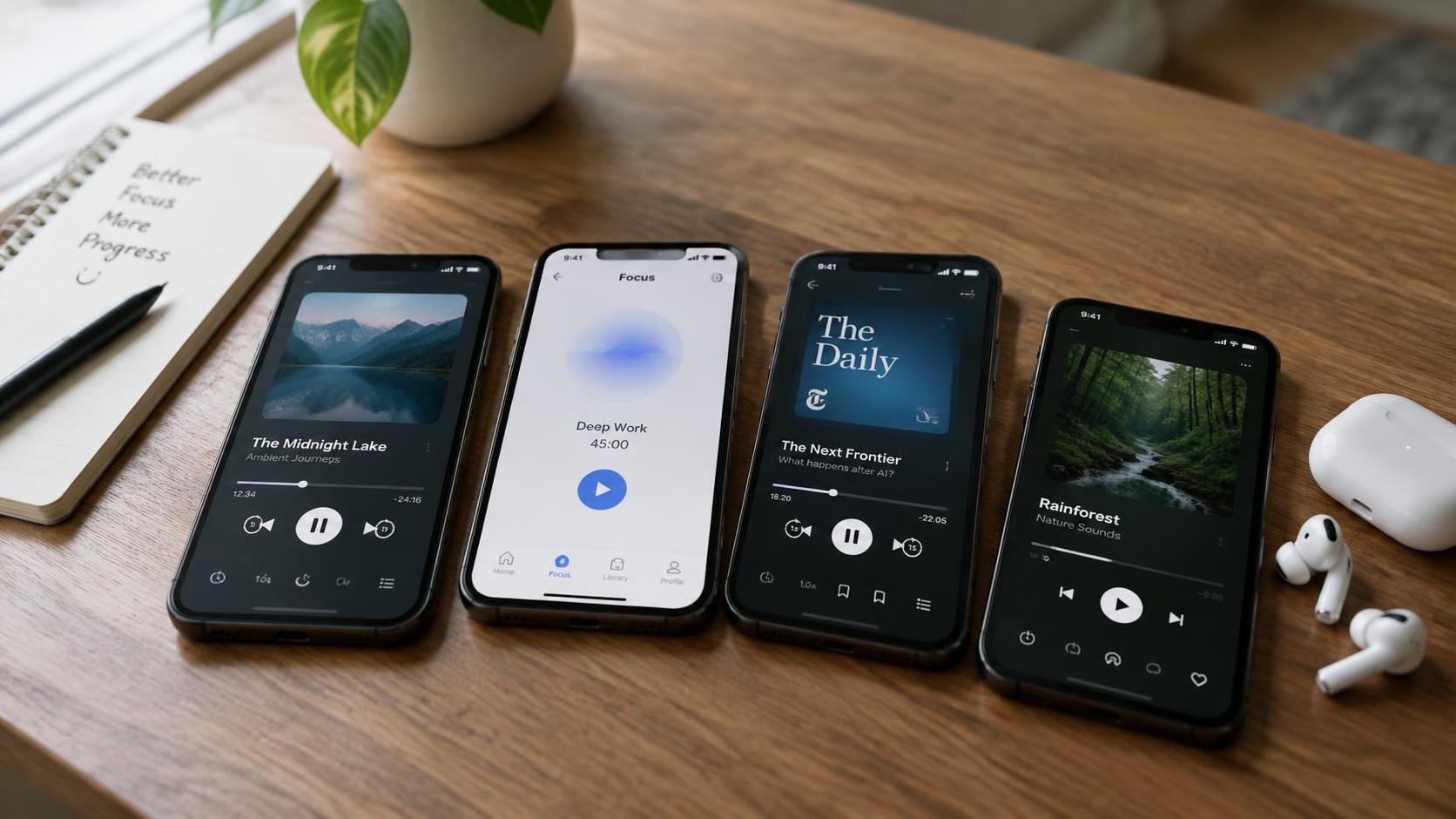
A podcast alone gives a stream of sound and no scaffolding. ListenLeap adds the scaffolding without changing the show. Episodes carry bilingual subtitles that can be toggled on and off, so a first pass can lean on the text and a second pass can run clean. Difficulty labels make it easier to pick a show that sits just above the current level rather than far beyond it. Tapping a word opens its meaning in context, and any phrase can be replayed sentence by sentence until the rhythm sticks.
The practical effect is that a twenty minute episode can be used three times. Once with subtitles to understand the content, once without to test comprehension, and once while repeating a few sentences aloud to copy the intonation. The app keeps the episode and the saved words together, so a listening session leaves something to review on the train the next morning.
Six business English shows for six different work situations
1. Business English Podcast-Intermediate English
Level: Intermediate, roughly B1 to B2.
Theme: Steady, well-shaped listening for learners leaving textbook English behind.
The archive follows host Arsenio across several phases. It began with ESL episodes in 2018, moved through a long run of TOEFL iTP and iBT material, and has since been rebranded into a coaching series. What survives the change is the format: one voice, one idea, clearly signposted, spoken at a pace an intermediate learner can follow without panic. Recent episodes such as "Having Personal Responsibility" and "Build Your Motivational System" are structured monologues, which makes them good practice for following an argument from claim to example to conclusion.
On ListenLeap: the transcripts make the structure visible. A learner can read a section, then replay it without subtitles and check whether the thread was followed.

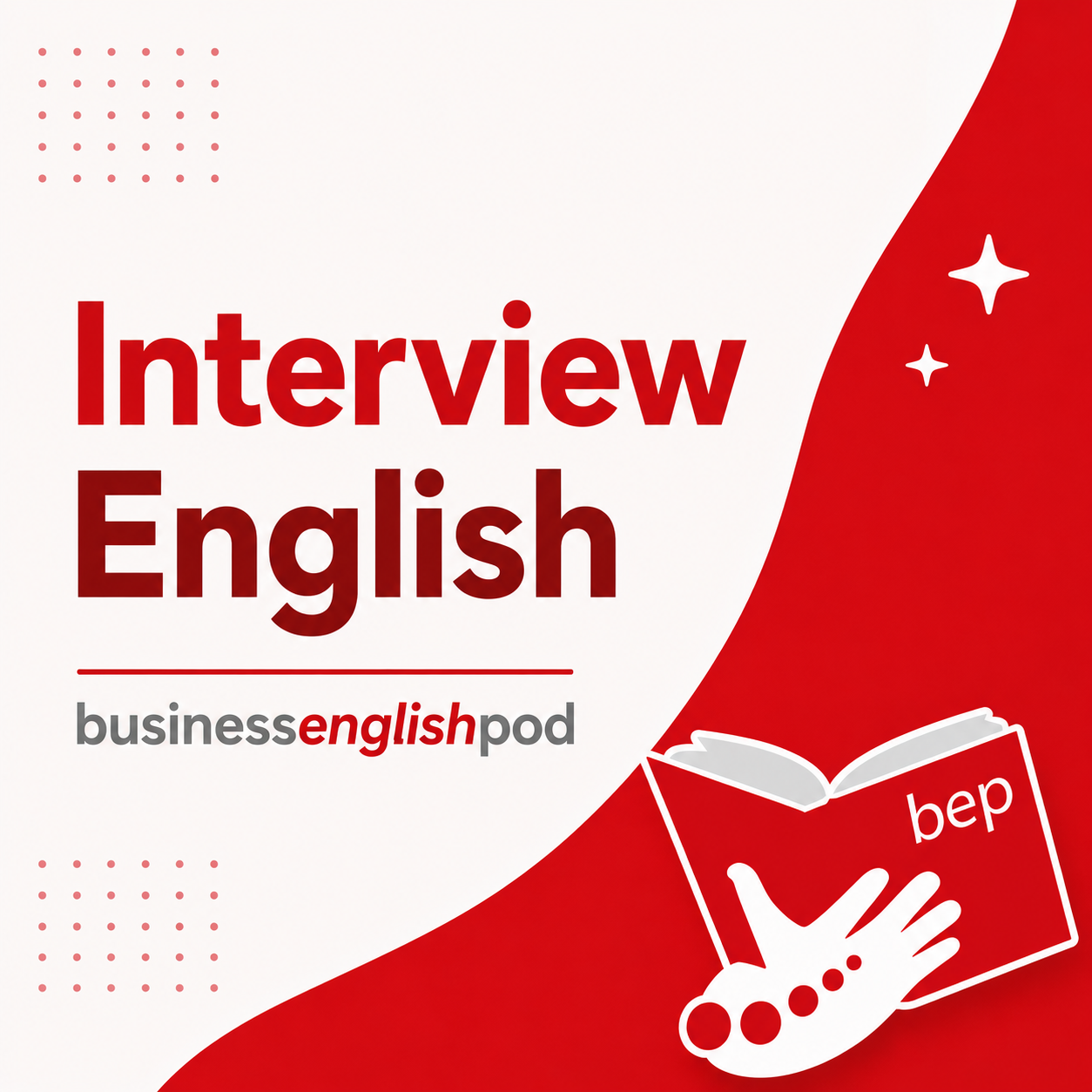
2. Business English Podcast-Interview English
Level: Intermediate to Advanced.
Theme: Job interviews, heard as a real conversation rather than a lesson.
This is a small archive built around a single long exchange, with Zach Barnett interviewing Michael Barnett. That narrowness is the point. Instead of a lesson about interview questions, a listener hears one interview unfold: the opening, the qualifications, the pauses, the follow-up that pushes a vague answer into a specific one. For anyone preparing for an English-language interview, that rhythm is worth more than a list of stock answers.
On ListenLeap: sentence replay is the useful part here. A question and its answer can be looped separately, so the phrasing of a strong answer can be copied rather than memorised from a template.
3. Business English Podcast-Sales English
Level: Intermediate to Upper Intermediate.
Theme: Weekly sales briefings and the compressed language of business updates.
The English US Sales team records what is happening each week, with episodes such as "What is happening this week? Week of Feb 17th". This is the register many professionals meet in internal calls: priorities, numbers, deadlines and quick status reports, delivered without much decoration. Nothing here is scripted for learners, which is exactly why it is useful. Following a fast weekly update trains the ear for the parts of a sentence that carry the actual information.
On ListenLeap: bilingual subtitles help on the first pass when names and figures arrive quickly. On the second pass, turning them off turns the briefing into a comprehension test with a clear right answer: what changed this week.

4. Business English Podcast-Travel English
Level: Intermediate to Advanced.
Theme: Business travel, client meetings and cross-cultural etiquette.
Despite the label, the feed carries SAMURAI TOKYO, the Japan Business and Culture Podcast in its English edition, hosted by RANA-SEHO and produced by OTO-PORT. Episodes range across Japanese franchise business, car culture, popular food chains, home appliances and social norms, including changing attitudes to smoking and dating etiquette. For anyone travelling to meet clients in Japan, the show covers the part that phrasebooks skip: how business talk and cultural expectation sit in the same sentence.
On ListenLeap: the episode list is easy to scan by topic, so a listener can pick the subject closest to an upcoming trip and use subtitles to catch the cultural asides that carry the real meaning.

5. Confident Business English
Level: Upper Intermediate to Advanced, B2 and above.
Theme: Confidence in high-pressure meetings, negotiations and presentations.
Host Anna Connelly is an Advanced Neurolanguage Coach who works with senior managers, and each weekly episode is built from the communication problems that come up in those sessions. Episode 348, "When The Pressure Is On", deals with staying coherent under stress. Episode 347 offers a negotiation framework. Episode 345 turns to wording in difficult situations, and 344 is a shortcut for sounding more natural at work. The tone is direct and uncluttered, closer to a short coaching conversation than a lecture.
On ListenLeap: the difficulty label and transcript let a listener treat an episode as a model to imitate. Listening once for meaning and once for phrasing is enough to walk into a meeting with two or three usable sentences.

6. Breakout Business English - Improve your vocabulary and confidence using English at work.
Level: Intermediate and above.
Theme: Workplace vocabulary, speaking structure and small talk.
This show is built for people who use English as a second language at work and want better tools rather than more theory. Episodes cover job interview tips, how to structure a spoken answer, the FORD method for small talk, how to talk about numbers and maths, and how to understand everyone in the room. The vocabulary episodes take workplace themes and supply the advanced professional wording that most courses leave out.
On ListenLeap: tapping a word in the transcript shows its meaning in the sentence, which suits a show that is dense with new professional vocabulary. Saved words can be revisited before the next episode.

A listening week that fits around actual work
Podcasts get abandoned when they are treated as a course, and four episodes is usually where it happens. A pattern that survives a busy month is one show tied to one recurring part of the week, usually the commute.
- Pick by situation, not by level alone. A salesperson who already follows numbers at work will get more from the weekly briefing show than from a beginner dialogue, even if the briefing is faster.
- Listen twice, not once. First pass with subtitles for meaning, second pass without them. The second pass is where comprehension is actually built.
- Steal five sentences a week. Choose five lines from the transcript that would be useful in a real meeting, repeat them aloud, and use at least one of them before the week ends.
- Keep a running note of phrases. Ten expressions per week is a realistic target and a reviewable one.
- Change shows when a situation changes. An interview coming up is a reason to switch to the interview archive; a client trip is a reason to switch to the travel and culture show.
What changes after a couple of months
What shifts first is not vocabulary but tolerance. Meetings in English stop feeling like a test with a finish line and start to feel like a stream that can be followed, even when a phrase slips past. Timing changes as well: answering while the other person is still finishing a sentence starts to feel normal, and that habit does more for how a speaker is perceived than another hundred words of vocabulary.
Six shows are enough for that. One episode a week, one recurring commute, and a transcript to open when a sentence does not land. Everything after that is repetition, and that part has to come from the listener.


Comments
No comments yet.
Leave a Comment