

Why Conversation Starts with a Story
Most families who want their children to speak better English start with vocabulary lists and grammar drills, and a lot of them stall inside a month. The reason is simple: lists do not give a child anything to say. Stories do. A five minute episode about a camel that knows the way, or a soup that refuses to be stirred, hands a young listener characters, jokes, and a small problem to think about. That material then leaks into the rest of the day, at the kitchen table, in the car, in the ten minutes before lights out.
Audio adds one advantage that screens cannot match. Children can listen while their hands are busy, which means practice happens during cooking, drawing, folding laundry, or staring out of a car window instead of competing with homework time. For parents who are not native speakers, a well made show also provides a neutral model of pronunciation that does not carry the emotions of a family argument about homework.
The five shows below were chosen with a specific filter in mind: each one has to give a family something to talk about after the episode ends. That rules out passive background music channels and rules in interview formats, trivia games, cooking conversations, and serialised adventures with cliffhangers. All five are in English, all five are listed on ListenLeap, and all five work for children roughly between five and twelve, with enough wit to keep an adult awake.
How the Five Were Picked
Three criteria shaped the list. First, speech has to be clear enough for a learner to follow without constant rewinding, which means hosts who slow down for jokes and repeat key words instead of racing through them. Second, episodes have to be short enough to fit inside a real evening, usually between ten and thirty minutes. Third, the format has to invite a response: a question to answer, a recipe to argue about, a guess to make, a cliffhanger to complain about.
That last point matters more than most parents expect. A show that ends with a question turns listening into a game, and games are where children volunteer sentences without being asked. A show that ends with a moral often ends the conversation instead.
Where ListenLeap Fits into the Routine
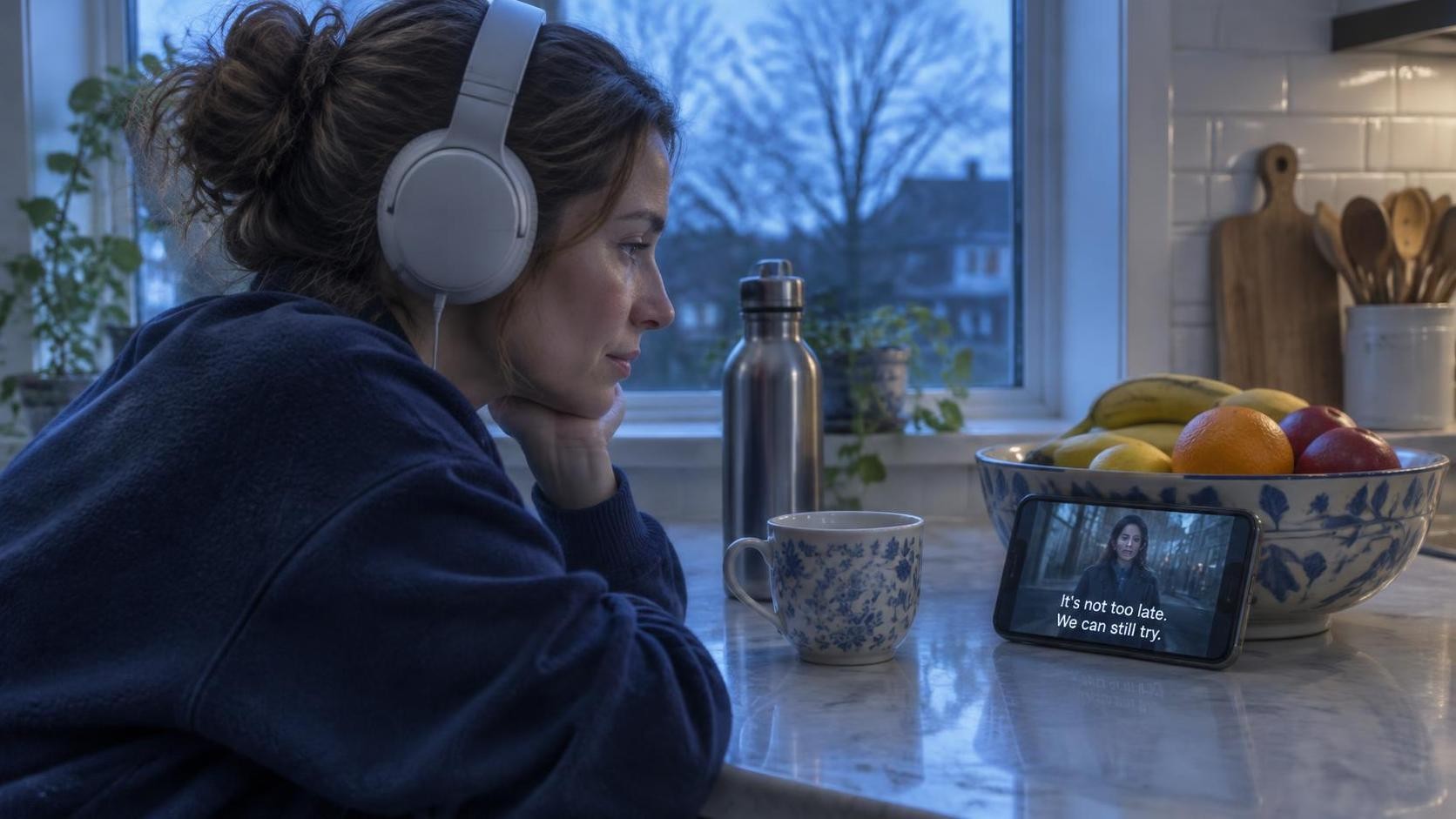
ListenLeap is built for exactly this kind of family listening, and a few of its features do most of the work. Episodes come with bilingual subtitles that can be switched on for a first pass and switched off for a second, so a child can read along when a joke depends on a phrase they have never met. Any word on screen can be tapped for a definition, which removes the pause, the search, and the argument about whose turn it is to look things up.
Difficulty gradings help a parent decide whether a show is a stretch or a comfort listen, and playback speed can be dropped slightly for younger listeners without turning voices into cartoons. For older children who want to imitate accents, a line can be replayed and repeated until the rhythm settles. None of this replaces a parent sitting nearby, but it does mean the parent can cook dinner while the practice continues.
Cover images for each show, as they appear on the platform, are listed with the recommendations below so a family can recognise the artwork before pressing play.
Five Shows Worth a Weekly Slot
ChopChop Podcast
A cooking conversation for families, produced by the non profit behind ChopChop Family, whose stated aim is teaching families to cook and eat real food together. Episodes take one food idea and pull it apart in the most enjoyable way possible, from a defence of soup in "Slurp's Up: Let's Talk Soup!" to a discussion of picky eating that name checks presidential habits, and a pantry tour that invites listeners to compare their own shelves.
The appeal for language learners is the vocabulary of the kitchen, which is concrete, repeatable, and immediately usable. A child who has heard "Stretchy Cheese and Lasagna Skyscrapers" will describe dinner with those words the same evening. The show also gives adults a reason to hand over the wooden spoon, since the episodes assume children are actually cooking rather than watching.
On ListenLeap, the recipes and food terms are easy to revisit, and the short runtime makes the show a natural fit for the twenty minutes before dinner.
[一句话简介:A family cooking show that turns recipes, pantry tours and picky eating into kitchen vocabulary.
Amazing Stories with Zaki the Hoopoe
A storytelling series hosted by a lively hoopoe bird who guides listeners through ancient tales, aimed at children aged five to eight but written with enough humour for parents. The narrator moves between deserts, seas, and enchanted forests, meeting prophets, brave animals, and the occasional stubborn king, with interactive questions and sound effects punctuating each scene.
The language here is deliberate and rhythmic, which suits children who are still building their first thousand English words. Episodes such as "The Children of Madina" and "The Camel Who Knew the Way" repeat key phrases at the start of scenes, giving a listener a second and third chance to catch a new word without feeling tested.
Families looking for stories with a moral frame will find one, and families who simply want a calm, well told tale will find that too.

[一句话简介:A hoopoe bird narrates ancient tales with jokes, questions and sound effects for young listeners.
Club Bubble Kids Trivia
A trivia and game show for children, complete with a secret passcode, points, catchy songs, and a rotating cast of club members. Episodes are built around a theme, so a road trip episode asks questions about travel while a Halloween episode leans into spooky facts, and a head to head episode pits two characters against each other in a friendly contest.
This is the show that gets quiet children talking, because the format demands answers rather than attention. Parents can pause before the reveal, let everyone shout a guess, and then continue, which turns a fifteen minute episode into a twenty minute conversation with repetition built in. The scoring system also gives siblings a reason to listen to the same episode twice.
ListenLeap handles the fast exchanges well, and the replay function makes it easy to catch a question that went by too quickly.

[一句话简介:A trivia game show for kids with passcodes, points and songs that invite shouting out answers.
TALES FROM THE CLOUD SEA
An improvised comedy adventure, made up on the spot with no script and no plan, in which Amelia and Arthur find a secret in the attic and are carried into a parallel world of sky islands, pirate airships, and steam powered robots. The crew includes Captain Squidhand, first mate Dobbins, and a robot named Cranklin, and listeners are invited to decide where the airship sails next.
Improvised audio is unusually good for learners because the speakers negotiate meaning out loud. When a character misunderstands another, the correction happens in plain language, which is exactly the repair work a learner needs to hear modelled. Episodes such as "Dear Dobbins and the Dinosaur Debacle" and "Bedlam on Body Switch Island" also pile up descriptive adjectives, the kind a child can borrow when retelling the story at school.
The comedy keeps adults listening, and the ongoing plot rewards families who come back weekly.

[一句话简介:An improvised sky pirate adventure where listeners vote on where the airship sails next.
Adventures on Ahway Island
An immersive audio drama following Marie and her two best friends, JJ and Christian, as they hunt for a hidden treasure that could change everything they know about their island. The series unfolds week to week, with clues, riddles, and secrets spread across multi part episodes such as "The Target Identified" and "A New View", and it is pitched at listeners from eight to eighty.
Serialised mystery teaches a specific skill that shorter shows cannot: holding a thread across days. Children who ask what happened last time are rehearsing narrative memory in English, and the recaps at the start of each part quietly model how to summarise. The pacing is slower than the comedy pick above, which makes it a better choice for bedtime or for a long drive.
The show is also the most likely of the five to pull in older siblings, since the plot carries real tension without straying into anything frightening.
[一句话简介:A weekly mystery drama about three friends chasing hidden treasure across a strange island.
A Routine That Survives a Real Week
The families who stick with listening usually attach it to something that already happens every day, rather than inventing a new slot on the calendar. Cooking dinner is the easiest anchor, because ChopChop and Club Bubble both survive background noise and interruptions. Car journeys suit the longer serials, since a cliffhanger makes the next trip easier to negotiate.
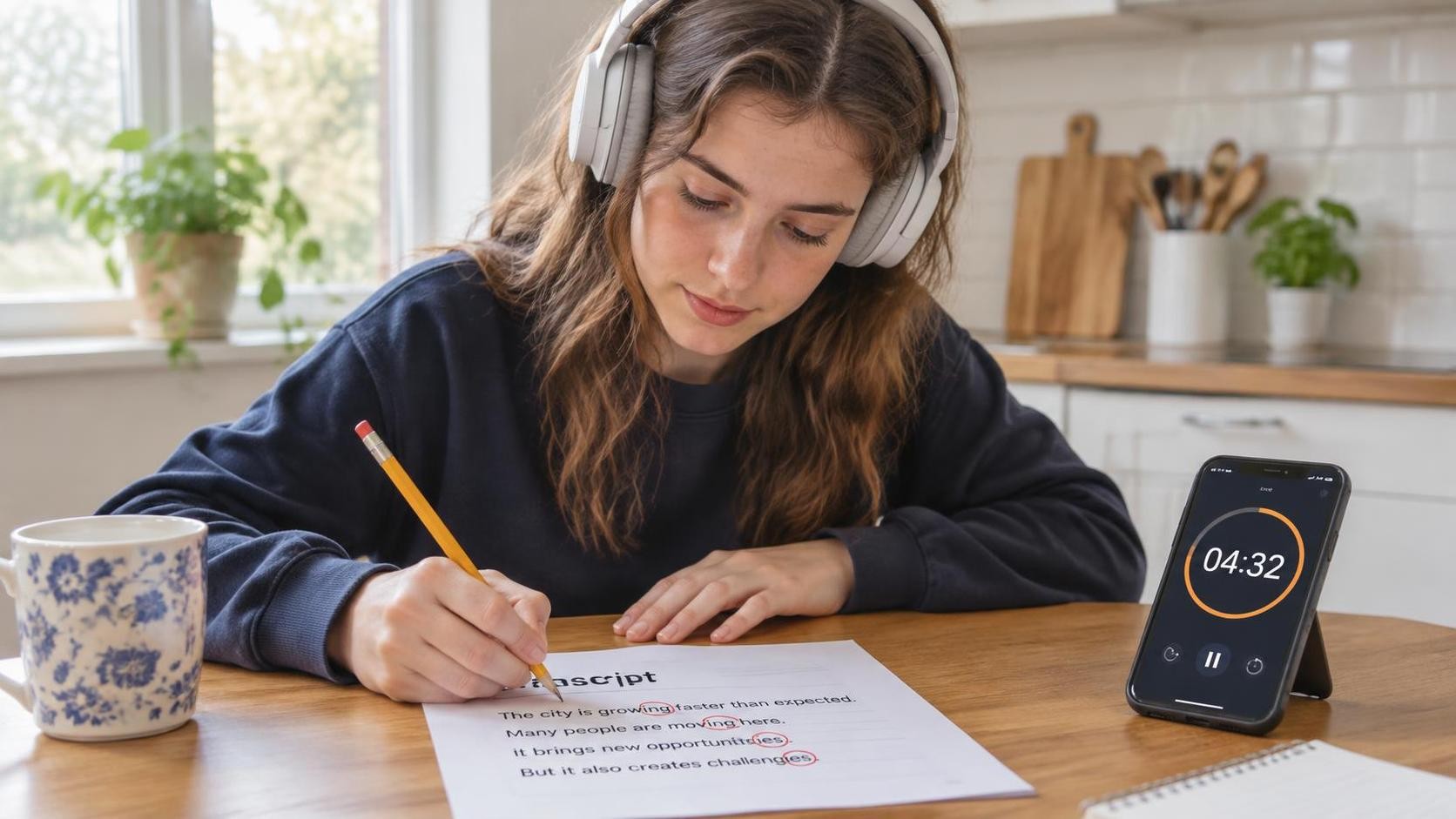
A simple pattern works well: one episode with subtitles on, one question afterwards, and no quiz. The question does not need to be academic. Asking which character was most annoying, or which guess was closest, is enough to produce three or four sentences of English, and those sentences are the actual practice.
For children who dislike being corrected, a parent can repeat the child's idea back in a slightly cleaner form instead of flagging the error. The child hears the fixed version, the conversation continues, and nobody loses face. ListenLeap's tap to define feature covers the moments when a word blocks comprehension, which keeps the flow going without turning the evening into a lesson.
What a Month of This Actually Changes
After four weeks of two or three episodes a week, most children notice three small shifts. Familiar phrases arrive faster, especially the catchphrases that shows repeat. Accent imitation gets more accurate, because the ear has had practice. And retelling improves, since the child has heard the same story structure modelled many times.
None of that requires a curriculum. It requires a speaker, a short list of shows that respect a child's intelligence, and an adult willing to ask one curious question instead of ten test questions. The five shows above cover cooking, folklore, trivia, comedy, and mystery, which is enough variety to keep a family listening long after the novelty of a new app has worn off.
Comments
No comments yet.
Leave a Comment