

Many B1 learners can read English well and still lose the thread of a fast English podcast after a few seconds. The problem is rarely vocabulary alone. It is speed, connected speech, and the habit of reading words one by one instead of hearing them as sound groups. This guide solves one specific problem: how to shadow a fast English podcast when speed, not grammar, is the real blocker. The routine below takes about ten minutes a day and fits learners at B1 and above who already understand simple sentences but struggle with natural spoken English. After a few sessions, a learner can expect steadier listening, better rhythm, and the ability to say longer chunks without stopping.
The method is built around one real, verifiable podcast: BBC Learning English "6 Minute English". Each episode runs about six minutes, uses British English at a natural, fairly fast pace, and comes with a free transcript on the official BBC Learning English page. The episode length is the point. Six minutes is short enough to repeat and long enough to expose a learner to real connected speech. Because the transcript is official and free, a learner can check every line without guessing.
What to Prepare Before the First Session
Pick one episode that fits the level
BBC Learning English "6 Minute English" is a strong fit for this routine. Every episode runs roughly six minutes, the speakers use a natural British English pace, and the full transcript is free on the official BBC Learning English website. A learner should pick one episode on a topic that is at least slightly familiar. Familiar topics matter because they free up attention for sound instead of meaning. When a topic is completely new, the brain spends its energy decoding ideas and ignores rhythm and stress. The learner should note the episode title and keep the official transcript open in a second window or on a phone.
Set up three simple tools
- Headphones, so small sound details stay audible.
- A player that can run at 0.75x and at 1.0x speed.
- The official transcript page for the chosen episode.
Speed control is not optional. The routine starts slower than normal and returns to full speed at the end. Without a slower setting, a B1 learner often fails at pass three and gives up.
Block ten minutes
The routine is fixed in length. Ten minutes keeps the habit realistic on a busy day. A learner who tries to stretch the session to thirty minutes often quits within a week.
The Core Method: One Episode, Four Passes
The routine always follows the same four passes in the same order. Skipping a pass weakens the next one, so the order should stay fixed even when the episode feels easy.
Pass 1: Blind listen without the transcript
Play the full episode once from start to finish at normal speed, with no transcript and no pausing. The goal is not full comprehension. The goal is to catch the topic, the speaker's mood, and any words that repeat. Many learners understand about half on the first pass, and that is normal. The key instruction is to resist the urge to stop. Pausing trains translation. Finishing trains the ear to keep up with a fast stream.
Pass 2: Read the transcript and mark the gaps
Open the official transcript and play the episode again. This time, follow the text and mark every place where the spoken sound did not match the written word. Typical gaps come from dropped sounds, blended words, and weak syllables. Realizing that a common phrase can sound like one blurred unit is more useful than memorizing a fresh word list. This pass answers the central question of why a fast podcast feels fast. The cause is usually connected speech, not only the speed number.
Pass 3: Shadow the audio line by line
Shadowing means speaking at the same time as the recording, a beat behind it, copying rhythm, stress, and melody instead of reading aloud. Start with a short slice of audio, about five to eight seconds. Use the 0.75x setting until the mouth can follow, then return to 1.0x. Shadow the same slice three times. The first attempt is usually rough. The second begins to lock in the rhythm. The third shows which sounds the learner still cannot produce. This is the step that most people skip, and it is the step that builds spoken fluency.
Pass 4: Retell the episode in own words
Close the transcript, set the audio aside, and retell the main points out loud in simple sentences for about one minute. The retell is not a memory test. It is a bridge between listening and speaking that forces the brain to reuse the exact phrases just shadowed. A learner who can retell a six minute episode in about sixty seconds is ready for a new episode.

Three Pronunciation Points to Watch
Point one: linking between words
In connected English, a final consonant often joins the first vowel of the next word. Inside fast speech, two separate words can merge into one continuous sound. Listening for these joins explains why isolated words sound different inside a sentence, and it reduces the feeling that the speaker is hiding words.
Point two: the schwa and weak forms
Small function words such as "of", "to", and "for" are usually reduced to a soft, unclear vowel. A learner who searches for the full, clear pronunciation of every word will fall behind a fast speaker. Training the ear to accept weak forms is essential, and shadowing is one of the fastest ways to build that tolerance.
Point three: sentence stress and melody
English marks meaning with stress rather than with an even tone on every syllable. When a speaker pushes one word, that word carries the message. Shadowing teaches where the beat lands, which in turn makes speech easier to understand and easier to produce.
Self-Assessment Table
| Item | What to check | Weak | Okay | Strong |
|---|---|---|---|---|
| Blind listen | Topic and repeated words understood | Only topic clear | Topic and one word clear | Topic and repeated words clear |
| Transcript pass | Gap between sound and text marked | Few gaps marked | Some gaps marked | Most gaps marked |
| Shadowing | Rhythm copied at full speed | Only at 0.75x | Partly at 1.0x | Fully at 1.0x |
| Retell | Episode retold in about 60 seconds | Under three points | Three or four points | Five clear points |
| Consistency | Sessions completed this week | One day | Three days | Five days |
Any row marked "Weak" points to the pass that needs one extra repeat the next day. The table is meant to guide the next session, not to grade the learner.
Common Mistakes to Avoid
- Skipping the blind listen because the transcript feels safer. The blind pass builds tolerance for uncertainty, and the transcript pass cannot replace it.
- Shadowing too long a segment. A ten second slice usually collapses into reading, while a five second slice stays a listening and speaking task.
- Reading the transcript while shadowing. The eyes pull the brain back to spelling, and the ear stops doing the work.
- Treating the retell as optional. The retell is where fresh phrases move from short term use into active speech.
How to Repeat Without Burning Out
The routine is short on purpose. One episode can be reused for two or three days before moving on. Repeated episodes often teach more than fresh ones because the sound becomes familiar and the learner can aim for cleaner production. A steady weekly rhythm is five sessions of about ten minutes, with one longer session at the weekend that adds a second episode. The habit matters more than the volume. Learners who try to finish a new episode every single day often trade accuracy for speed and stop noticing details.
One App That Fits This Routine
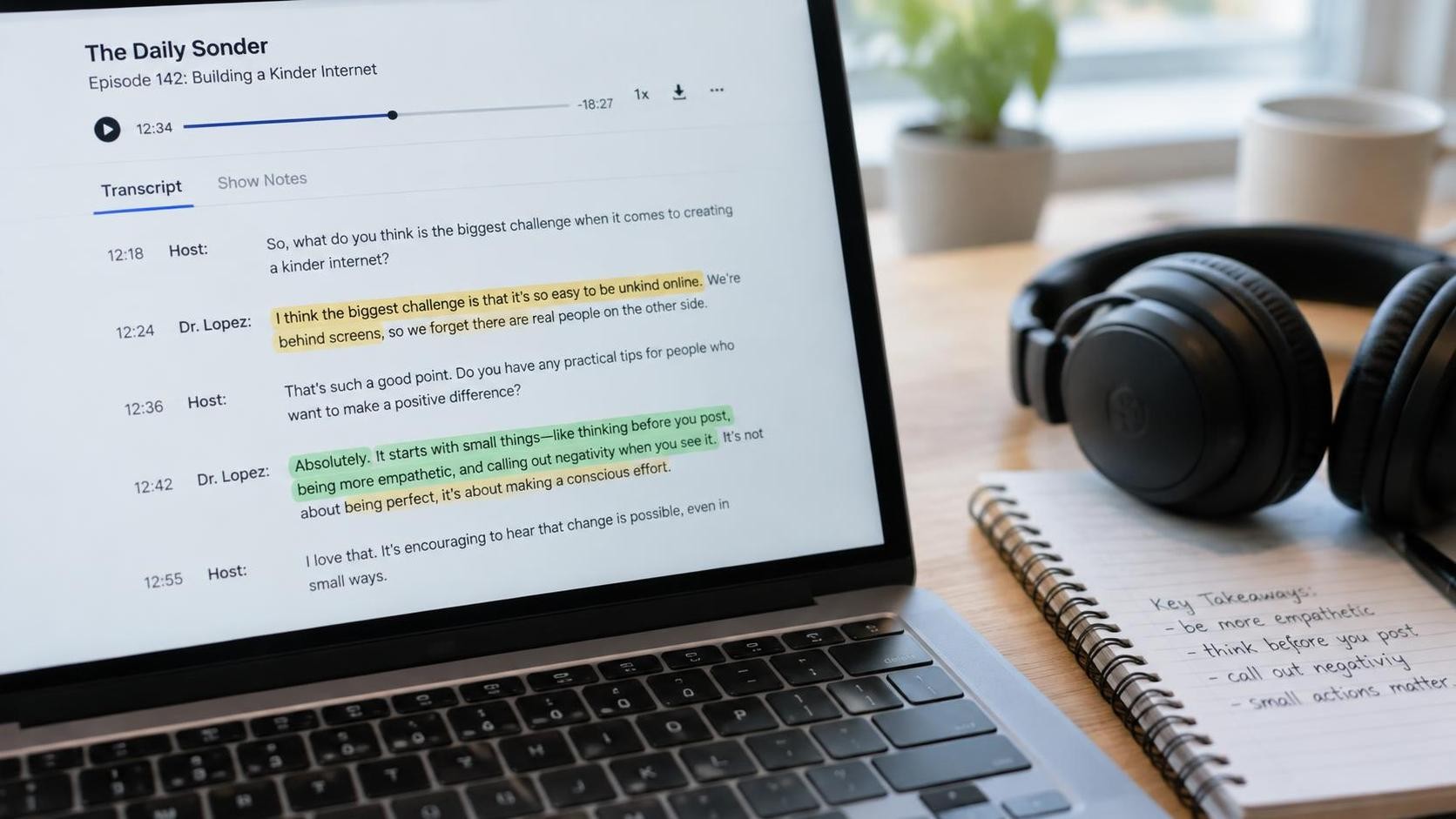
After the four passes feel natural, some learners want a single player that keeps audio and transcript together instead of switching between two windows. ListenLeap (listenleap.com) offers English podcasts and videos with transcripts that follow the audio, together with adjustable speed, so a learner can move between listening and shadowing on one screen. It suits learners who already follow the four pass method and want the tools in one place. It does not suit absolute beginners who still need direct teacher feedback, and it does not replace the retell step, which must stay spoken and unscripted.
Closing Note
A fast English podcast is not a wall. It is a set of skills that grows with short, repeated contact. Ten minutes, four passes, and one honest self check table are enough to turn scattered listening practice into a routine that a learner can keep, week after week.


Comments
No comments yet.
Leave a Comment