
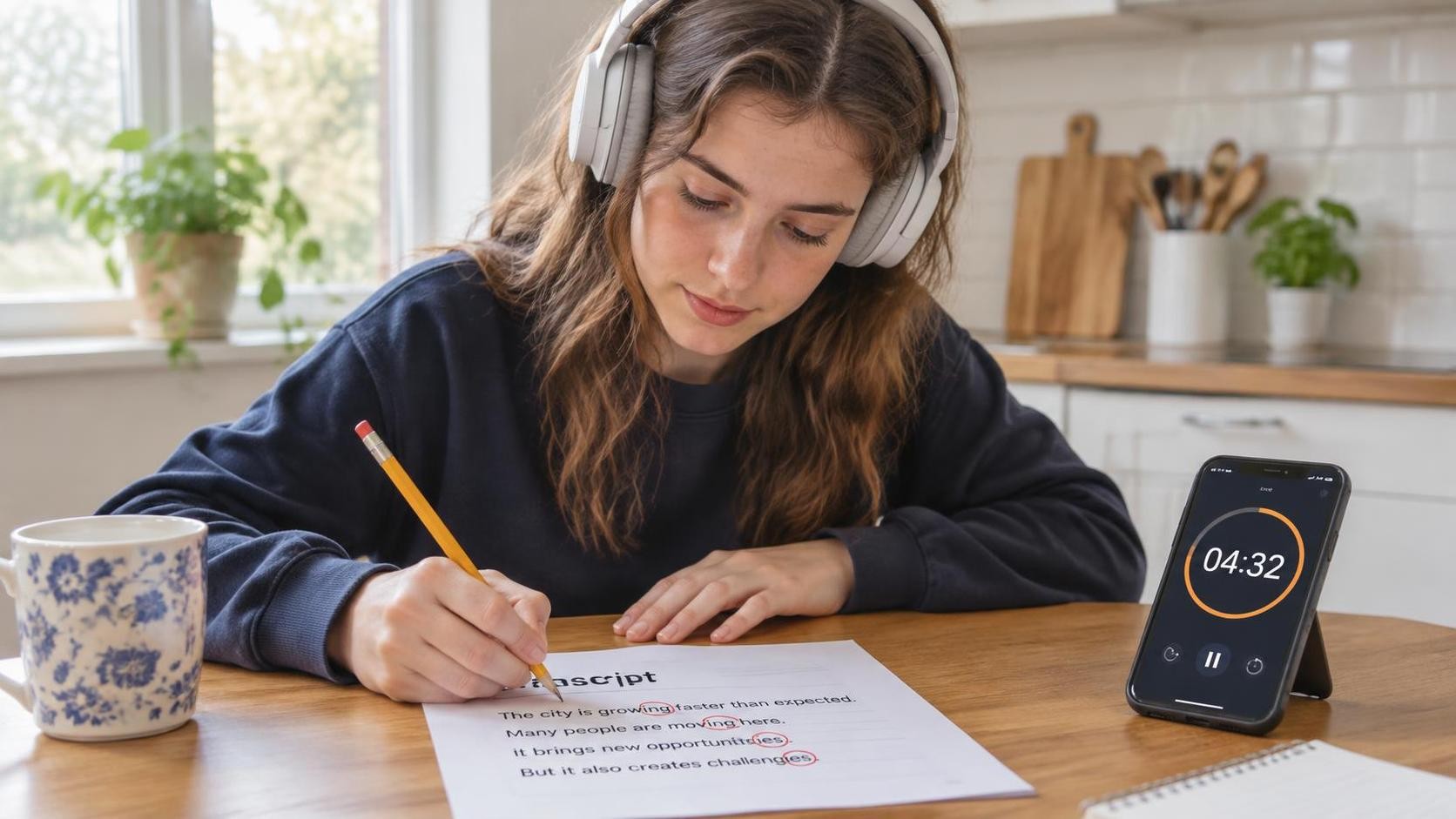
A ninety-second podcast clip can be enough to fix one repeated pronunciation problem. This guide uses a short segment from BBC Learning English's 6 Minute English to train three word endings that B1 learners often drop: past-tense -ed, plural and third-person -s, and final consonant clusters. The session takes about fifteen minutes and follows four passes: listening for endings without text, marking them in the transcript, shadowing the clip slowly, and recording a short retell. It is written for learners who can follow clear speech on familiar topics but whose own speech loses endings, so "asked" becomes "ask" and "books" becomes "book". The outcome is not a new accent. The outcome is grammar that can be heard.
Why Endings Matter More Than Speed
English carries a lot of grammar at the end of words. A past tense can be one sound: "walk" becomes "walked". A plural can be one sound: "book" becomes "books". A third-person verb adds the same kind of sound: "need" becomes "needs". When those sounds disappear, the listener loses information and has to guess from context. Fluent speakers also reduce endings, but they do it selectively. A learner who drops every ending sounds less precise than a speaker who keeps the important ones.
Shadowing helps because it links hearing and production in real time. The learner cannot plan the ending while speaking; the ending has to arrive with the phrase. That is the skill this drill builds. The clip is short so the same endings repeat, and the transcript makes the target visible before the mouth has to produce it.
The Clip: One Show, One Segment, Ninety Seconds
The source is BBC Learning English's 6 Minute English, a free show with two studio hosts, British accents, and a transcript on each episode page. Episodes run about six minutes and use clear, moderated conversation, which places the show near B1 to B2 for listening. The transcript is the reason to use it here: without a reliable text, the marking pass becomes guesswork.
Use the latest published episode. The topic does not matter, because the target is endings, not vocabulary. Take a ninety-second segment that starts at the host's first question and runs through the first answer, usually somewhere between 0:40 and 2:10. Check that the page shows a transcript before starting. If the text is missing, or if the episode is thin on past tense, choose another episode rather than stretching the drill.
What to prepare
Write a small legend on paper:
- underline for -ed
- circle for plural or third-person -s
- box for a final cluster of two or more consonants
The legend matters. A learner who tries to mark everything at once will mark nothing well.
Pass 1: Listen for Endings, Not Meaning (3 minutes)
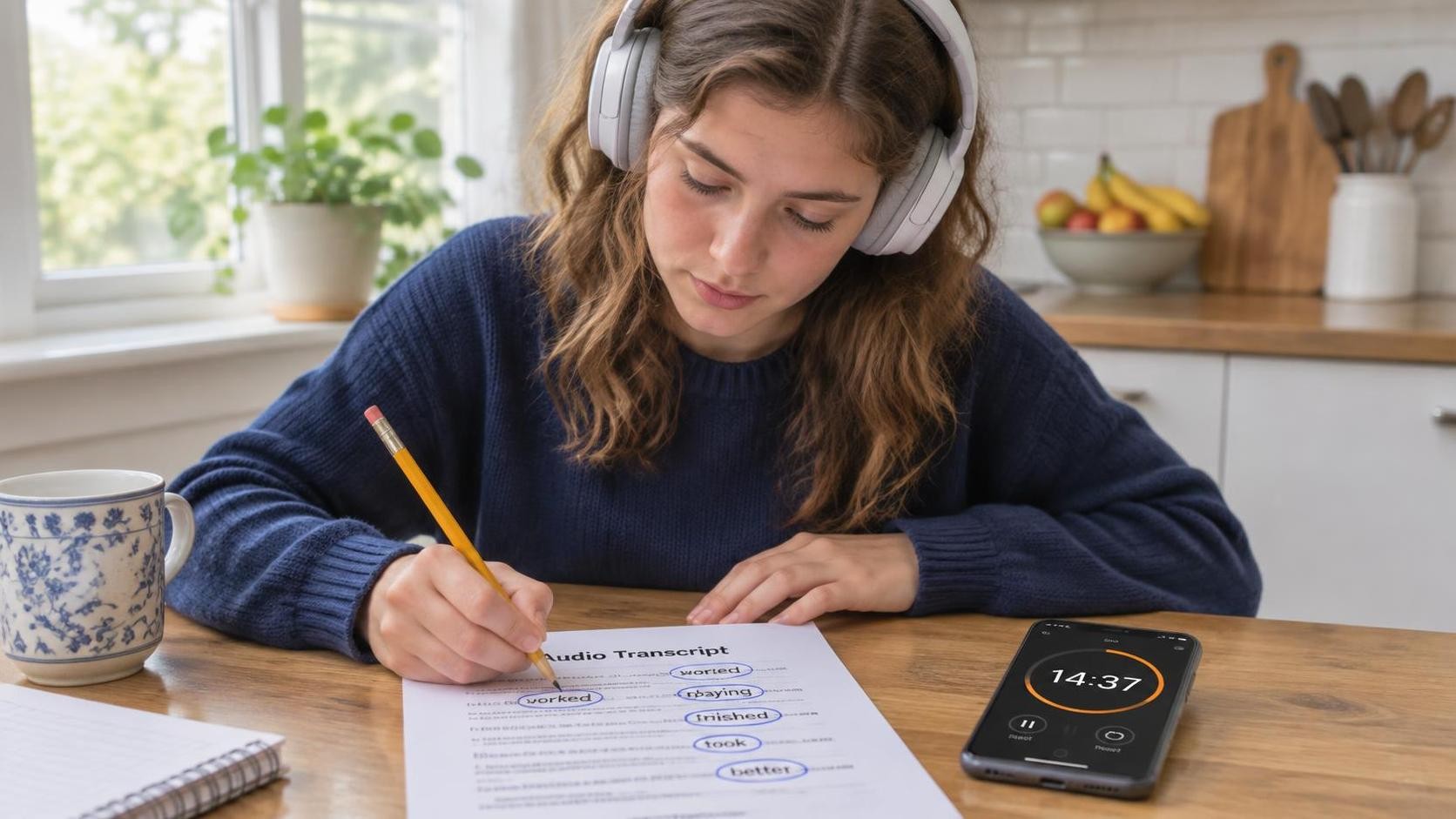
Play the segment twice with no transcript and no pauses. The task is not to understand every word. The task is to notice endings. On the first listen, make a dot on paper for every ending that is clearly audible. On the second listen, raise one finger each time a past-tense ending sounds like /t/ or /d/. Do not rewind in the middle of a sentence. If attention drifts, let the sentence go and rejoin at the next one.
The first count is often low. That is not a grade. Content words usually arrive first and endings last, so the ear needs a second pass with a clear target. The same audio usually produces more marks the second time because the brain now knows what to listen for.
Pass 2: Mark the Transcript (4 minutes)
Read the transcript while the segment plays once at normal speed. Mark no more than twelve endings. The limit is deliberate: twelve marks can be reviewed and practiced, while sixty marks become a coloring exercise. Choose the endings that carry meaning: past-tense verbs, plural nouns, and third-person verbs.
Sorting the -ed words
Sort the marked -ed words into three columns:
| Sound | Rule | Examples |
|---|---|---|
| /t/ | after a voiceless sound | asked, finished, watched |
| /d/ | after a voiced sound | played, listened, called |
| /ɪd/ | after /t/ or /d/ | wanted, needed, started |
The third column causes the most damage. Many learners add /ɪd/ to every -ed word, so "asked" becomes two syllables. The rule is narrow: /ɪd/ appears only when the base verb already ends in /t/ or /d/. "Asked" ends in /k/, so the ending is /t/ and the word stays one syllable. "Started" ends in /t/, so the ending adds a syllable.
The same logic for -s
The ending -s follows the same voicing pattern. After a voiceless sound, it is /s/ (books, cats). After a voiced sound, it is /z/ (dogs, plays). After a sibilant, it is /ɪz/ (buses, watches, boxes). Marking the three groups separately makes the pattern visible.
Pass 3: Shadow the Endings (5 minutes)
Set the player to 0.75 speed. Work through the segment phrase by phrase, not word by word. Keep the mouth moving even when the phrase is not perfect.
The end-first step
For each phrase, say only the final word with the audio, then say the whole phrase with the audio. For example, hear "the programme asked six people", say "people", then say the full phrase while the audio plays. Repeat each phrase two or three times. This step puts the ending in the ear before the full sentence arrives.
After the phrase work, shadow the full ninety seconds at 0.75 speed twice, then once at normal speed. Stay about half a second behind the speaker. If the audio gets ahead, do not stop and restart; rejoin at the next phrase. Stopping breaks the timing that shadowing is meant to train.
The physical cue
Tap a finger on the desk when an ending lands. The tap gives the ending a beat and makes a dropped /t/ or /z/ easier to notice. Exaggerate the final consonant at first. "Ask" becomes "ask-t", "book" becomes "book-s". The exaggeration is temporary; it teaches the mouth where the sound belongs. At normal speed, the ending returns to its natural size.
Pass 4: Record a Short Retell (3 minutes)
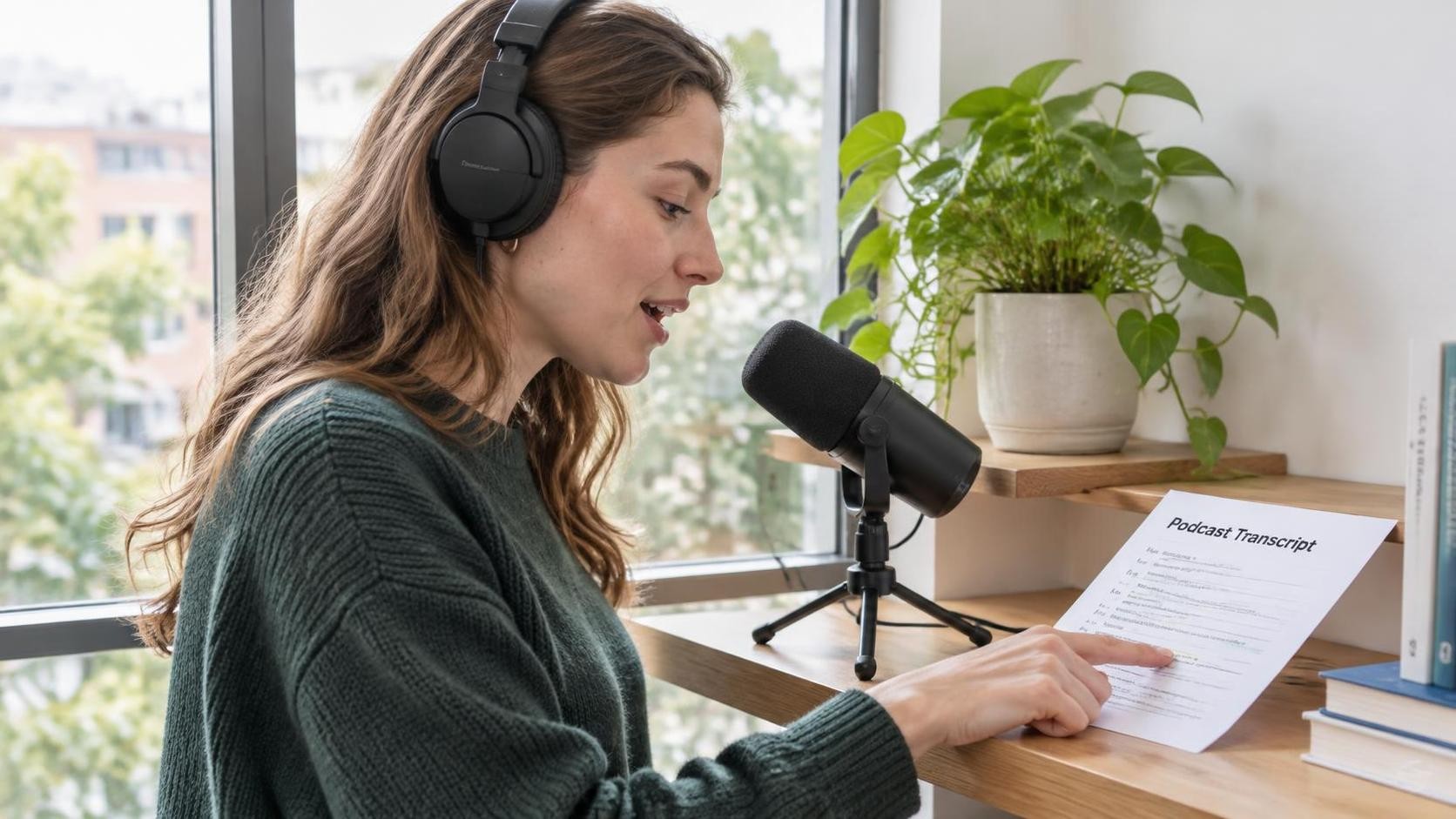
Close the transcript and the player. Record a sixty-second summary on a phone. Use the past tense and include at least five -ed verbs and five plurals. A simple frame works: "The episode asked... The host mentioned... The guest explained... Two examples showed..." The content can be rough. The grammar targets are the point.
Listen to the recording once. Do not fix anything during the first listen. On the second listen, count three things: extra syllables after -ed, missing plural endings, and clusters that turned into two syllables. Write the counts down. This is the only feedback loop in the session, and it is enough for one day.
Three Rules to Carry Into the Next Session
- -ed has three sounds: /t/, /d/, and /ɪd/. The /ɪd/ form is the exception, not the default.
- -s has three sounds: /s/, /z/, and /ɪz/. Voicing decides the first two; a sibilant decides the third.
- A final cluster keeps its consonants. "Texts" ends with four consonants in a row, and "months" keeps /nθs/ at the end. Inserting a vowel between consonants makes the word easier to say and harder to recognize.
Self-Assessment
Score each row from 1 to 3 after the recording.
| Skill | 1 point | 2 points | 3 points |
|---|---|---|---|
| Hearing -ed | endings blur together | two of the three sounds are clear | all three are clear at normal speed |
| Producing -ed | adds /ɪd/ to most words | correct after /t/ and /d/, unsure elsewhere | correct in slow phrases |
| Plural -s | the ending is often dropped | /s/ and /z/ appear, /ɪz/ is missed | all three sounds appear in the retell |
| Final clusters | adds a vowel inside the cluster | keeps clusters in slow speech | keeps clusters at normal speed |
| Retell | reads notes and stops | three sentences with some targets | five sentences with five -ed verbs and five plurals |
A total of 5 to 8 points means the clip should be repeated. A total of 9 to 12 means one more session with the same clip, then a new one. A total of 13 to 15 means the learner can move on.
When to Repeat the Same Clip
Repeat the clip for three sessions before changing it. The first session builds recognition, the second builds timing, and the third builds independence. Change the clip when the self-assessment reaches 12 or more and the retell needs no notes. Keep one old clip in a weekly review: shadow it once at normal speed and check whether the endings still hold.
This schedule is deliberately small. Fifteen minutes, three times a week, is easier to repeat than a long session that happens once.
Common Mistakes
- Marking every ending in the transcript. Twelve marks are enough.
- Shadowing at normal speed before the phrases are clean.
- Adding /ɪd/ to every past tense.
- Practicing single words instead of phrases.
- Chasing a British accent instead of keeping the grammar sounds.
Where ListenLeap Fits
ListenLeap (listenleap.com) is a real-world English learning platform built around podcasts and YouTube videos, with bilingual subtitles and AI explanations. In this routine, it fits the transcript pass: the learner can hear a line, read the subtitle, and check an unknown phrase without leaving the audio. It suits learners who want authentic speech with support close at hand, especially on a phone. It is not a replacement for a teacher who can hear the learner and correct an ending in real time. The recording and the counting stay with the learner.
A Note on Progress
Endings improve slowly because they are small, fast, and easy to skip. A learner may hear the difference in a recording before friends do. That is normal. The useful signal is the count: more endings heard in pass one, fewer extra syllables in pass four. Track those two numbers across four weeks and the direction will be clear.


Comments
No comments yet.
Leave a Comment