

For a B1 learner who can follow a slow English podcast but falls apart when the same content is spoken at natural speed, the usual instruction to repeat each sentence is the wrong unit. Spoken English is built from breath groups, short stretches of words delivered on one breath, often five to nine words long. A sentence may contain two or three of them, and the speaker pauses inside the sentence rather than at the full stop. This session takes 25 minutes and turns one 60-second podcast segment into a shadowing drill built on those groups. By the end, the reader should have a marked transcript, a recorded full shadow, and a one-minute retell that holds together without the script.
The Unit Problem: Sentences Are Written, Breath Groups Are Spoken
Most shadowing instructions tell a learner to play one sentence, pause, repeat it, then move on. That works for short, scripted sentences. It fails on conversation, because speakers do not pause where the punctuation is. A 16-word sentence may arrive in three bursts, with the first pause landing after the subject and the second in the middle of a prepositional phrase. A learner who waits for the full stop stores the sentence as a written string, then tries to reproduce it at speaking speed. The result is a rushed, flat delivery that sounds nothing like the recording.
A breath group is the stretch of speech a speaker produces between two audible pauses. In everyday English conversation, groups usually run from five to nine words. The boundaries carry meaning: they separate ideas, mark emphasis, and give the listener time to process. Shadowing at those boundaries keeps the learner inside the same rhythm as the speaker, which is the point of the exercise.
The session below is aimed at B1 learners who understand a graded listening text but lose words when the same content is spoken at natural speed. The goal is not to memorise the clip. The goal is to finish with a marked script, a clean shadow of the whole segment, and a retell that can be delivered without reading.
Choosing a Clip That Can Be Shadowed
The source
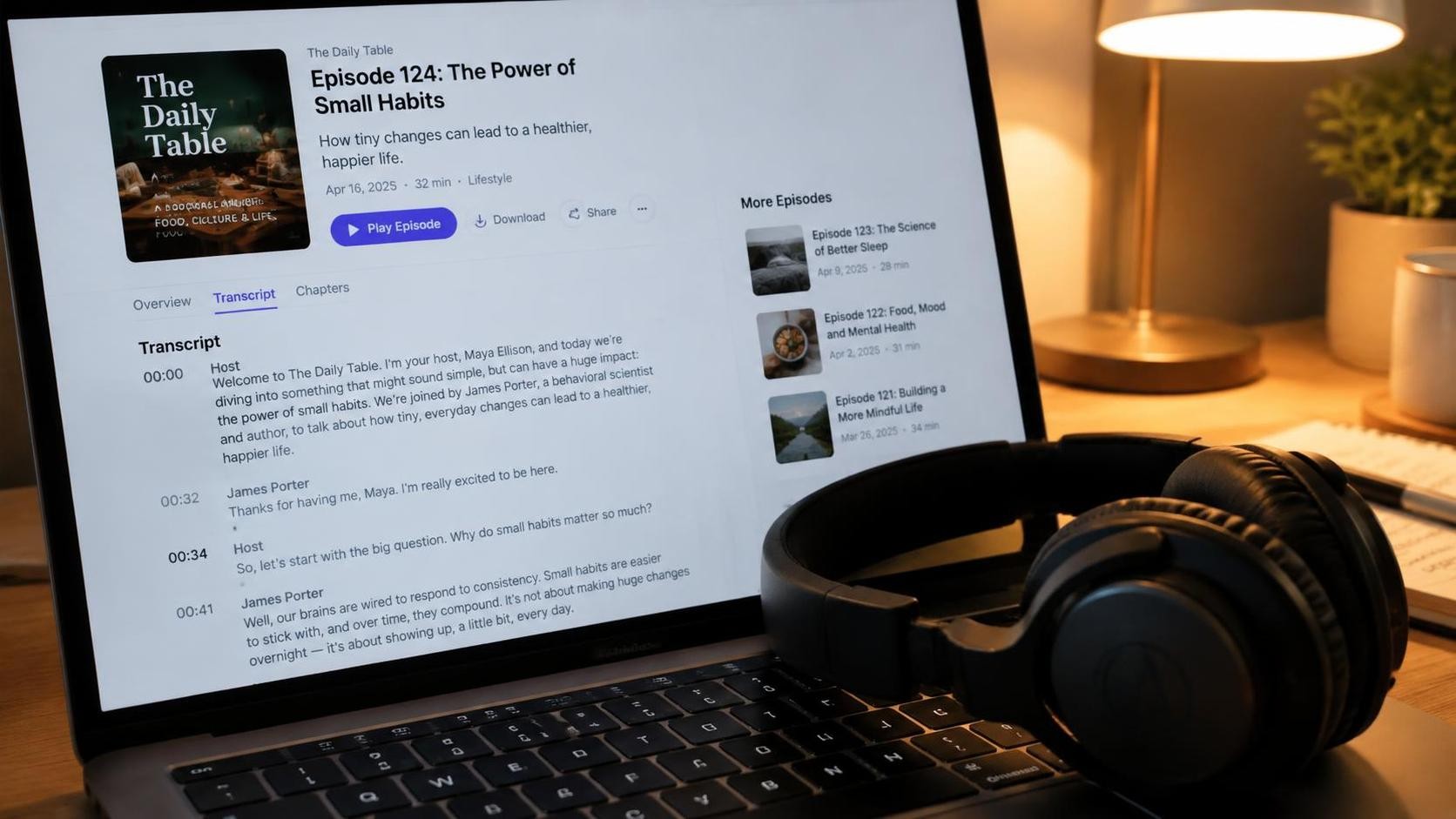
A reliable starting point is 6 Minute English from BBC Learning English. Each episode runs about six minutes, the presenters speak at normal conversational speed rather than in a slowed learner register, and the accents are British, with guest voices that vary by episode. The transcript is published on the episode page, so the words can be checked rather than guessed. Any recent episode works, but the topic should be concrete: sleep, food waste, city transport, or a similar everyday subject. Abstract episodes about economics add vocabulary load that distracts from rhythm work.
The segment
Do not shadow the opening. The first thirty seconds usually contain music, a welcome line, and a preview of the topic, all delivered in a performance voice. Move to the first exchange between the presenter and the guest, then take 45 to 75 seconds from the middle of that exchange. A segment of this length contains roughly eight to twelve breath groups. Longer clips dilute the repetition; shorter clips do not give enough context for the retell.
Before starting, confirm three things on the page: the transcript is present in full, the audio matches the transcript, and the chosen segment has no overlapping laughter, music, or crosstalk. If any of those fails, pick another episode. A clip that cannot be checked cannot be marked.
Pass 1: Blind Listening and Pause Counting
Play the segment once without the transcript and without pausing. The task is narrow: count the pauses. Put a finger down each time the speaker takes a clear breath or leaves a gap of about half a second. Most learners count four or five pauses on the first try and miss two or three.
Play it a second time and count again. The number should settle. This step trains the ear to hear boundaries as events rather than as gaps in understanding. No words need to be caught. If the pause count is still unstable after two plays, the clip is too fast or too long for this session, and a shorter segment is the better choice.
Pass 2: Transcript Work and Marking
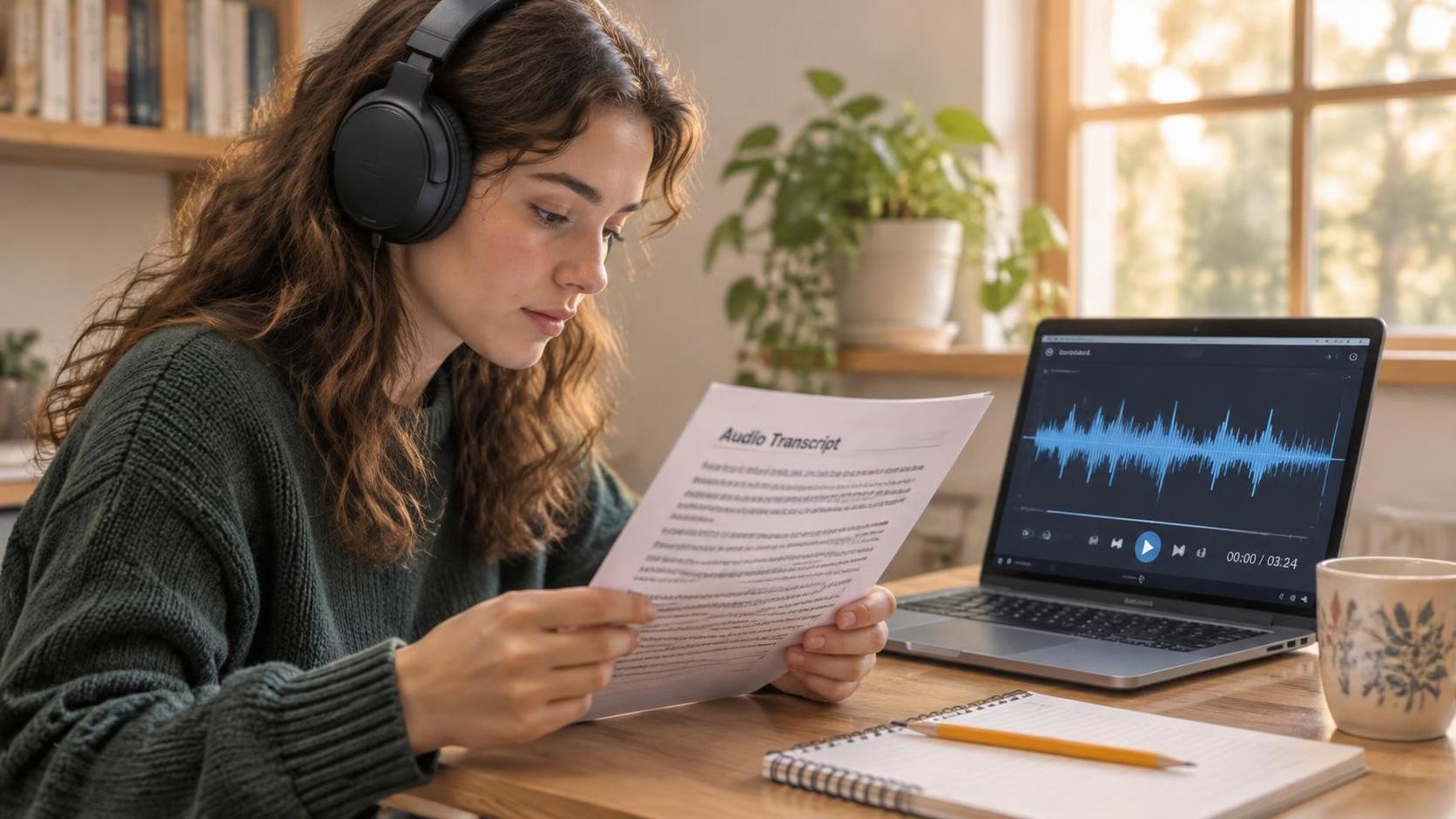
Open the transcript and read the segment while listening a third time. Mark a single slash at every pause that was counted in pass 1. Mark a double slash at the end of a speaker turn. The marks should follow the audio, not the punctuation. A comma in the transcript may pass without a pause, and a pause may appear where there is no punctuation at all.
A marked line looks like this. The example is invented and only shows the notation:
示例: "The thing is / most people start too late // and then they blame the app / instead of the schedule //"
Read the marked line aloud once, breathing only at the slashes. If a group feels too long to say on one breath, a slash was missed. If a group feels like two separate ideas, a slash was placed too late. Adjust the marks until each group can be spoken comfortably in one breath. This adjusted transcript is the working script for the rest of the session.
Pass 3: Shadowing Group by Group
Shadowing means speaking along with the audio, a half second behind the voice, without stopping. It is not repetition after a pause. The first attempts will be messy, and that is expected.
Start with two groups
Play the first two groups on a loop, about ten seconds of audio. Speak along with them until the words arrive without a search. Do not slow the audio at this stage. Slowing changes the vowel length and the linking, which are the features being practised. If the two groups are still impossible after five loops, cut the loop to one group.
Add groups in pairs
Once two groups are clean, add the next two. The join between group two and group three is the difficult part, because the speaker may link the final consonant of one group into the first vowel of the next, even across a pause. Practise the join on its own before running the four groups together.
Run the full segment
Play the whole 45 to 75 seconds and shadow from start to finish without stopping, even when words are lost. Losing words is information: the lost stretch marks a group that needs another loop. Run the full segment three times. On the third run, record the audio on a phone. The recording is not for posting. It is for comparing pause placement with the original.
Pass 4: Retell Without the Script
Put the transcript face down. Retell the segment in one minute, using the same breath groups as anchors. The retell does not need the original wording. It needs the same sequence of ideas and a similar pace. A retell that speeds up and flattens at the end usually means the last two groups were never stable.
Finish by playing the original once more and listening only for the pause pattern. If the pauses now sound obvious, the session did its job.
Three Details That Decide Whether It Works
1. Weak forms inside the group
Inside a breath group, function words compress. "Of" becomes a schwa, "to" loses its vowel, "and" drops to a nasal sound, and "can" loses its vowel when it is not stressed. A learner who pronounces each word fully will run out of breath before the pause and will sound slower than the recording even when the speed matches. Mark the weak forms in the transcript with a small dot, then say the group with those words reduced.
2. Linking at the edges
Words inside a group connect. A final consonant moves onto the next vowel, so "start it" sounds like "star tit" and "an hour" sounds like "an nour". The link is strongest inside a group and weaker across a pause. Practising the edge between two groups separately is what makes the full shadow sound continuous rather than chopped.
3. Pitch reset after the pause
Each new group usually starts on a slightly higher pitch, then falls. The reset is the audible sign that a new idea has begun. Learners who keep a flat pitch through the pause sound robotic and lose the listener. Copy the reset deliberately on the first group of each pair, then let the rest of the group fall naturally.
Useful group starters to listen for include "the thing is", "to be fair", "the point is", and "you know". They are often delivered as their own short group, and they carry the pitch reset clearly.
Self-Assessment After One Session
Score each row from 1 to 5. A total below 15 means the next session should reuse the same clip rather than move to a new one.
| Check | 1 point | 3 points | 5 points |
|---|---|---|---|
| Pause count | Count is unstable after two plays | Count settles on the third play | Count matches the marked transcript |
| Group length | Groups run past one breath | Most groups fit one breath | Every group fits one breath |
| Joins | Stops between groups | Joins two groups cleanly | Runs four groups without a stop |
| Full shadow | Loses more than half the words | Loses isolated words | Finishes with the pause pattern intact |
| Retell | Reads from memory of the script | Retells with gaps | Retells in one minute with the same groups |
When This Method Is the Wrong Tool
Breath-group shadowing assumes the learner can already decode most of the clip. For someone below A2, or for a clip where fewer than half the words are recognisable, dictation of two or three groups is the better first step. The same applies to episodes with heavy crosstalk, laughter, or background music, where the pauses are unreliable.
For learners who want the audio and the transcript in one place, ListenLeap (listenleap.com) offers podcasts with bilingual subtitles and AI explanations, which removes the app switching between listening and checking. It fits a learner who has already marked a segment and needs repeated playback. It does not replace the marking work, and it will not fix a clip that is simply too far above the current level.
A Note on Reuse
One clip can carry three sessions. The first session marks and shadows it. The second session, a day later, runs the same four passes without re-marking, which tests whether the pause pattern held. The third session uses the retell only, then moves to a new clip. Rotating clips every day produces variety but weak retention. Reusing one clip three times produces the repetition that shadowing depends on.



Comments
No comments yet.
Leave a Comment