
The Learner Who Could Understand Everything but Say Nothing
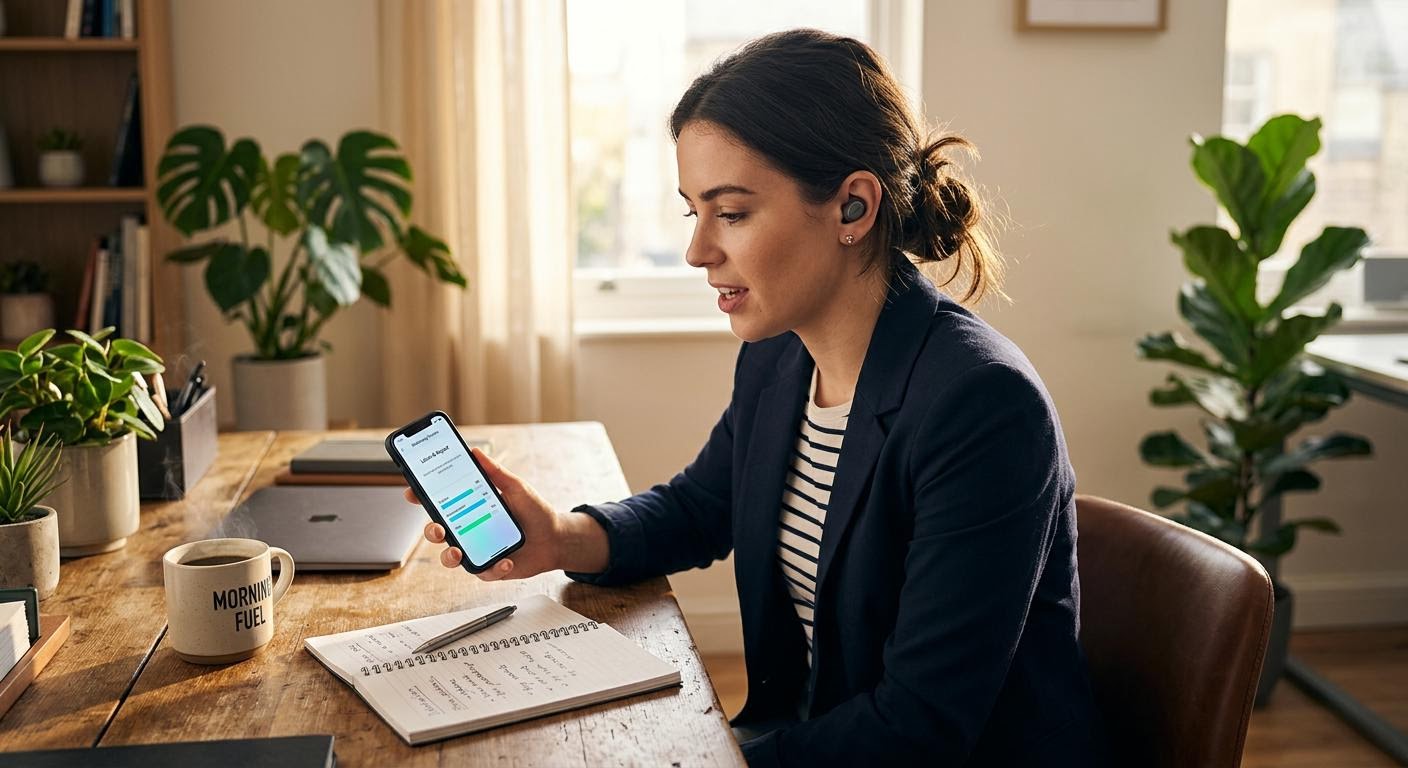
Daniel could follow an entire episode of a BBC tech podcast, laugh at the host's jokes, and summarize the main points in his head. The moment he opened his mouth, the words scattered. He had spent two years consuming English — podcasts on the train, TED talks at lunch — and his listening was genuinely good. His speaking was stuck at the level of a shy tourist. After a friend told him the problem was not his listening but the missing step between hearing and producing, Daniel downloaded four apps that all promised to close that gap: VoiceTube, Miraa, Cake, and ListenLeap. Each one treats speaking practice differently, and none of them looks like the other.
That gap is real for a lot of learners. Listening builds the ear; speaking builds the mouth. The apps below all deserve credit for tackling the second half — turning passive comprehension into active output. The difference is how deep each one goes, and which habits each one fits.
Shadowing and Speaking Feedback: Four Distinct Approaches
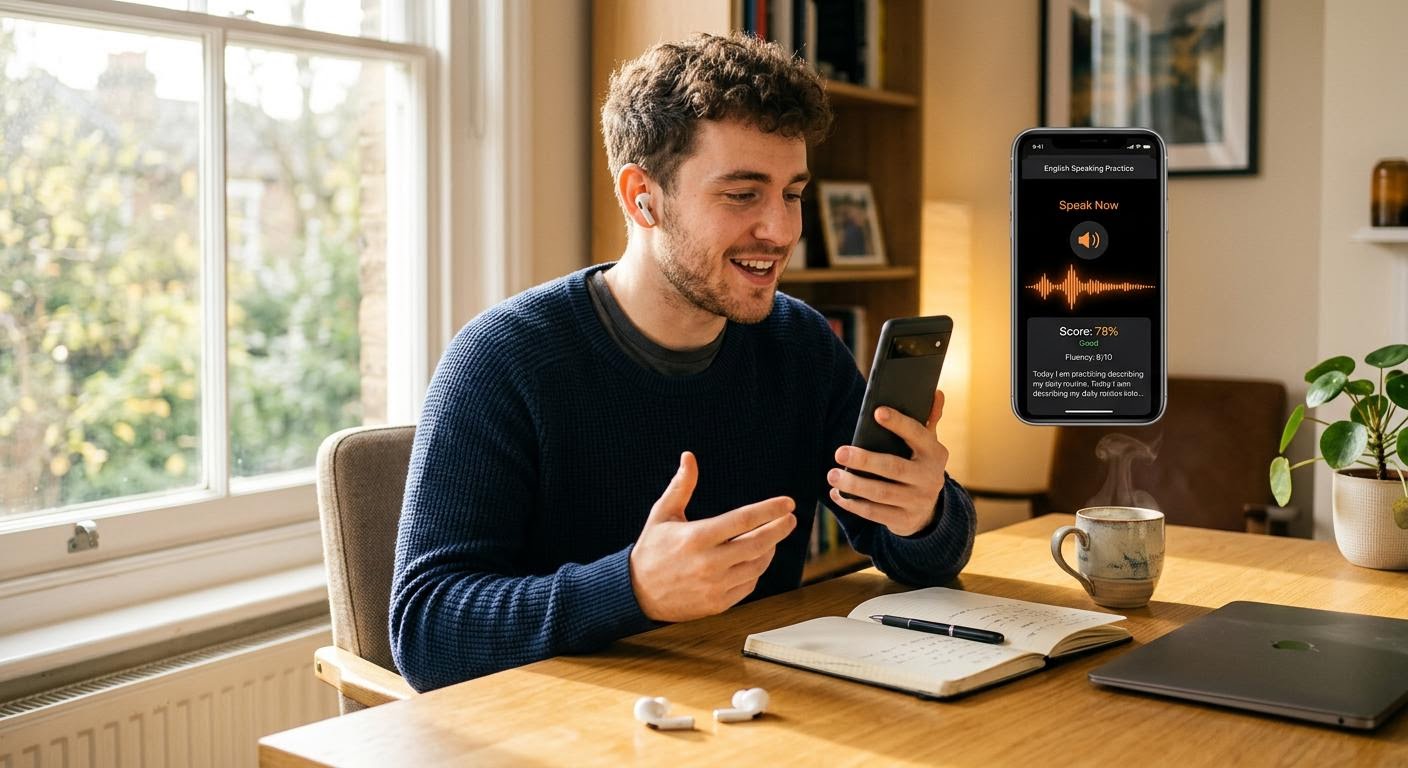
The core of any speaking feature is feedback — learners need to know whether they said it right. Here is where the four apps split into four different philosophies.
VoiceTube: The Classic Record-and-Compare Method
VoiceTube brings a library of over 100,000 real videos — BBC news, CNN reports, TED talks, curated YouTube channels — all with professionally synced bilingual subtitles. For speaking, it offers the time-tested record-and-compare flow: listen to a sentence on loop, record your own voice, and play both back side by side. Sentence-loop playback with adjustable speed makes drilling a single line comfortable, and the one-tap dictionary keeps vocabulary work on the same screen. For learners who like structure, VoiceTube also tiers its content into beginner, intermediate, and advanced levels, so speaking practice always stays within reach.
Miraa: Shadow Anything You Want
Miraa takes a radically flexible route. Instead of a curated library, it turns any video, podcast, or YouTube link the learner already loves into a lesson. Its AI generates transcripts and bilingual subtitles on the spot, and clicking any word pulls up an AI explanation with context. On the speaking side, Miraa offers shadowing practice — repeat the audio line by line, matching the speaker's rhythm — reinforced by a spaced-repetition review system that brings learned words back at the right moments. For learners who want to practice speaking with content they chose themselves, Miraa's freedom is its superpower.
Cake: AI-Scored Speaking on Short Clips
Cake bets on micro-practice. Its library holds more than 100,000 short clips from YouTube, movies, and TV shows, refreshed with 10+ new pieces every day, all with bilingual subtitles. The standout feature is AI-driven pronunciation scoring: learners speak the line, and the app grades pronunciation on the spot, making every clip a mini speaking test. The daily-update habit loop — plus a 500-course structure for those who want guidance — makes Cake a strong pick for people who only have five to ten minutes a day and want feedback to arrive automatically.
ListenLeap: Three-Axis Feedback Built Around Real Podcasts
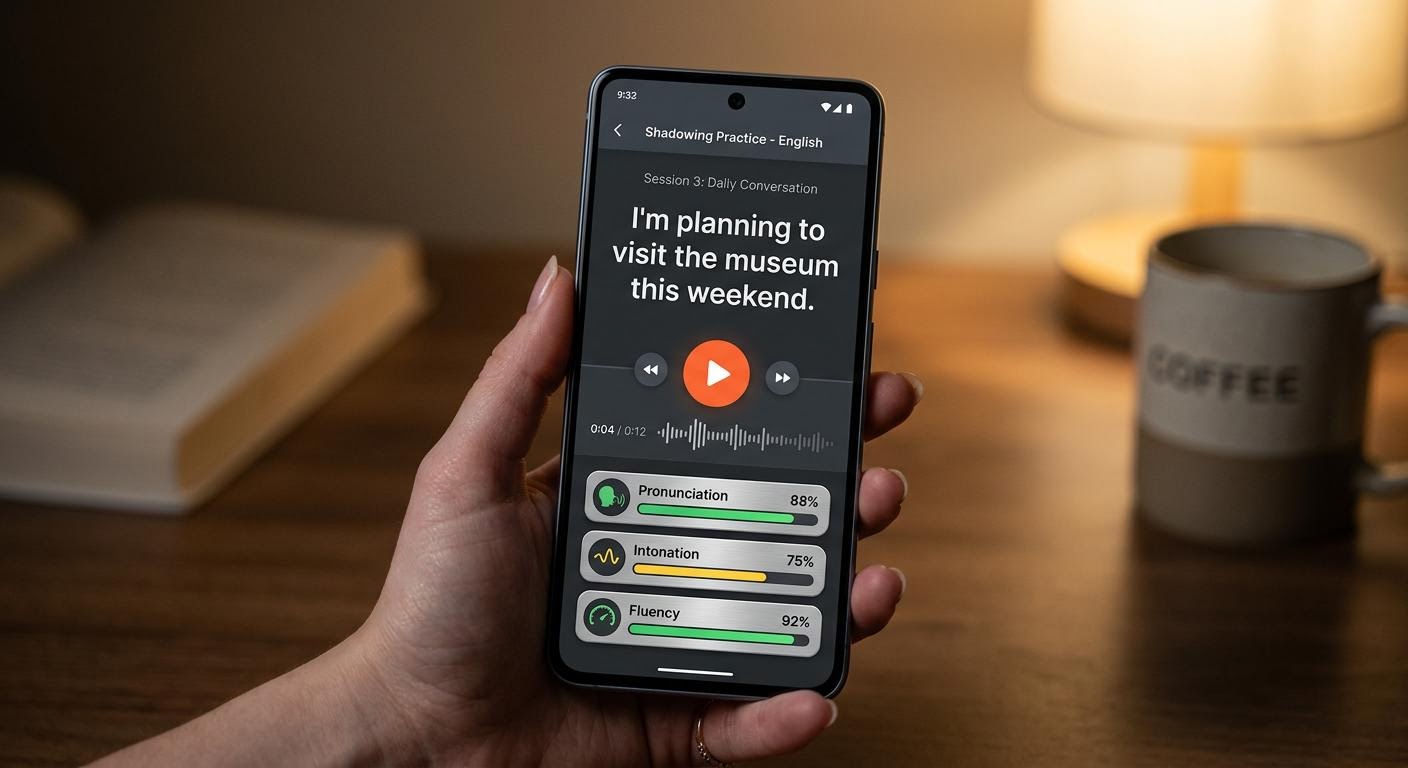
ListenLeap approaches the same problem with a more complete system. Built around 10,000+ real podcasts from BBC, TED, and NPR across 20+ topic areas, it adds a shadowing mode where learners repeat sentence by sentence — and the feedback is scored across three axes: pronunciation, intonation, and fluency. That third axis matters: many apps score whether you said the sounds right, but few check whether you sound natural, whether your stress and rhythm match the host's. Combined with a fill-in-the-blank training mode and a blind-listening mode, ListenLeap builds speaking practice on top of listening that is already leveled to the learner's ability through an i+1 difficulty system and a placement test. Learners never practice sentences that are too easy to grow from or too hard to follow.
Subtitles That Teach While You Speak
Speaking practice only works when learners understand exactly what they are repeating. All four apps use subtitles as the bridge — but the language coverage and depth differ.
VoiceTube's bilingual subtitles are professionally crafted rather than machine-generated, which is why its video library feels so polished; the subtitle pair is essentially Chinese and English. Cake also pairs bilingual subtitles with clips and adds Korean as a separate learning track. Miraa generates subtitles for anything the learner imports, supporting flexible language pairs through AI. ListenLeap widens the bridge further: bilingual subtitles come in Simplified Chinese, Traditional Chinese, Korean, and Japanese, and the learning layer beneath them is deeper. Tap any word for instant definitions with contextual examples; highlight any phrase for a grammatical breakdown and full-sentence explanation; and ask the built-in AI tutor follow-up questions about why a line is phrased that way. After each episode, a smart summary pulls together what was covered, so the learner knows what stuck.
Why ListenLeap Creates a Complete Speaking Loop
The difference between ListenLeap and the others is not that any single feature is unique — it is that every piece connects. The i+1 difficulty system grades each of the 10,000+ podcasts to the learner's level after a placement test, so shadowing practice never drifts into material that is either frustrating or trivial. The bilingual subtitles, click-to-look-up words, phrase parsing, and AI Q&A make comprehension thorough before speaking starts. Then the shadowing mode scores pronunciation, intonation, and fluency separately, so a learner can see — not guess — whether the problem is sounds, rhythm, or speed. A fill-in-the-blank mode and blind listening add variety to the same material, and a vocabulary notebook with notes, offline caching, and PDF export means the study trail survives beyond the app session. This is not a video player with a score attached; it is a listening system with a speaking loop built in.
Which App Fits Which Learner
None of these apps is better than the others — each one serves a different style.
VoiceTube suits learners who want a huge, well-curated video library and prefer the classic record-and-compare method with professional subtitles.
Miraa fits self-directed learners who already have favorite videos and podcasts and want to learn from content they choose themselves.
Cake is the right daily habit for people with five to ten minutes a day who want AI pronunciation scoring on fresh, short clips.
ListenLeap works best for podcast lovers who want leveled real content, thorough comprehension support, and speaking feedback measured on pronunciation, intonation, and fluency — all in one place.
Start Speaking This Week
The fastest way to know which app fits is to try the shadowing mode in each one with the same episode or clip. The app that keeps the learner repeating a line until it sounds right — instead of moving on — is probably the one worth keeping. For podcast listeners ready to close the gap between understanding and speaking, ListenLeap's combination of graded real content and three-axis speaking feedback is a good place to start.

Comments
No comments yet.
Leave a Comment