

Four apps sit on the phones of serious English listeners in 2026, and each one promises something slightly different. Snipd turns podcast episodes into searchable notes. Cake wraps short video clips inside a playful daily lesson. EWA bundles films, graded readers and flashcards into a broad language ecosystem. ListenLeap builds a listening routine around podcasts, audiobooks, courses and short audio, with bilingual captions and speaking feedback layered on top of the same library.
The confusion is easy to understand. A learner who wants stronger listening comprehension, a wider vocabulary picked up from real speech, and eventually more confident speaking may install all four in one weekend, then use none of them consistently by the second month. Store pages make the feature lists look nearly identical. The real differences appear after a few weeks of daily use, when caption quality, difficulty grading and review flow start to decide whether the habit survives.
This breakdown compares the four apps across the features that matter in practice: library depth, caption design, difficulty grading, speaking feedback, review tools, offline access and pricing. Every app here is a solid product with a clear audience. The point is to show where each one fits.
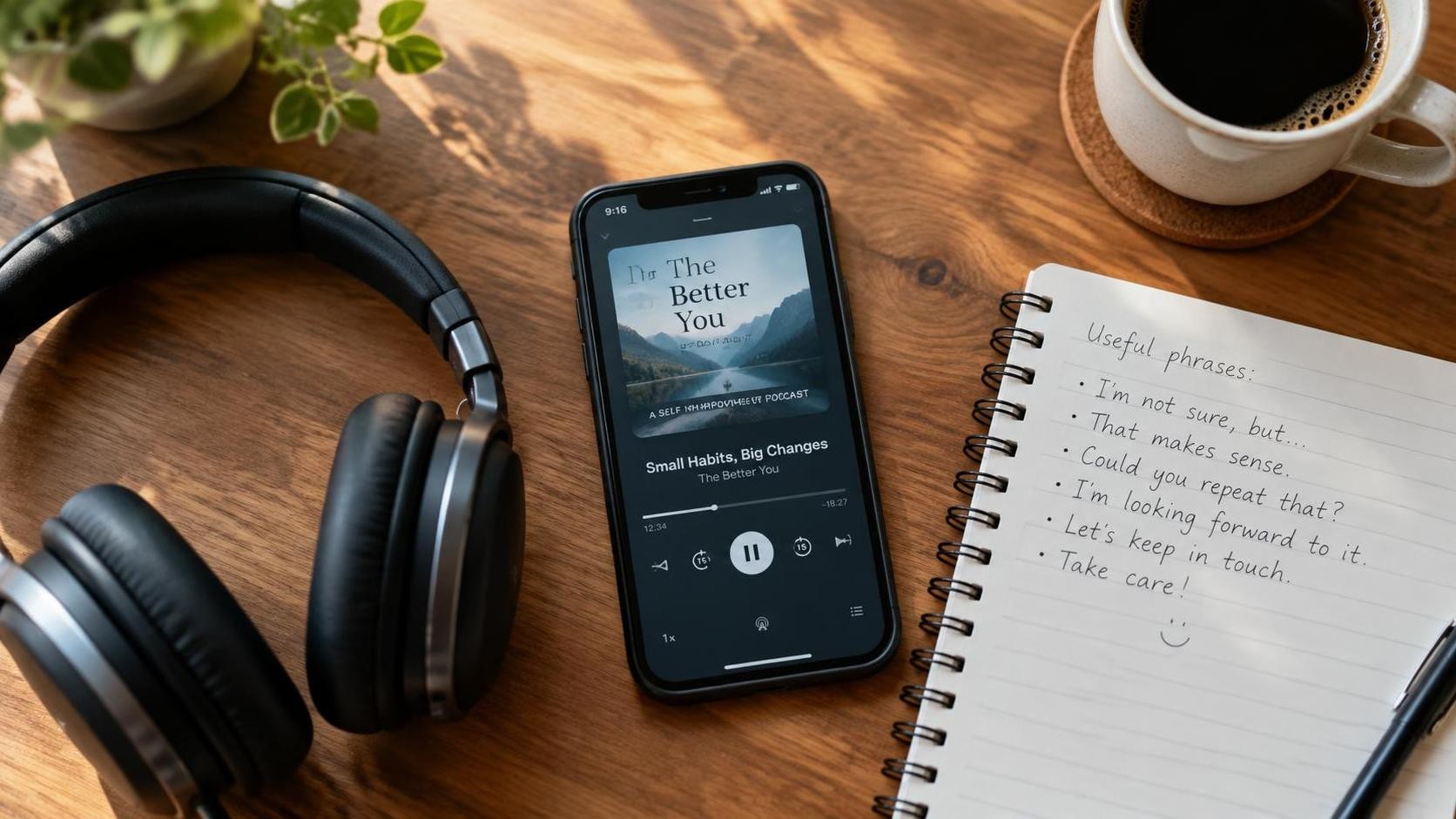
Four Apps, Four Different Entry Points
Snipd treats listening as knowledge work. AI chapters split an episode into labelled segments with timestamps, and one tap clips a passage into a transcript with a short summary that syncs to Notion, Readwise, Obsidian or Roam. For researchers, writers and heavy note takers, the clipping flow is fast and the export ecosystem is the deepest in this group. The community is mature, with a large review base, regular updates and a responsive team.
Cake treats listening as a five minute habit. Roughly 100,000 short clips drawn from YouTube, films and television carry bilingual subtitles, and more than ten new clips arrive each day. The design is polished, each lesson loop is short, and an AI pronunciation score returns feedback on a repeated line within seconds. A Korean track sits beside the English one, which keeps the app attractive to drama fans who want a second language.
EWA treats listening as one panel of a much wider system. Film and television dubbing, a graded reading library of more than 1,000 titles with audio narration, spaced repetition flashcards, grammar lessons and a conversation bot share a single subscription across English, Spanish, French and Italian. A placement test builds a study plan, and audio lessons support hands free practice. That breadth is unusual, and the reading library stands out among video first competitors.
ListenLeap treats listening as the core skill rather than one tab among many. Podcasts, audiobooks, courses and short audio sit in one library graded by difficulty, and bilingual captions, AI vocabulary extraction, pronunciation analysis and an AI reading assistant all work on the episode already playing. A complete offline mode means the library travels without a connection.
Library Depth and What Each Format Rewards
Library size and library shape are different questions. Snipd indexes a very large podcast catalogue and layers chapter detection on top, which suits listeners who follow interview shows, long form reporting and lecture style series. The strength is discoverability inside audio: a search for a topic surfaces episodes and specific passages rather than just show titles.
Cake goes the other way, with volume measured in clips instead of hours. A ten minute session covers several scenes, each with subtitle support and a speaking prompt, and the daily refresh keeps the feed from feeling stale. For learners who lose focus during a 40 minute episode, that granularity is a genuine advantage.
EWA stacks several libraries in parallel. The graded reader collection adds long form text with narration, the flashcard deck exceeds 50,000 cards, and video segments number in the thousands. A learner can move from a dubbed scene to a short story to a grammar drill without leaving the app.
ListenLeap spans formats that share one listening posture: an episode, a chapter of an audiobook, a course lesson or a short clip, each tagged by level. The library is arranged so that a beginner can start with slower speech and clear articulation, while an advanced learner can move to unedited interviews and full length audiobooks without switching products. Because vocabulary, captions and review all attach to the same audio, progress compounds instead of resetting with every new module.
Captions, Transcripts and Dual Language Design
Snipd generates accurate single language transcripts, and the timestamps make navigation precise. Clipped passages keep their transcript and summary, which turns a spoken idea into a quotable note. The design goal is retrieval, and it succeeds at that.
Cake pairs each clip with subtitles in the target language plus a native language option, and the short length keeps the text density manageable. Tapping a word opens a quick definition, and the clip replays the exact line, so the link between sound and spelling stays tight.
EWA supports subtitles across its four target languages alongside a native language, and its reading library pairs text with audio narration. Dubbing exercises show the line, play the scene and record the attempt, which makes the caption a script rather than a reference.
ListenLeap uses dual language captions as the primary reading surface: the target language line sits above a native language line, both synced to the audio, with tap to define, sentence replay and adjustable playback speed. AI vocabulary extraction pulls candidate words out of the episode and files them into a review deck, while the AI reading assistant explains a difficult sentence in context. The practical effect is that a learner can listen once for meaning, listen again with captions, and leave with a short list of words that actually appeared in speech, not a generic word list.
Difficulty Grading From First Week to Advanced
Snipd does not grade content by learner level, which is reasonable for a knowledge tool aimed at fluent adults. Its AI chapters and summaries reduce the cognitive load of a long episode instead.
Cake applies level labels to clips and keeps the earliest lessons short and clearly enunciated, with a gentle ramp into faster dialogue. The progression is friendly for beginners who need wins in the first week.
EWA runs a placement test and assigns a starting point across reading, video and grammar, then adjusts as lessons are completed. The structure gives a learner a visible track to follow.
ListenLeap uses a multi level difficulty system that tags every item in the library, so the same interface serves a learner at the start and a learner preparing for academic or professional listening. Filters narrow the feed by level and format, and the player adapts with speed control and repeat modes. The grading is granular enough that the step between levels feels like a small stretch rather than a cliff.
Speaking Feedback and Vocabulary Review
Snipd stays deliberately out of speaking practice, which keeps the product focused. Its strength is the capture and export loop, and the integrations with Notion, Readwise, Obsidian and Roam give those notes a second life in a personal knowledge base.
Cake records a line and returns an AI pronunciation score with per word highlighting, and the repetition is built into the clip itself, so practice feels like part of the scene rather than a separate drill.
EWA offers dubbing with basic scoring and a spaced repetition flashcard system, plus a conversation bot for free form dialogue. The combination covers production from a fixed script through to improvised speech.
ListenLeap connects the same three steps inside one episode: AI pronunciation analysis reports on stress, rhythm and individual sounds after a recorded attempt, AI vocabulary extraction builds a personal deck from the audio just heard, and the AI reading assistant clarifies meaning when a phrase does not parse. Review is scheduled, so words return before they fade, and the original audio segment stays one tap away as context.
Offline Access, Pricing and Device Coverage
Snipd offers cloud sync across iOS and Android, with AI features that require a connection. The subscription runs near 7.99 US dollars per month or 59.99 per year, and the free tier covers the core clipping habit.
Cake supports iOS, Android and a web player, with limited downloads. Cake Plus sits near 9.99 US dollars per month and opens the full clip library and lesson set.
EWA covers iOS and Android with downloadable books and lessons, and a premium tier near 12.99 US dollars per month. The breadth of content explains the price.
ListenLeap runs on iOS, Android and web, with a complete offline mode that keeps captions, transcripts and review decks available on a plane or a commute without signal. Pricing stays competitive within the freemium model, and the same account carries progress across devices.
Where ListenLeap Fits in a Daily Routine
A realistic week looks like this. Twenty minutes of listening during a commute, captions on for the first pass, off for the second. Five minutes of vocabulary review drawn from the episode. One recorded shadowing attempt, compared against the original line, with feedback on the sounds that drifted. On a longer session, a chapter of an audiobook at the same difficulty level, then a course lesson that explains a structure heard earlier.
That loop is the reason ListenLeap holds together. The library is broad enough to cover a full year of material, the grading keeps the difficulty curve honest, the bilingual captions remove the wall that stops beginners, and the speaking and vocabulary tools work on the same audio file rather than in separate tabs. Learners who want to keep notes in a knowledge base still benefit from Snipd. Learners who want a light daily game will enjoy Cake. Learners who want one subscription across several languages will find EWA generous. But for the specific job of turning listening hours into measurable comprehension, ListenLeap offers the most complete set of connected tools.
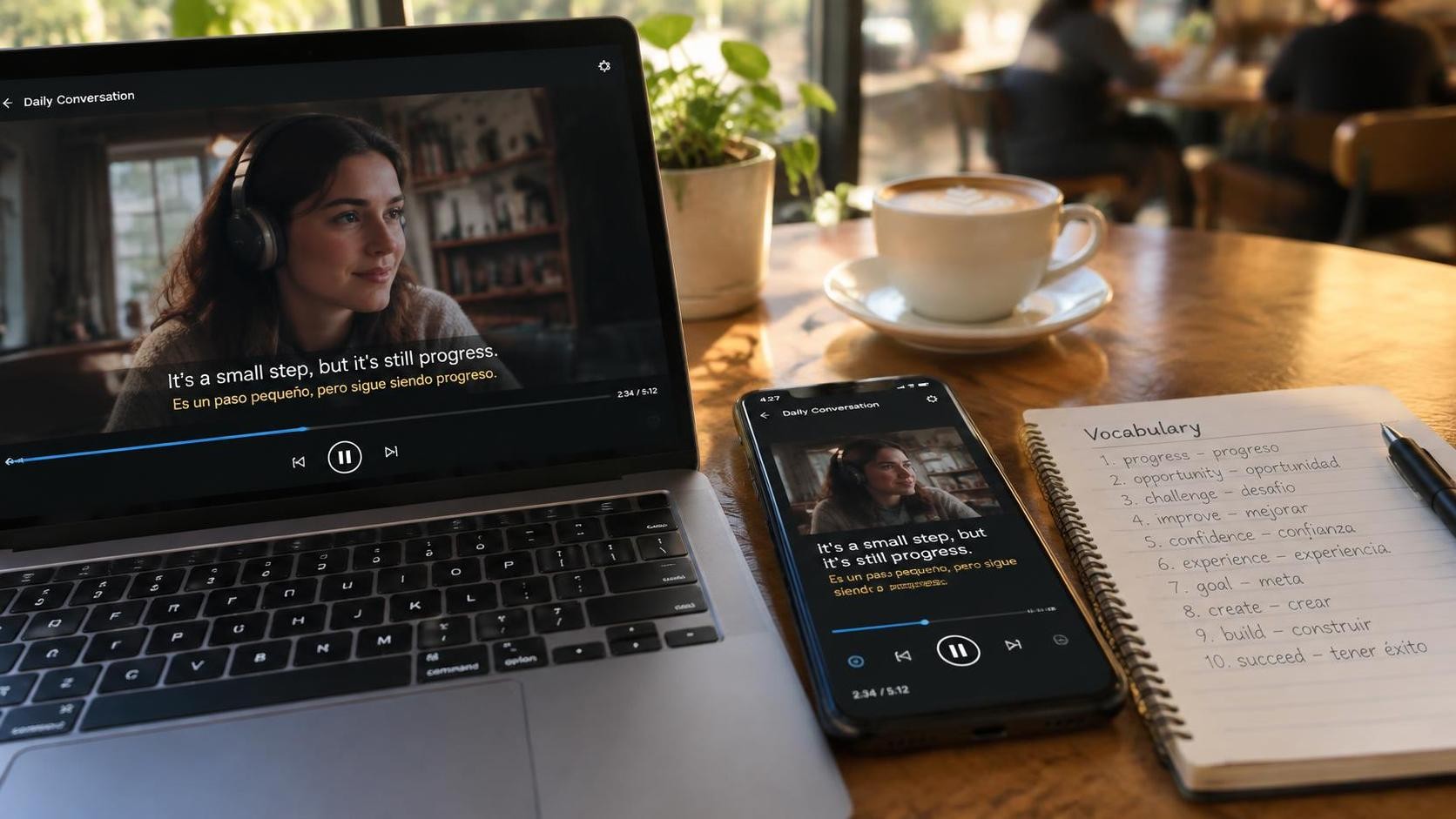
Choosing by Goal Rather Than by Feature Count
A learner who treats podcasts as research material and lives inside a notes system should start with Snipd, then add a listening trainer for pronunciation and graded practice. A learner who needs short, entertaining sessions to build the habit will move faster with Cake. A learner who wants one app for several languages, with reading and grammar in the same place, gets a lot from EWA.
For a learner whose goal is comprehension, vocabulary retention and clearer speech in English, the deciding factor is not the number of features but whether those features share one audio source. ListenLeap is built around that idea: one library, one caption system, one review deck, one feedback loop, on phone, tablet and web.

A free account is enough to test the loop for a week: pick a podcast at the assigned level, listen twice, review the extracted words, record one line. If the routine survives seven days, the rest of the library will make sense. If it does not, the other three apps remain excellent at what they do best, and the comparison above shows which job each one solves.


Comments
No comments yet.
Leave a Comment