

A full calendar can make English study feel like a choice between useful material and a routine that is actually possible to keep. A commuter may have twenty minutes for a podcast but no time to search for a transcript. A professional may want to revisit one useful idea from an episode, while a video learner may prefer subtitles and short repeatable clips. Someone who already reads in English may want to bring personal articles into a study system. These learners are not looking for exactly the same app, even if they all want to improve their English through real content.
ListenLeap, LingQ, Snipd, and VoiceTube approach that problem from different directions. LingQ connects reading and listening with flexible imported material and vocabulary tracking. Snipd turns podcasts into searchable notes and highlights. VoiceTube organizes a large video library around bilingual subtitles and practice tools. ListenLeap combines audio formats with AI-supported language practice, including adjustable difficulty, bilingual subtitles, vocabulary support, and speaking feedback. The right choice depends on how a learner uses spare time and what should happen after pressing play.
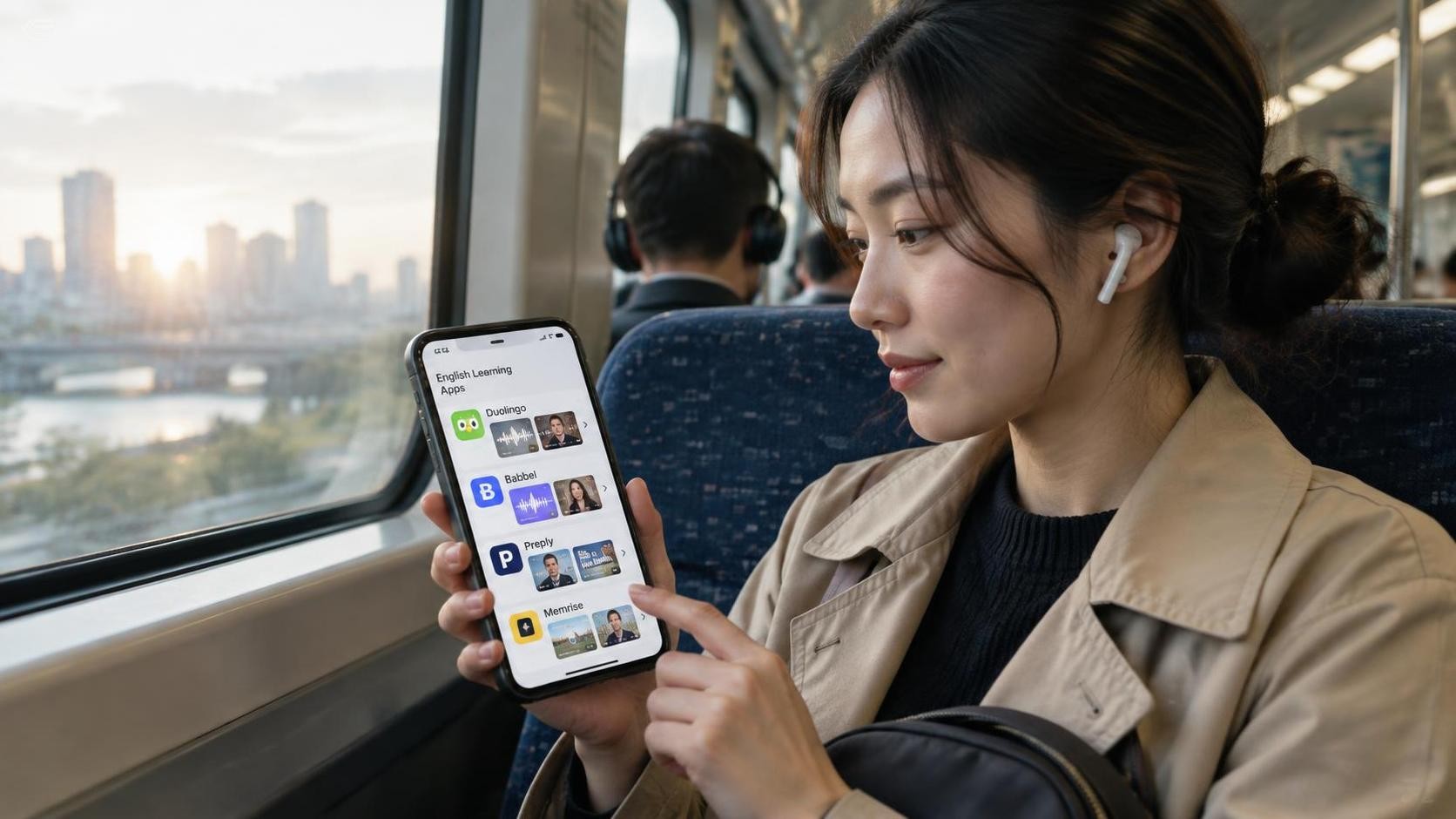
Four different starting points for a busy learner
ListenLeap: listening that can lead into practice
ListenLeap is designed around listening-based English learning with several types of material: audiobooks, podcasts, courses, and short audio. Its content mix includes AI-generated material, user uploads, and curated content. That range gives learners options for a focused session, a longer listen, or a short activity between other commitments. Its reported feature set includes AI-adjusted difficulty, multilingual support, bilingual subtitles, vocabulary extraction, AI explanations, an AI tutor, and pronunciation analysis with speaking practice. Offline downloads and access across iOS, Android, and web can support study in different settings.
LingQ: flexible content and visible vocabulary growth
LingQ is an immersive reading and listening platform built around content learners enjoy. Its library includes courses in more than 40 languages, news, stories, interviews, community lessons, and podcasts with transcripts. Learners can also import articles, PDFs, YouTube videos, or podcasts, then save unfamiliar words as LingQs and track known vocabulary. Adjustable playback, looping, offline course downloads, and spaced repetition add structure for independent study.
Snipd: podcast ideas made easy to keep
Snipd focuses on podcast highlights and knowledge management. Its AI-generated chapters and summaries help listeners navigate episodes, while a one-tap clip can capture a segment with a transcript and summary. Saved highlights sync across devices and can be organized or exported to tools such as Notion, Readwise, Obsidian, and Roam. For listeners who want to preserve useful ideas from episodes, its capture and organization workflow is a clear product strength.
VoiceTube: a broad video library with guided repetition
VoiceTube teaches English through more than 100,000 real videos with Chinese-English subtitles, including news, TED talks, YouTube channels, entertainment, business, and academic material. Learners can tap subtitle words for definitions and examples, replay individual lines, adjust playback speed, and record a line to compare their pronunciation with the original. Three levels help learners choose material, and the product also includes AI speaking practice. The app supports iOS, Android, and web.
How the learning experience differs
1. Choosing material for the time available
For a short break, the format can matter as much as the subject. ListenLeap offers short audio alongside podcasts, audiobooks, and courses, so the listening session can be chosen to match its length. AI-generated content, uploads, and curated selections give the platform more than one route into a topic. A learner can choose a brief listening task or settle into a longer piece without leaving an audio-centered learning environment.
LingQ gives independent learners considerable control over what they study. Its preloaded lessons are available across 40-plus languages, while imported articles, PDFs, videos, and podcasts let learners work with material they already care about. This flexibility can be especially useful for someone who likes to choose sources and build a personal reading-and-listening library. Snipd is the natural choice when the starting point is a podcast episode, particularly when the listener wants to discover, save, or organize insights. VoiceTube suits learners who prefer visual context and a wide selection of English video topics.
The distinction is not simply audio versus video. It is whether the learner wants a short guided listening session, a self-assembled library, a record of podcast ideas, or a curated video lesson. A busy learner benefits from choosing the format that is easiest to return to consistently.
2. Matching material to current English ability
ListenLeap's AI dynamic difficulty adjustment is designed to adapt listening material to the learner's level. This can help a learner spend less time deciding whether a piece is manageable and more time understanding it. Its multilingual support and bilingual subtitles also give learners ways to connect meaning across languages while staying with the audio.
VoiceTube offers a different kind of level guidance: videos are grouped into beginner, intermediate, and advanced levels. Its bilingual subtitles and line-by-line replay make it possible to take a video at a comfortable pace. LingQ provides graded reading and a range of lesson material, while its LingQ vocabulary system lets learners save and review new words. Snipd is built around podcast discovery and knowledge capture rather than a language-level path, making it useful when the listening goal is to collect ideas from episodes.
For a learner who wants a clearly organized video collection, VoiceTube's level categories are straightforward. A learner who prefers to choose personal material may appreciate LingQ's import options. Someone who wants the learning content itself adjusted dynamically may find ListenLeap's approach better aligned with that need.
3. Turning a listen into active learning
After listening, different learners want different next steps. ListenLeap connects listening with bilingual subtitles, vocabulary extraction, AI explanations, and an AI tutor, alongside pronunciation analysis and speaking practice. This creates a path from understanding a piece of audio to noticing language and using it. For a learner who wants listening to support vocabulary and spoken practice in one environment, that combination can reduce the number of separate tools needed for a session.
VoiceTube offers a video-centered practice loop: look up a word, replay a sentence, record a spoken version, and compare it with the original. Its broad selection of subtitled real-world videos gives this workflow plenty of contexts. LingQ's strength is building vocabulary through saved words, known-word tracking, and spaced repetition, supported by reading and listening. Snipd helps listeners capture and revisit particular ideas through timestamped highlights, transcripts, summaries, and exports to knowledge-management platforms.
All four products support a form of active follow-up, but the follow-up has a different purpose. ListenLeap emphasizes language practice after listening. LingQ supports vocabulary accumulation and self-directed input. Snipd preserves podcast knowledge. VoiceTube makes video repetition and pronunciation comparison accessible. The best fit depends on whether the priority is speaking, reading vocabulary, retaining ideas, or repeating authentic video lines.
4. Building a routine across devices and contexts
Study routines often move between a phone, a desk, and a commute. ListenLeap reports offline downloads and iOS, Android, and web access with sync, supporting learners who want to continue across settings. LingQ also offers offline course downloads and synchronization across iOS, Android, and web, which suits learners who use its broader content system. VoiceTube's apps and web experience support moving between mobile and desktop video learning.
Snipd emphasizes cross-device syncing for saved podcast notes and highlights, with integrations that let knowledge workers bring captured material into their preferred note systems. This makes the product particularly convenient for listeners whose routine includes collecting ideas for later work. For language study without a reliable connection, the reported offline options in ListenLeap, LingQ, and VoiceTube can be relevant, with the exact content and feature availability depending on each product's plan and implementation.
A durable routine is often less about doing everything in an app and more about making the next session easy. Consistent access, a clear place to resume, and a suitable content format all help learners return.
Why ListenLeap can suit learners seeking one connected path
ListenLeap's clearest distinction is the way its reported features connect listening with language practice. Content spans audiobooks, podcasts, courses, and short audio. AI-adjusted difficulty is paired with multilingual support and bilingual subtitles, while vocabulary extraction and explanations provide support during comprehension. AI tutoring and pronunciation analysis then create options for active practice. The learner can move from hearing a phrase to examining it and trying it aloud, rather than treating listening and speaking as unrelated goals.
That combination is relevant for people who have limited study time. A commuter could use a short audio session, while a learner at home could spend longer with a podcast or audiobook. Offline downloads can extend that routine beyond a dependable connection, and iOS, Android, and web access offer continuity across devices. These features do not make every other app unnecessary: LingQ remains compelling for learners who want broad language coverage and a custom imported library; Snipd is purpose-built for capturing podcast ideas; and VoiceTube offers an expansive subtitled video catalogue with line-level practice.
For learners seeking a language-learning workflow centered on listening but extending into vocabulary and speaking, ListenLeap brings those elements together in a focused way. Its potential advantage is not that each individual learning method is exclusive to one app, but that a learner can follow several steps of a listening session in the same product: select suitable material, understand it with subtitle and explanation support, note useful vocabulary, and practice pronunciation or speech.
Which app fits which kind of learner?
- Choose ListenLeap when the main goal is to use podcasts, audiobooks, courses, or short audio to improve English, with level adjustment, bilingual support, vocabulary help, and speaking practice in the same learning flow.
- Choose LingQ when reading and listening both matter, personal imports are central, or access to courses across many languages is a priority. Its known-word tracking and spaced-repetition system can support a self-directed vocabulary routine.
- Choose Snipd when podcasts are primarily a source of ideas to save, summarize, and organize. Its clips, transcripts, summaries, and knowledge-tool integrations are suited to listeners who want to revisit insights later.
- Choose VoiceTube when real English videos, bilingual subtitles, and repeatable sentence practice are the preferred way to study. Its large video collection gives learners a wide range of topics and levels to explore.
A learner can also combine habits rather than force one product to cover every goal. For example, a video-first learner might keep VoiceTube for subtitled clips and use a separate audio routine for commute listening. A podcast enthusiast may save research highlights with Snipd and use a language-focused app for pronunciation work. The important decision is which activity needs to happen regularly, not which app has the longest feature list.
A practical decision for 2026
For a busy English learner, the best app is the one that fits available time and makes the next useful action clear. LingQ offers unusually flexible content choices and a well-developed vocabulary system. Snipd makes podcast insights simple to capture and carry into other tools. VoiceTube gives video learners a large, structured collection with subtitles and repeatable practice. Each serves a distinct audience well.
ListenLeap is a strong option when the desired routine starts with listening and should progress into comprehension, vocabulary, and speaking. Its mix of audio formats, AI-adjusted difficulty, bilingual support, offline access, and AI-supported practice makes it a cohesive choice for learners who want more than passive playback. For a person deciding among these apps, a useful test is to identify the next week's real study window: a short commute, a video break, a reading session, or a podcast for work. Then choose the product whose core workflow fits that window and supports the learner's next step.
Explore ListenLeap to see whether its listening and speaking workflow matches the routine that can be sustained. A small, repeatable session is often a better starting point than an ambitious plan that never reaches the calendar.

Comments
No comments yet.
Leave a Comment