
Four Apps, One Habit: Turning Listening Into Study
A marketing manager in Seoul spends two hours a week with English podcasts and still freezes when a colleague asks a follow-up question. A graduate student in Berlin has 400 saved episodes and no system for revisiting any of them. A nurse in Manila has replayed the same YouTube clip six times and can repeat every line except the ones that carry the actual meaning. None of these people lack motivation. They lack a tool that treats listening as a skill to be trained rather than content to be consumed.
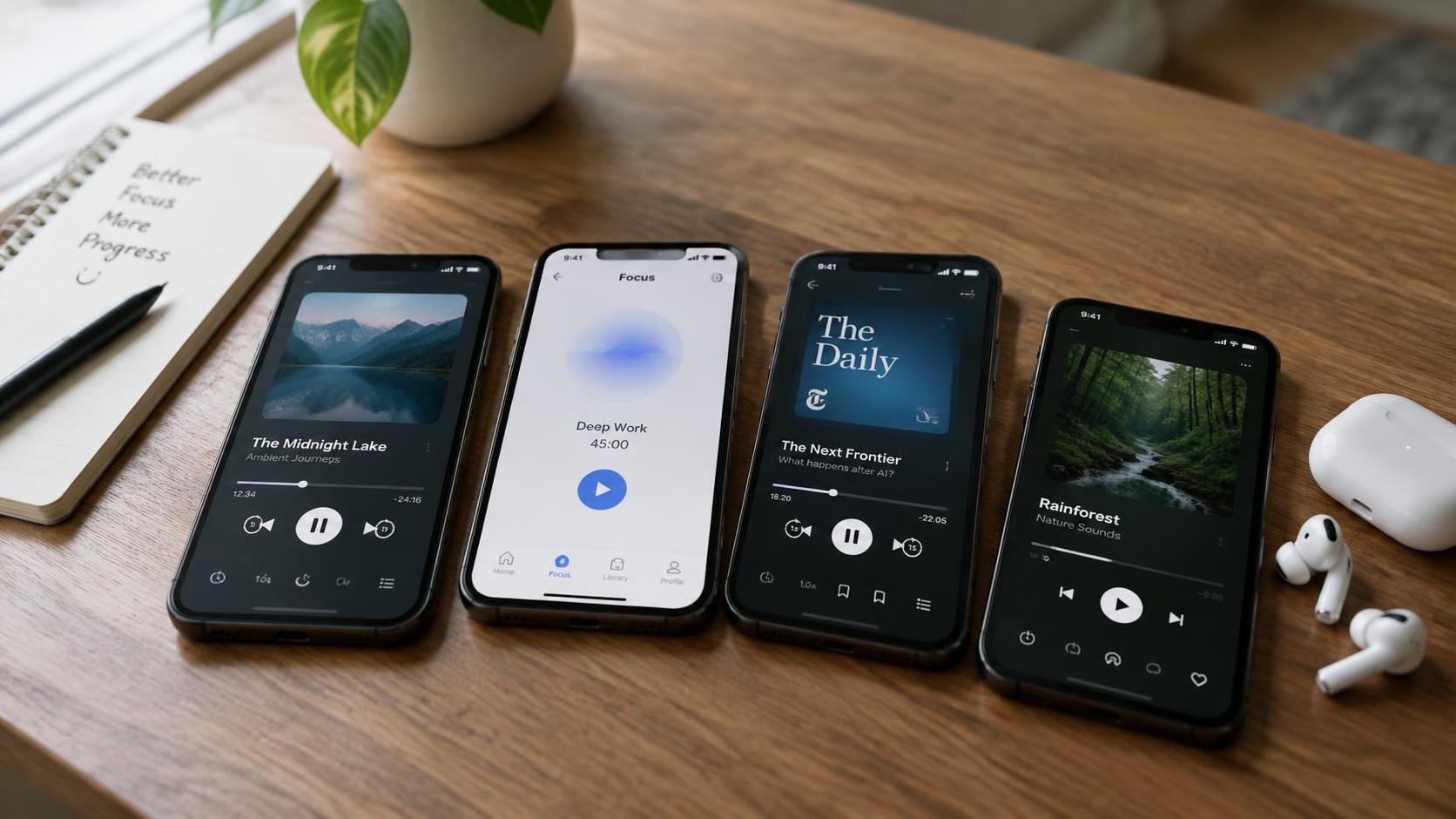
That gap explains why four names keep appearing in the same search results: LingQ, Snipd, RedKiwi and ListenLeap. Each was built around a different theory of how audio becomes fluency, and each is genuinely strong at the theory it chose. LingQ bets on massive input in dozens of languages. Snipd bets on the podcast as a source of professional insight. RedKiwi bets on short, game-like drills over real video. ListenLeap bets on a single loop that carries a learner from hearing a sentence to being able to say it.
What Each App Does With a Piece of Audio
The first real difference shows up before any lesson starts. Feed the same podcast episode into all four apps and each one produces something structurally different.
LingQ: A Personal Library That Becomes a Lesson
LingQ has been running since 2002, which makes it the elder statesman of the group, and its core idea has aged well. Any article, blog post, PDF, YouTube video or podcast can be imported and converted into an interactive lesson on the spot. Clicking a word creates a LingQ, a saved item that can hold a translation, a note and a status of known or learning. A running known-word counter gives learners a concrete number to watch, and the built-in spaced repetition system keeps old vocabulary in rotation. The preloaded catalogue covers more than 40 languages with thousands of lessons, news articles at graded difficulty, interviews and community-made courses. For anyone studying a less common language, or anyone who wants to read the exact material they already care about, the breadth is hard to match.
Snipd: The Podcast That Files Itself
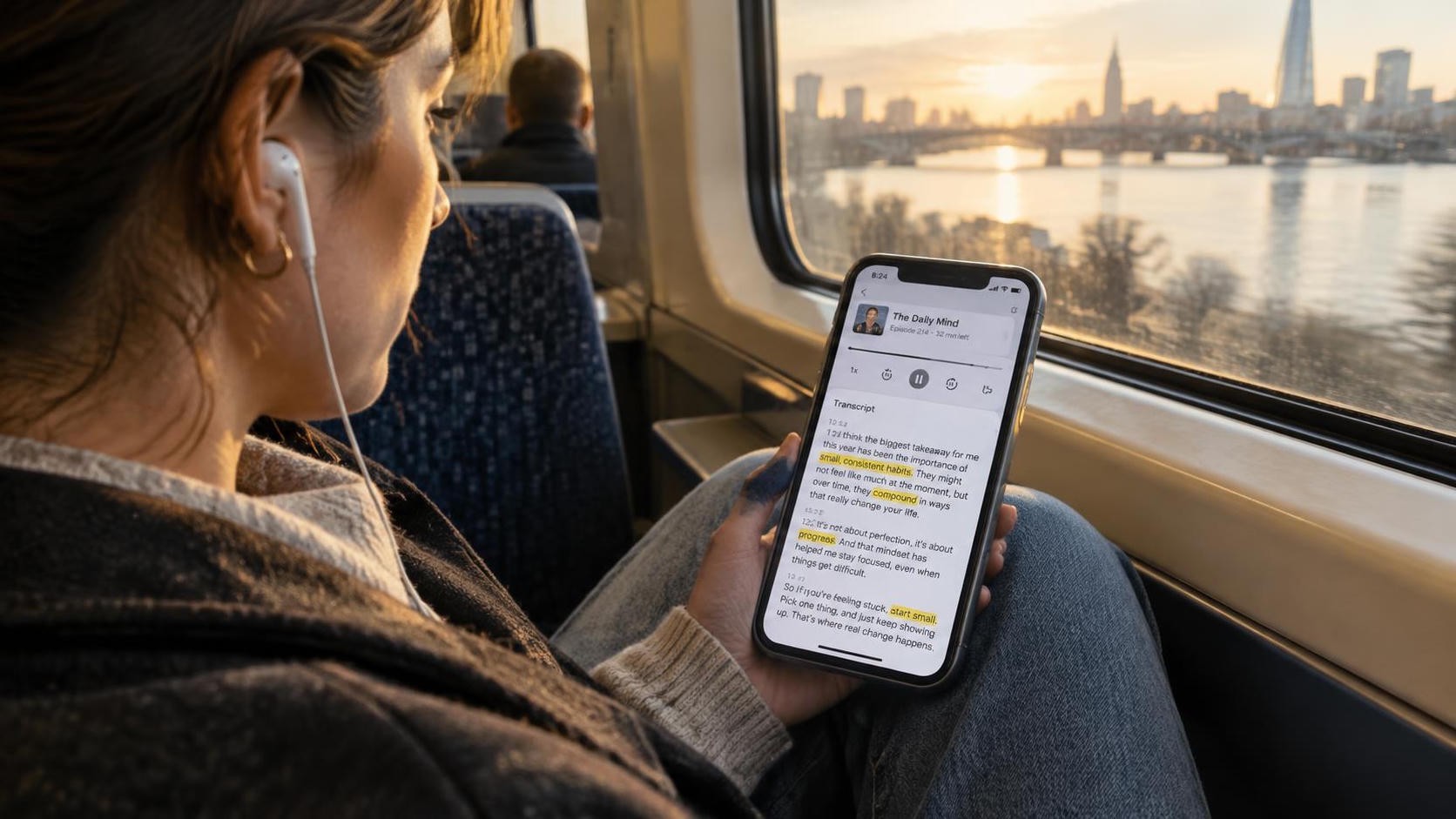
Snipd approaches audio as a knowledge stream rather than a curriculum. Its AI listens alongside the user, generating chapter markers and summaries with timestamps so a 90 minute episode can be skimmed in a few minutes. A single tap clips a segment, transcribes it and writes a summary, and that clip can sync to Notion, Readwise, Obsidian or Roam. The product has earned more than 10,000 reviews and a loyal base among knowledge workers, and the clipping gesture is genuinely inventive: saving an idea from a podcast becomes as fast as taking a screenshot. Cross-device sync is dependable, releases are frequent, and the AI chaptering is among the best available for spoken audio.
RedKiwi: Short Clips, Sharp Focus
RedKiwi launched in 2019 from a Korean team and now reports more than five million downloads and a 4.7 rating. Its library holds over 10,000 YouTube clips refreshed daily, paired with 50,000 plus exercises. The practice formats are unusually well designed for listening specifically: fill in the blank dictation, comprehension questions, sentence by sentence dictation mode and shadowing. Bilingual subtitles in more than 10 languages sit under every clip, and three difficulty levels sort the catalogue. Streaks, achievements and a clean mobile interface keep daily sessions short and repeatable, and a spaced repetition vocabulary book collects saved words. For learners who want fifteen focused minutes on real speech, the drill design is excellent.
ListenLeap: Three Sources in One Feed
ListenLeap takes a wider intake. Lessons come from three places: AI generated material built around a topic or grammar point, audio and video uploaded by the learner, and a curated library of podcasts, audiobooks, courses and short audio. Anything imported can be paired with bilingual subtitles and split into sentences. The difference is not the size of the catalogue but the fact that all three sources land in the same workspace, with the same subtitle tools and the same review flow attached.
Subtitles, Speed, and the Difficulty Curve
Subtitles are where listening apps quietly diverge, because a transcript can support comprehension or replace it.
LingQ uses parallel text, showing the target language beside a translation, and its graded reading levels come from community tagging rather than automated analysis. That works well for readers who want full control and are comfortable choosing their own material. Snipd produces a single language transcript, which suits its purpose: the transcript exists to be searched and clipped, not studied line by line.
RedKiwi shows English and the learner's native language side by side, which is a strong scaffold for intermediate listeners, and its three level split gives a clear starting point. ListenLeap pairs bilingual subtitles with an AI difficulty layer that adjusts the lesson to the learner's current level instead of asking for a manual choice, and every sentence can be replayed on its own at a slower speed without losing the surrounding context. That combination matters more than any single feature: a learner can stay inside one episode while the difficulty of the support moves with them.
From Hearing to Speaking
Recognition and production are different skills, and the four apps draw that line in different places.
LingQ is deliberately an input machine. Reading and listening are the whole method, grounded in comprehensible input theory and two decades of practice, and the depth of that focus is a real strength for learners who want to build a large passive base before opening their mouth. Snipd is not a language trainer at all, and it does not pretend to be; its value is capture and retrieval, and it does that better than general purpose note apps.
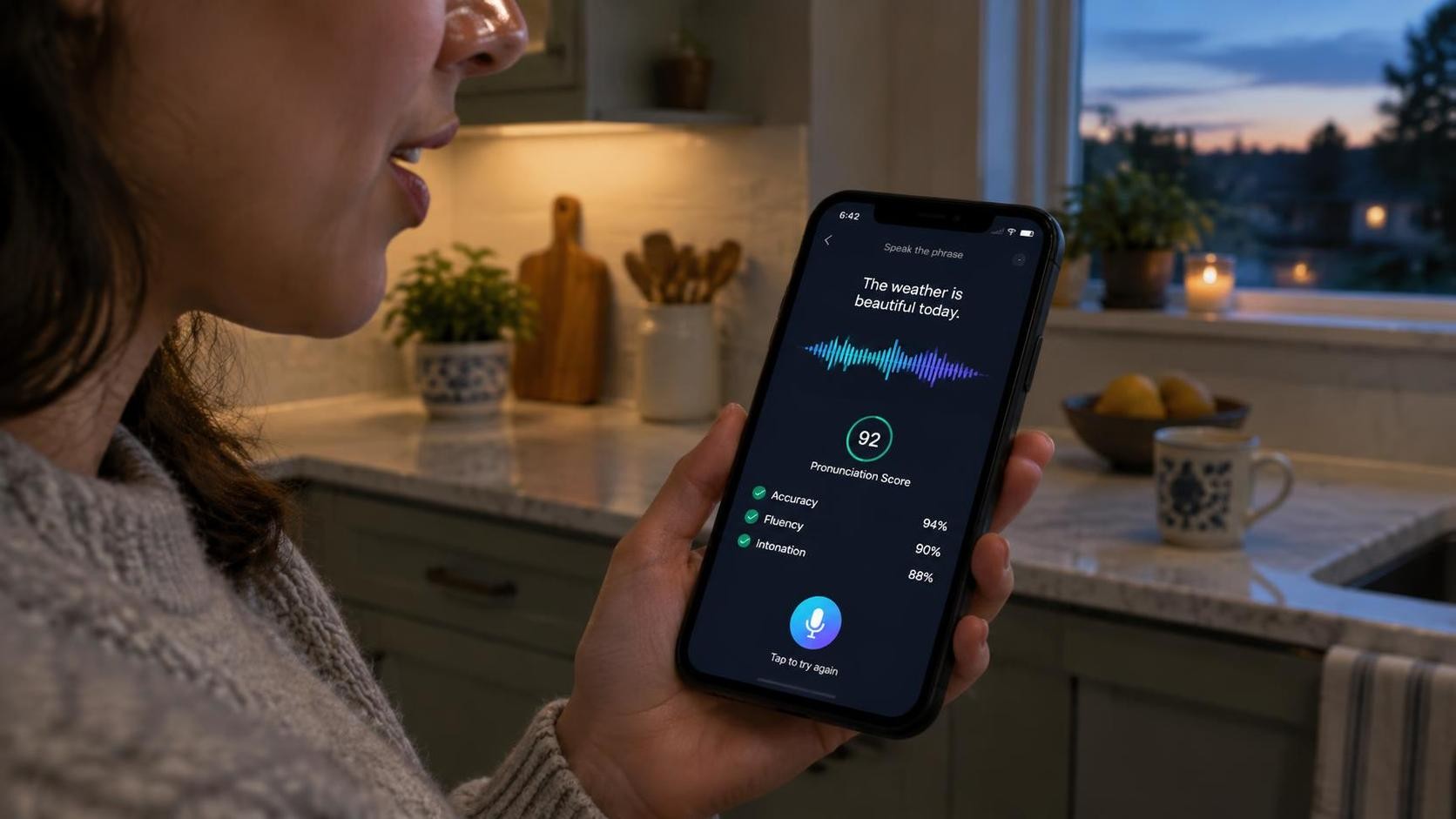
RedKiwi includes shadowing, so learners do repeat lines aloud, though the app does not score pronunciation. ListenLeap closes that loop with AI conversation practice that responds to what the learner says and returns feedback, plus pronunciation analysis on individual words and sentences. A learner can hear a line, repeat it, get a judgement on which sounds drifted and then try again inside the same lesson.
How Vocabulary Survives the Week
Every app in this group can save a word. The interesting question is what happens on day eight.
LingQ remains the strongest pure vocabulary tracker here. The LingQ status system, the known-word counter and spaced repetition reviews form a coherent record of everything encountered, and the visible number is a genuine motivator for learners who like measurement. Snipd sends highlights outward to Notion, Readwise, Obsidian and Roam, which is the right answer for people whose review habit already lives in those tools. RedKiwi turns saved words into spaced repetition flashcards with a streak system attached, so review is short and frequent.
ListenLeap extracts vocabulary directly from the audio just studied, keeps the original sentence as context, and folds those words into a review queue alongside the lesson. Because the extraction is tied to what was just heard rather than to a separate word list, the review tends to feel like recall practice instead of memorisation.
Cost, Devices, and the Offline Question
Pricing across the group sits in a narrow band. LingQ runs a freemium model with paid tiers roughly between 7.99 and 14.99 dollars per month, and the free tier is limited, which is worth knowing before committing. Snipd charges around 7.99 dollars monthly or 59.99 dollars yearly for the full feature set. RedKiwi Premium sits near 6.99 dollars per month. ListenLeap uses a freemium structure with subscription tiers as well.
Platform support is where the differences sharpen. LingQ covers iOS, Android and web with course downloads for offline study. Snipd is iOS and Android, and its AI clipping and summarising need a connection. RedKiwi is mobile only with limited offline access. ListenLeap runs on iOS, Android and web, syncs across them, and supports full offline downloads, including the lesson audio and subtitles a learner needs on a flight or in a subway tunnel.
Where ListenLeap's Design Choices Add Up
Judged feature by feature, each competitor wins something. LingQ wins on language coverage and vocabulary tracking. Snipd wins on capture and export. RedKiwi wins on drill design and daily habit mechanics. What separates ListenLeap is that the loop is closed inside one app: import or generate a lesson, read bilingual subtitles at an adjusted difficulty, tap a word for an AI explanation, hear the sentence again at a slower speed, repeat it and receive pronunciation feedback, then review the extracted vocabulary later, online or off.
That sequence is the actual product. Most learners do not fail because one step is missing from their toolkit; they fail because the steps live in four different places and the handoffs cost more energy than the study itself. Consolidating them removes the friction that usually ends a listening habit in week three.
Which App Suits Which Learner
The honest answer depends on what already works.
A polyglot juggling Spanish, Japanese and Turkish, or a learner of a language with few commercial options, will get more from LingQ than from anything else here, because 40 plus languages and unlimited importing is a category of its own. A consultant or researcher who treats podcasts as a reading list should look at Snipd, where a clip becomes a searchable note in two taps and lands in the tools already in use. A learner who likes short sessions, real YouTube footage and clear daily targets will find RedKiwi's drill formats and streak system hard to beat, particularly on iOS.
A learner who wants one place to take a podcast, a YouTube interview or an AI generated lesson, understand it line by line and then actually say it back, is the person ListenLeap was designed for. Mixed sources, mixed levels and a review habit that survives a busy week all point in the same direction.
The Decision That Actually Matters
None of these four apps is a compromise. LingQ, Snipd, RedKiwi and ListenLeap each solve a real problem well, and the strongest setup for some learners is a combination: Snipd for collecting ideas, LingQ for a third language, ListenLeap for the daily listening to speaking loop. The choice that matters is the one a learner will still be using in March, not the one with the longest feature list in January.
For anyone who wants to test that loop with real audio, importing a favourite podcast episode into ListenLeap takes a couple of minutes, and the first lesson usually shows whether the format fits.



Comments
No comments yet.
Leave a Comment