

Four Apps, One Hour, and a Familiar Dilemma
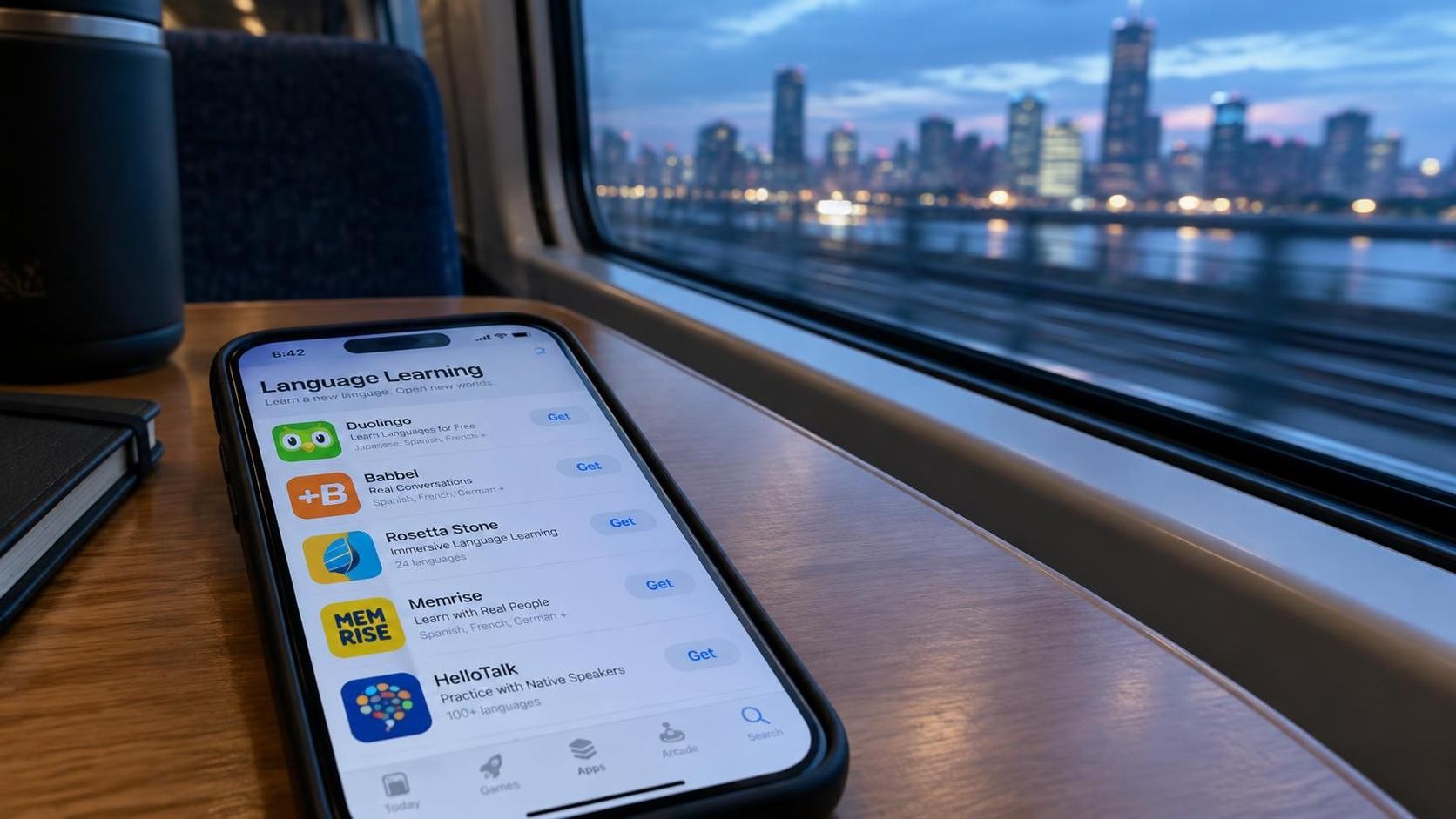
A 35 year old operations manager at a consumer goods company ends most workdays with a twenty minute commute and a short window before sleep. English matters at work: supplier calls on Thursday, a quarterly review with a team in Rotterdam, and a growing pile of unread reports. Over eighteen months this manager has installed four apps. EWA arrived first, because a colleague praised its movie clips. Miraa came next, after a podcast episode about importing any video into a lesson. VoiceTube followed during a business trip, when news clips with dual subtitles felt like a productive way to fill a hotel evening. ListenLeap was the last download, suggested in a group chat about podcast based study. Each app solved a real problem for a week or two. The dilemma is familiar to almost every professional learner: four apps, four partial routines, one limited attention span, and no clear answer about which subscription deserves to survive the next billing cycle.
Four Apps Built on Four Different Ideas About Learning
EWA, launched in 2017 by EWA UK, describes itself as a complete language ecosystem. It carries a 4.7 star store rating and more than 60 million downloads, and its library combines 10,000 movie and television clips, a graded reading collection of over 1,000 books with audio, 50,000 flashcards built on spaced repetition, more than 200 grammar lessons, and an AI chat partner. The app also teaches Spanish, French and Italian. Its central idea is variety: a learner who gets bored quickly always has another mode to try, and dubbing a film scene feels closer to play than to study.
Miraa starts from the opposite premise. Instead of building a library, it turns whatever media a learner already loves into a lesson. A video file, a podcast download or a YouTube link becomes a transcript with bilingual subtitles, and any phrase can be tapped for an AI explanation with context. Shadowing mode supports pronunciation work, and a spaced repetition system keeps new vocabulary in circulation. The appeal is obvious for self directed learners who trust their own taste in content and dislike being confined to a fixed catalog.
VoiceTube has been running since 2013 and has assembled more than 100,000 videos from BBC, CNN, TED and selected YouTube channels. Its subtitles are produced and synchronized by a team rather than generated by a machine, and the player includes a click dictionary, sentence level looping, adjustable speed, recording and comparison, and three difficulty tiers. Its reputation is strongest among Chinese speaking learners in Taiwan and Hong Kong, and the platform now runs on mobile and web with cloud sync.
ListenLeap approaches the same audience from an AI first angle. It mixes AI generated original lessons, uploads from the learner and a curated library, then adds AI explanations, an AI tutor for spoken practice, dynamic difficulty, multiple subtitle languages, offline downloads and synchronization across iOS, Android and web. The design goal is a single loop: listen to real speech, study the transcript, speak about it, and review what remains.
The Twenty Minute Commute Test
Working professionals rarely have study blocks. They have fragments: a train ride, a queue, a lunch break cut short by a message. EWA handles this well with audio courses that can run hands free, and its short lessons fit a walk from the station to the office. Miraa is strongest at a desk, where imported video can be transcribed and studied in detail; a live commute depends on network conditions and processing time. VoiceTube rewards attention, since the value sits in watching a clip while reading subtitles, which is difficult on a crowded train but excellent on a sofa.
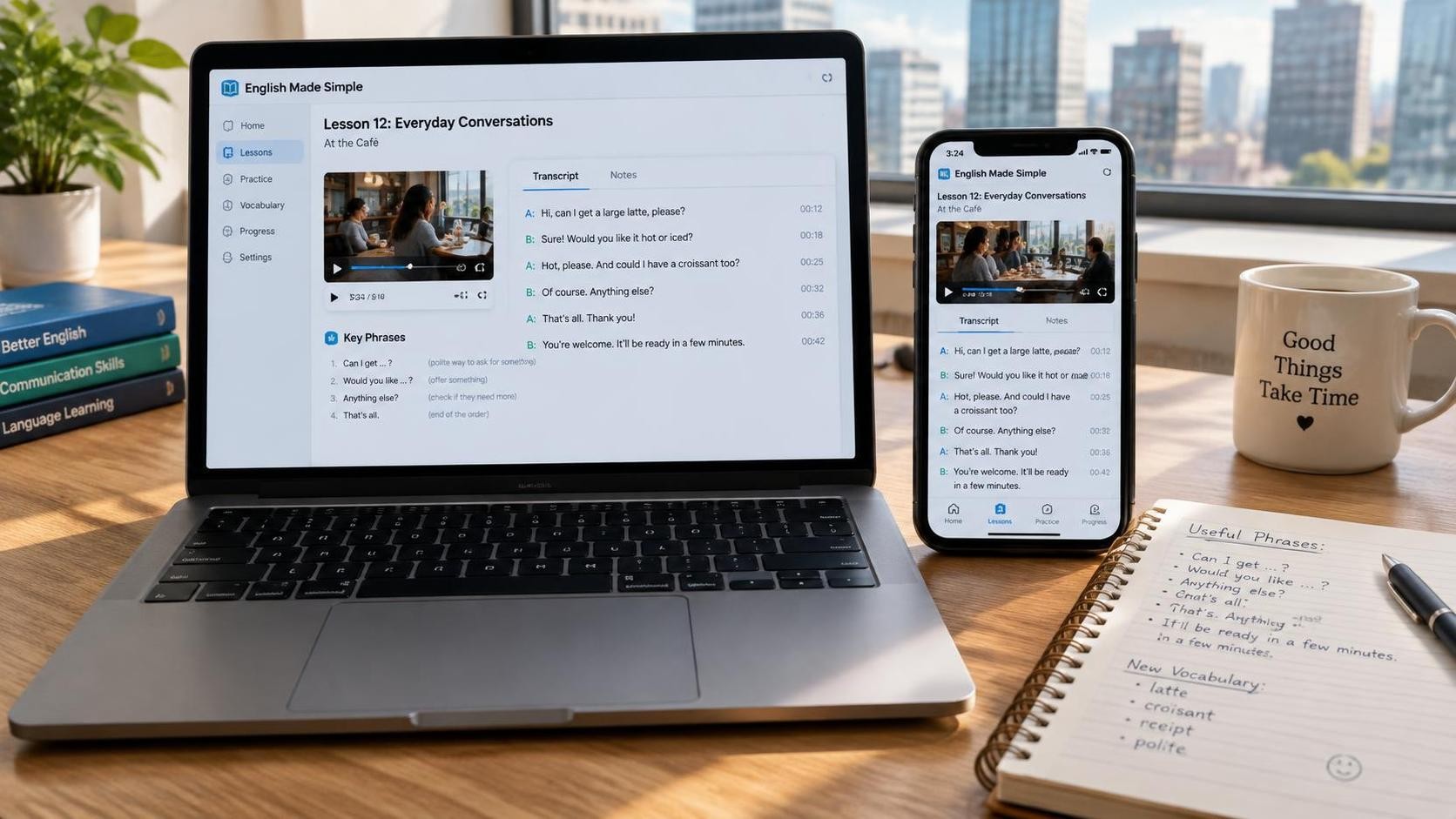
ListenLeap treats the commute as a primary use case. Lessons are audio first, so a single episode can be heard on a train, then revisited with a transcript at a desk. Downloads work without a signal, and progress, notes and the review queue move between phone and laptop. A twenty minute ride can therefore hold three passes over the same material: a first listen for meaning, a second with the transcript for phrases, and a short review card session before the office door opens.

Speaking Practice That Has to Survive a Real Meeting
Speaking is where most app routines quietly collapse, because tapping buttons is easy and talking aloud is not. EWA lowers that barrier with dubbing. Repeating lines from a film scene gives rhythm, intonation and a dose of confidence, and the scoring system turns a potentially embarrassing act into a game. VoiceTube offers a similar bridge with record and compare, letting a learner hear an original line beside a personal attempt. Miraa's shadowing mode extends the same idea to any imported clip, which suits learners who want to imitate speakers they already admire.
ListenLeap pushes further into the situations that actually cause anxiety at work. The AI tutor can hold a simulated supplier call, ask a follow up question when an answer is vague, and comment on word choice, pronunciation and fluency after the exchange. A learner can rehearse a project update, stumble, restart, and read a transcript of the attempt. Because the same app stores vocabulary and listening history, phrases met during a podcast episode reappear naturally in conversation practice instead of living in a separate silo.
Difficulty, Feedback, and the Long Climb From B1 to C1
A professional who can follow a meeting but freezes when speaking needs material that grows with them. EWA begins with a placement test and then offers content across levels, with graded readers providing a clear ladder. VoiceTube's three tiers give a quick signal about whether a video will be comfortable or demanding. Miraa leaves the decision to the learner, which is liberating for experienced self studiers and less helpful for anyone who consistently chooses material that is too hard.
ListenLeap adjusts difficulty inside the lesson rather than only at the catalog level. Playback speed, sentence length, vocabulary range and the depth of AI explanations can shift as accuracy improves, so the same topic can be approached at two different levels without changing apps. The review system also tracks which words keep slipping, which turns a vague feeling of progress into a list of specific items to revisit. That feedback loop matters more for busy adults than any single feature, because it removes the weekly question of what to study next.
Price, Devices, and the Small Frictions That Decide Habits
All four apps use a free tier with a subscription above it, and the differences sit in the details. EWA Premium runs about 12.99 US dollars per month and opens the full mix of clips, books and grammar. VoiceTube keeps a free tier with ads and daily viewing limits, with premium plans often cited between 8 and 12 dollars per month. Miraa is free to try and currently mobile only, which is fine for a phone first learner and awkward for anyone who wants a larger screen at a desk.
ListenLeap combines a free tier with paid subscription levels and runs on iOS, Android and web with sync. The web client is not a minor extra for professionals: a lunch break at a work laptop becomes a usable study session, and notes taken there appear on the phone later. Offline downloads cover flights and subway rides, and multiple subtitle languages help learners who are not studying through Chinese or English alone. None of these choices is unique on its own, but together they reduce the number of reasons to skip a session.
Where ListenLeap Earns Its Place in a Professional's Week
The case for ListenLeap is not that the other three apps are lacking. EWA offers a wider variety of formats than most competitors, Miraa offers unmatched freedom in choosing content, and VoiceTube offers a video library and subtitle quality that took more than a decade to build. The case is that a working professional needs one place where listening, reading, speaking and review reinforce each other, and where the system adapts without requiring a new app for every skill.
ListenLeap's AI generated lessons cover the ground between a textbook and a podcast: a topic such as a contract delay or a product launch is delivered as natural speech, with a transcript, key phrases, explanations and a speaking task attached. A learner can also upload a recording of a real meeting or a favorite podcast, then work through it with the same tools. The AI tutor remembers the level and the recurring mistakes, so practice starts near the right difficulty instead of resetting every session. For a person with twenty fragmented minutes a day, that continuity is the feature that keeps the habit alive.
Matching the App to the Professional
For a learner who wants entertainment and variety, especially one curious about Spanish or French as well, EWA is a natural fit. Its mix of clips, books and flashcards means there is always a different door into the language, and the dubbing mode makes speaking practice feel low stakes.
For a self directed learner with a full podcast queue and a folder of favorite YouTube channels, Miraa is the closest match. Importing personal media removes the search for content entirely, and the AI explanation layer turns passive watching into active study.
For a visual learner preparing for interviews or following international news, VoiceTube offers a deep, well subtitled video library and a player built for careful listening. The three level system gives a quick way to choose material without guesswork.
For a working professional who needs a repeatable routine across commute, desk and travel, ListenLeap fits the shape of the week. The AI lessons supply structure, uploads supply relevance, and the tutor supplies speaking practice that connects back to everything else in the app.
A Reasonable Way to Start This Week
A sensible experiment takes seven days and no long term commitment. Pick one real work situation, such as a supplier call or a project update, and use the free tiers to prepare for it. Let EWA provide a fun warm up, let Miraa bring in a podcast episode that already matters, let VoiceTube supply a news clip on the same topic, and let ListenLeap run the main loop of listening, transcript study, speaking practice and review. At the end of the week, compare which app produced sentences that were actually used in a meeting. That answer is more useful than any feature table, and it usually points to the app that deserves the subscription.
Professionals do not need more English apps. They need fewer decisions and a routine that survives a busy Tuesday. ListenLeap is built around that constraint, and for many working learners it is the app that finally makes the other three optional rather than essential.


Comments
No comments yet.
Leave a Comment