

Three Different Answers to One Daily Habit
A typical learner decides to spend twenty minutes a day on English listening. Within a week the phone holds three apps: one built on short drama clips, one that turns podcast episodes into study notes, and one that mixes audiobooks with bilingual subtitles. Every demo looked convincing. Every trial ended at a subscription screen. The hard part is not finding features. It is finding a set of features that still works on a rainy Tuesday after a long shift.
This comparison sets ListenLeap beside Cake and PodWise, one feature at a time. Cake has assembled one of the largest collections of short video clips for language learners, refreshed daily and paired with pronunciation scoring. PodWise takes any podcast and converts it into summaries, chapter markers and flashcards with almost no manual work. ListenLeap gathers audiobooks, podcasts, curated courses and short audio in one library, then adds parallel subtitles, graded difficulty, speaking feedback and offline playback. The sections below look at how each product handles the same seven jobs, and which ordinary routine each one supports.
Content Library: Clips, Episodes, or a Full Shelf
Cake draws on YouTube, films and television. The catalogue holds more than 100,000 clips, over 500 lessons and at least ten new clips a day. The material is visual and current, and most clips are short scenes carried by emotion, which helps beginners tie a word to a situation rather than to a definition. A Korean track uses the same format and explains part of the app's popularity in Asia.
PodWise goes the other way and ships no catalogue at all. A learner picks a podcast, and the app builds study material around that episode. The listening source is therefore always something the learner already cares about, whether that is a design show, a football podcast or a long interview.
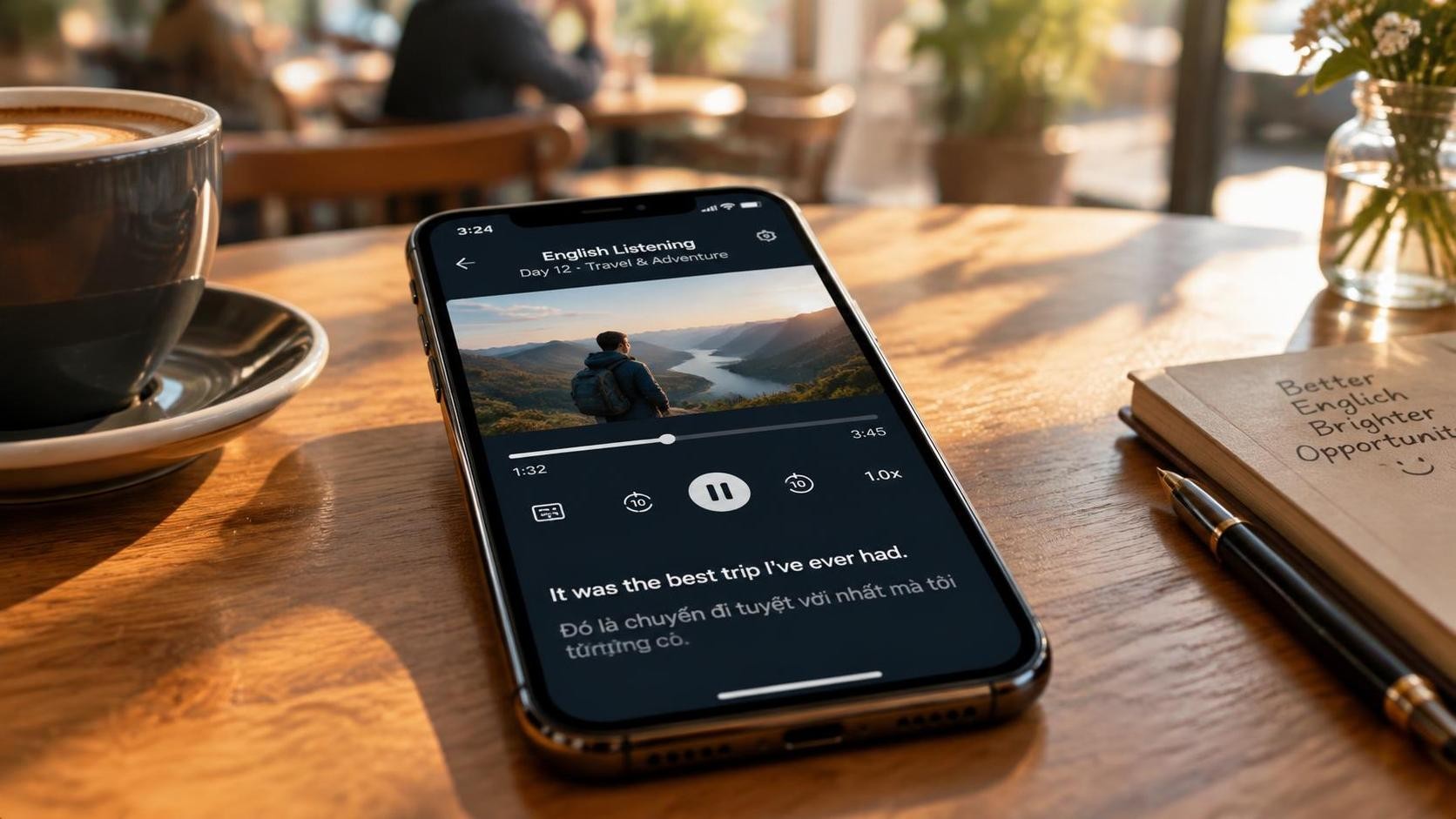
ListenLeap keeps a mixed shelf: audiobooks for long narrative listening, podcasts for opinion and interview English, curated courses for structured study, and short audio for five minute gaps. One account moves between formats without switching apps, which matters when the free time available changes from day to day.
Subtitles and Transcripts: How Much Support on Screen
Cake pairs clips with bilingual subtitles in English, Korean and several other native languages. A tap on a word brings up its meaning, and the scene behind the line supplies context that a text only app cannot offer.
PodWise generates a transcript with AI and marks key phrases inside it. Since the source is a single language podcast, the transcript stays in that language, so it works as a reading aid rather than a translation layer.
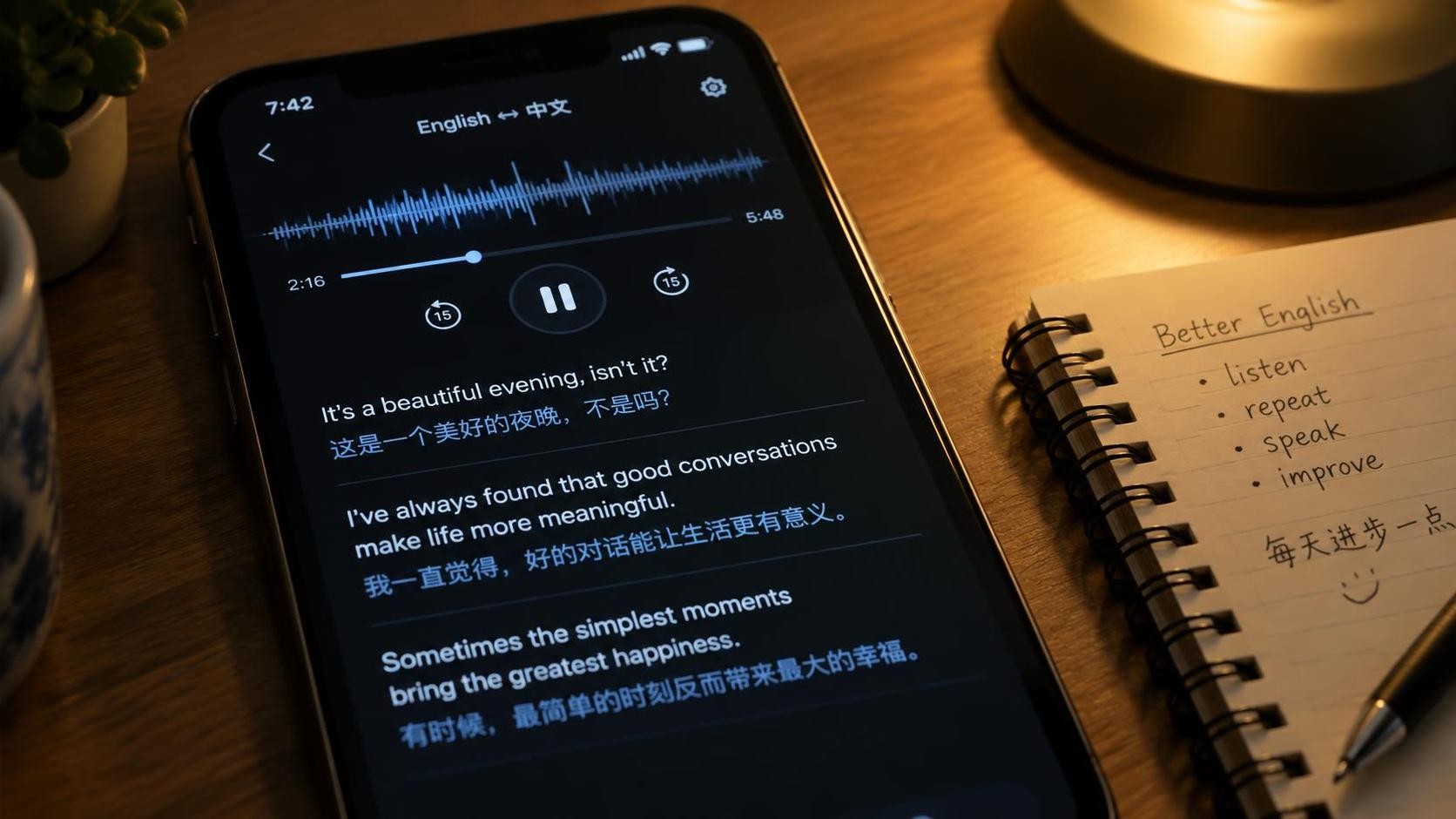
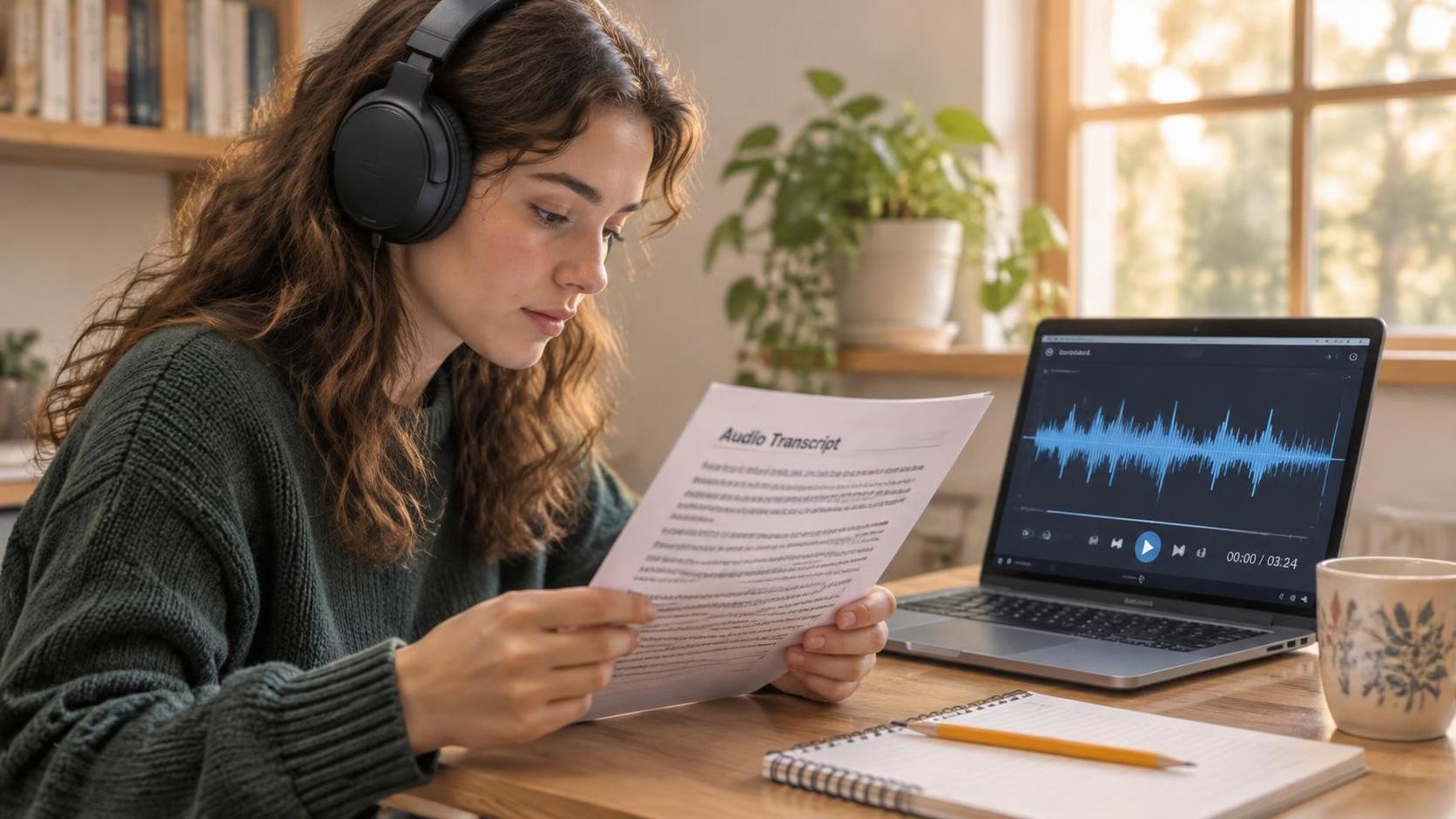
ListenLeap aligns two languages line by line beneath the audio. A learner can read the English line, glance at the translation, tap any word for a definition, and hide either language once confidence grows. An AI reading assistant explains a dense sentence in plain words. Support stays available without being forced on screen.
Difficulty and the Shape of a Learning Path
Cake labels content with basic level tags and arranges thematic courses around grammar and conversation. The path is light, which suits learners who want variety more than a syllabus.
PodWise has no internal grading. Difficulty is whatever the chosen podcast happens to be, and the AI summary adjusts the explanation rather than the source audio.
ListenLeap grades audio from beginner to advanced and groups material into levels, so a learner can stay inside a band that is understandable yet still stretching. Short audio and full courses share the same level tags, and progress stays coherent when the format changes.
Speaking Practice: Output Versus Input
Cake includes AI pronunciation scoring on dialogue lines taken from clips. Repeating a short, dramatic line is useful for rhythm and stress, and the scoring gives immediate, visible feedback.
PodWise concentrates on comprehension and note taking. Speaking practice sits outside its scope, a reasonable choice for a tool built around listening and reading.
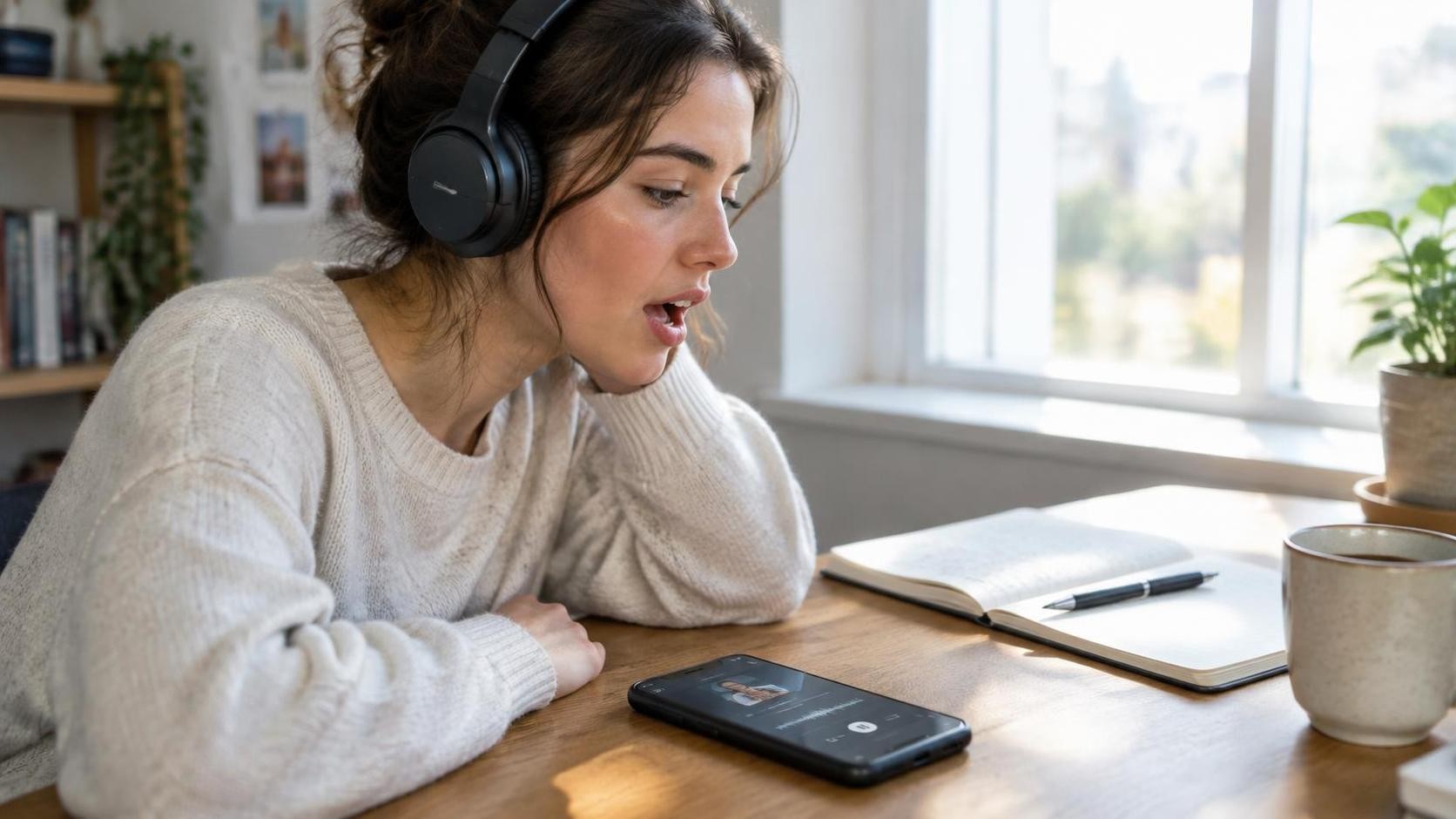
ListenLeap puts speaking into the same session as listening. A learner can shadow a sentence, record it, and receive feedback on pronunciation at word and sentence level. The audio used for shadowing is the audio just heard, so meaning is clear before the mouth tries to reproduce it. Meaning first and production second tends to reduce the awkwardness many learners feel when asked to speak into a phone.
Vocabulary: Capture, Context and Review
Cake lets learners save words into a personal list with spaced repetition. Because the source is a clip, each saved word keeps a scene attached to it.
PodWise automates the whole loop. Summaries, chapter markers, key phrases and flashcards appear after an episode, and highlights can be organised across shows. Learners who already take notes will recognise the value of that automation.
ListenLeap pulls vocabulary from the exact passage under study, keeps the original sentence as an example, and sends chosen words to a review deck. The review keeps the audio context, so a word returns with its voice and timing instead of as an isolated entry.
Offline Listening and Device Coverage
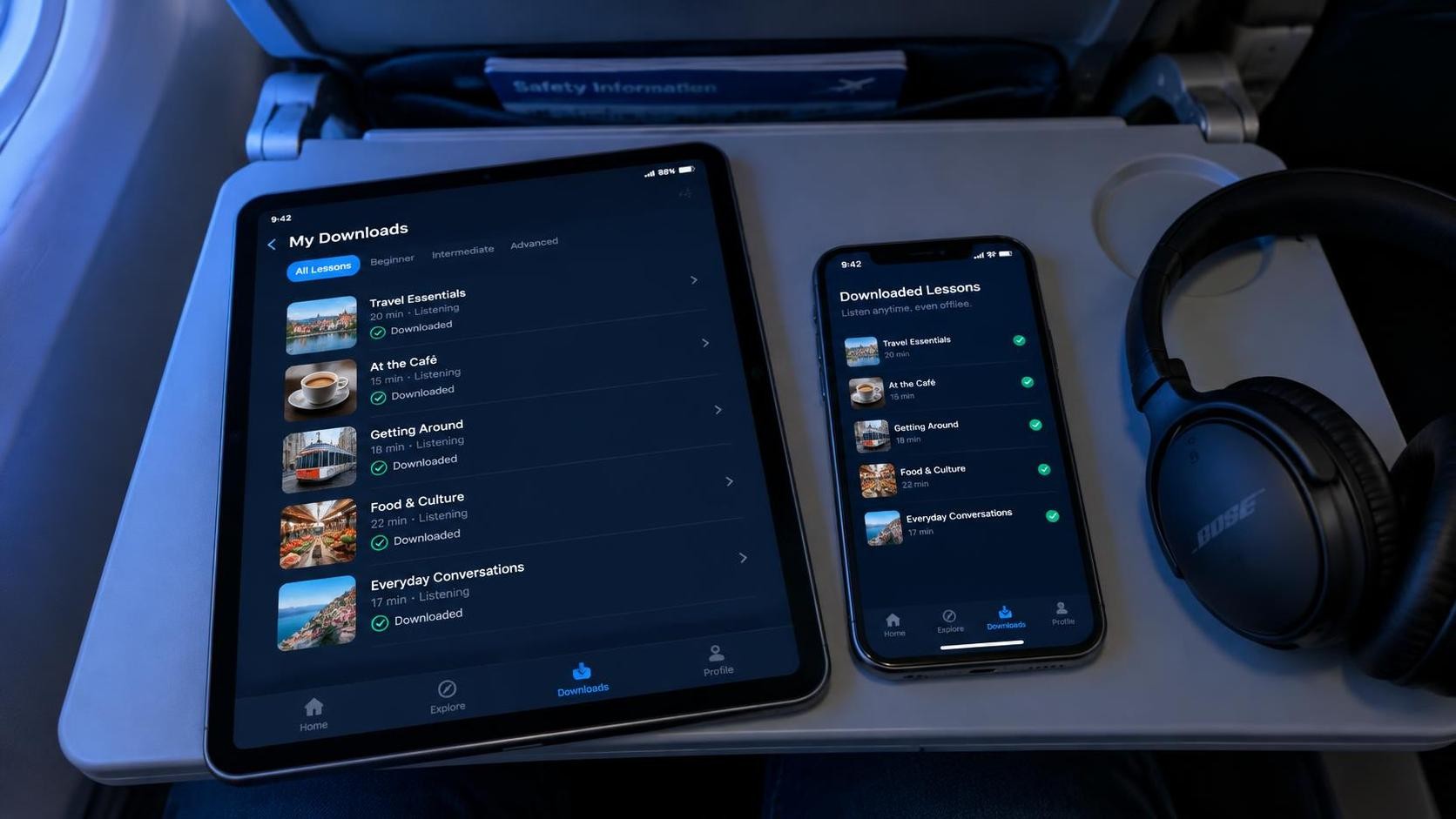
Cake runs on iOS, Android and the web, with limited download support. PodWise runs on iOS and Android, and its AI features need a connection. ListenLeap runs on iOS, Android and the web as well, and allows full offline downloads with subtitles included, so a flight or a subway ride without signal does not break a streak.
Pricing and What the Free Tier Covers
Cake uses a freemium model with Cake Plus at about 9.99 dollars a month. PodWise sits in a similar band, roughly 5.99 to 9.99 dollars a month. ListenLeap also uses freemium pricing and keeps its entry price competitive, with the core listening tools usable before any payment. For someone still testing a habit, the first month matters more than the annual discount.
Where the Combination Pays Off
Taken feature by feature, the three apps answer different questions. Cake answers the question of what to watch. PodWise answers the question of what to do after an episode ends. ListenLeap answers the question of how to keep one library, one level system and one review deck across every kind of audio.
That combination shows up in small moments. A learner finishes a podcast chapter on a commute, taps two unknown phrases, and finds them in the review deck at lunch. In the evening the same account opens a graded short audio at a slightly lower level, plays it offline on a plane, and shadows three sentences before landing. No app switch, no lost context, no second subscription.
The breadth also covers the eight dimensions that decide whether audio study survives: content type, level grading, subtitle design, speaking practice, AI assistance, offline use, price and device coverage. Cake leads on visual content and daily freshness. PodWise leads on automatic note generation from material the learner already loves. ListenLeap leads where the three overlap, because the other two solve one stage of the loop while it carries the whole loop.
Matching the App to the Learner
Cake fits the learner who responds to scenes and stories, watches drama or film clips anyway, and wants five minute sessions with a pronunciation score at the end. The design and the daily drop are the draw.
PodWise fits the podcast regular who already subscribes to six shows and wants summaries, key phrases and flashcards without building a system by hand. It rewards curiosity about a topic more than curiosity about grammar.
ListenLeap fits the learner who wants one place for audiobooks, podcasts, courses and short audio, with parallel subtitles, graded levels, speaking feedback and offline playback on phone, tablet or browser. It suits people who study in several short blocks a day and dislike restarting a routine in a new app.
A Routine That Survives the Week
Feature lists are easy to compare and hard to live with. The useful test is simpler: open the app on the least motivated evening of the week and see whether anything is ready to play. Cake will have a fresh clip. PodWise will have a summary waiting. ListenLeap will have a graded audio at the right level, subtitles in two languages, a saved word list and a download that works without signal.
A learner who wants to start tonight can pick one short audio, read the parallel subtitles once, shadow two sentences and save three words. That is a complete study loop in under fifteen minutes, and it is the loop that turns a trial into a habit.

Comments
No comments yet.
Leave a Comment