
A Month of Choosing
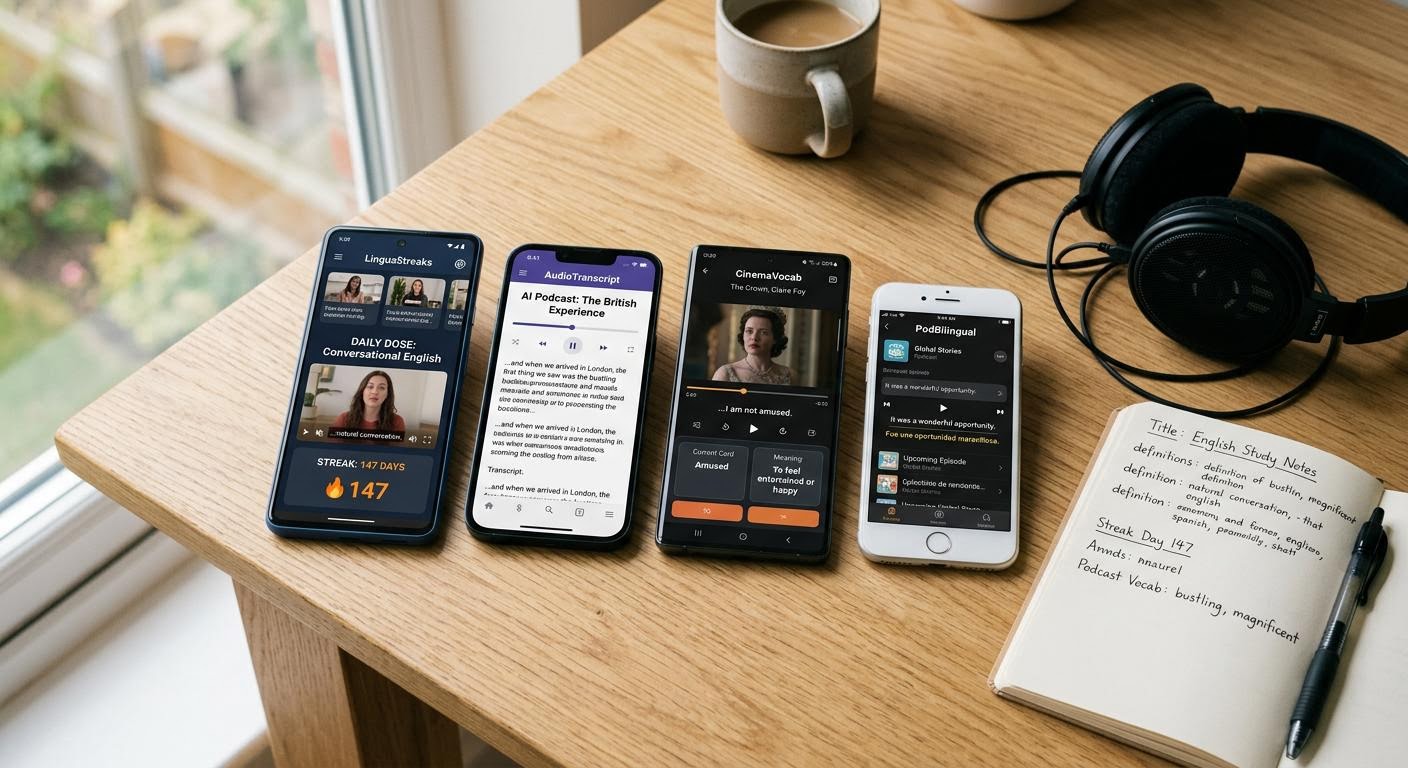
Hana had cleared her app shelf twice in a month. Cake, Miraa, EWA, and ListenLeap: she kept four English learning apps installed because each one felt right for a different mood, and she could not decide which one deserved her daily half hour. Weekdays called for something short and light; weekends felt like the moment for a long, real episode. One app fed her short clips with instant scores, one could turn the YouTube videos she already watched into lessons, one came with movies and books, and one carried thousands of real podcasts. They were all good at what they did. That was exactly the problem.

That scene is easy to recognize in 2026. English learning apps have stopped competing on who owns the biggest content pile and started competing on whose content fits a real week. Cake, Miraa, and EWA each execute a different vision with real polish, and ListenLeap sits beside them with its own approach. This guide compares the four fairly, without ranking them, so the app that matches your habits becomes obvious.
Four Apps, Four Different Strengths
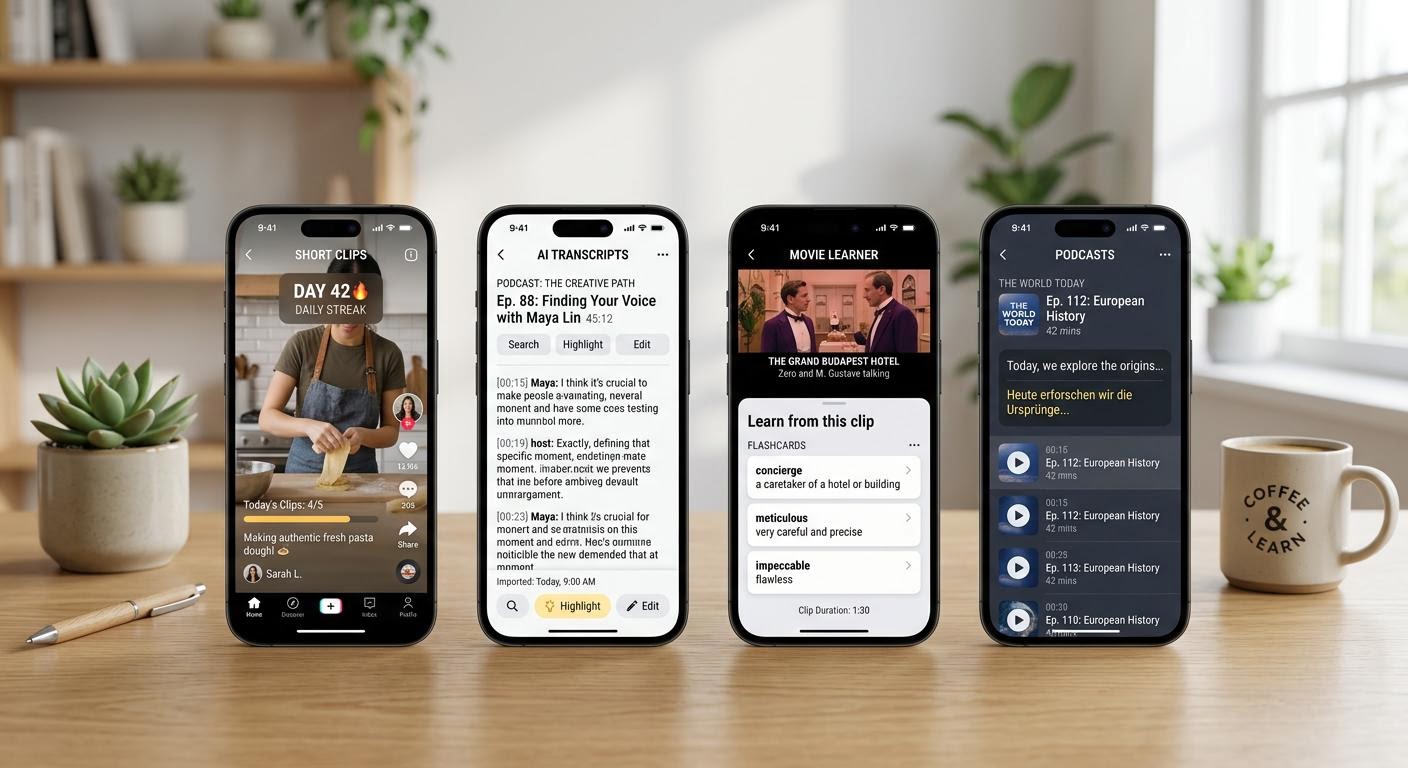
Cake is the daily clip library. Since 2017, it has collected 100,000+ short video clips from YouTube, movies, and TV shows, each with subtitles in English, Korean, and 5+ other languages, and it adds fresh ones every day. A 4.7-star rating and 50 million+ downloads show how well that formula works across Asia and beyond.
Miraa is the import-anything AI tool. Built around AI from day one, it turns any video or podcast a learner brings in, from a local file to a YouTube link, into an interactive lesson with AI transcription, bilingual subtitles, and tap-to-explain word meanings. Content freedom is its whole point.
EWA is the entertainment ecosystem. With 60 million+ downloads, it bundles 10,000+ movie and TV clips with dubbing practice, 1,000+ graded books with audio narration, 50,000+ flashcards, grammar courses, and an AI chatbot into one app that also covers Spanish, French, and Italian.
ListenLeap is the podcast learning system. It pairs a curated library of 10,000+ real podcasts from BBC, TED, and NPR, organized across 20+ topic areas, with i+1 difficulty grading, bilingual subtitles, and scored speaking practice, on iOS, Android, and Web.
Where the Content Comes From
Each app answers the content question differently, and each answer has its own appeal.
Cake is built around a curated feed of moments. Its editors pick clips from popular YouTube channels, movies, and TV shows that are worth learning from. The daily refresh keeps the feed alive, and every clip opens with subtitles ready to go. It is a library built for browsing.
Miraa trusts the learner's own library. There is no curated shelf: users import any video, podcast, or YouTube link, and AI transcribes it into bilingual subtitles on the spot. Learners who already follow English creators they love get to study exactly the content they would watch anyway.
EWA builds a world from movies and books. Its 10,000+ clips cover everyday dialogue that textbooks rarely touch, and the 1,000+ graded books with audio give reading practice at every level. Few apps let a learner go from a movie clip to a full book in the same session.
ListenLeap covers both sides. The in-app library holds 10,000+ curated podcasts across 20+ topic areas, so the shelf stays stocked with news, science, business, and lighter shows. The self-import feature accepts personal audio files, giving the same bring-your-own freedom that Miraa users value.
A Day of Practice in Each App
The daily loop decides whether an app becomes a habit. All four built loops that work, for different kinds of days.
Cake suits the five-minute break. Open the app, play one of the day's fresh clips, repeat a line, get an AI pronunciation score. Done. The light design and daily check-in make the streak easy to keep.
Miraa suits the learner who brings their own material. Import a video, read the AI transcript, tap any word or phrase for an explanation with definitions and context, shadow a few lines, and let the built-in spaced repetition bring the words back later.
EWA suits the learner who wants variety. Dubbing movie lines, flipping flashcards, doing a grammar bite, chatting with the AI bot: the day can spread across four different modes, and streaks and daily reminders keep the momentum.
ListenLeap suits the learner who wants structure. A quick level test places the learner on the i+1 difficulty ladder, so every episode is hard enough to stretch but easy enough to follow. Blind-listening mode strips the subtitles for pure ear training, fill-in-the-blank drills check retention, and smart summaries turn a long episode into reviewable notes.
Speaking, Vocabulary, and Keeping Score
Apps that only feed the ears tend to lose learners; the ones that push them to speak and show progress tend to keep them.
Cake scores pronunciation with AI after every dialogue practice, turning passive watching into active speaking in small doses. EWA's dubbing mode asks users to voice movie lines and get scored, and its 50,000+ flashcards handle vocabulary with spaced repetition. Miraa pairs shadowing practice with a built-in review system, so words met in imported content come back later.
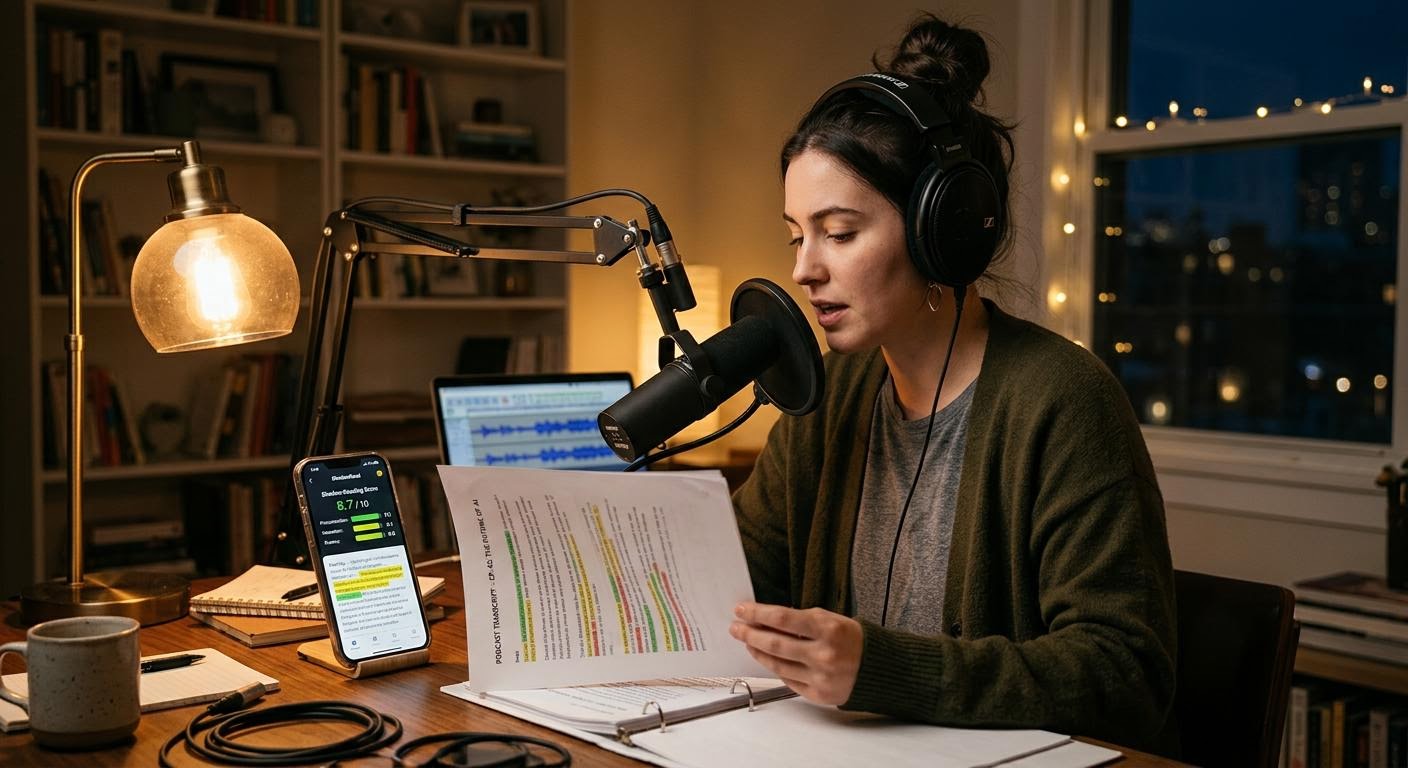
ListenLeap treats speaking as a measured habit. Its shadow reading mode scores pronunciation, intonation, and fluency separately, so a learner sees exactly which dimension needs work instead of a vague overall grade. Vocabulary gets the same treatment: tap any word for a definition with British and American pronunciations, phrase breakdowns, and example sentences, then file it into the vocabulary notebook with personal notes. The path from hearing a phrase to saying it and saving it stays inside one episode.
Where Each App Fits Into a Real Week
Platform reach and offline options decide whether an app survives real life: commutes, travel, weak signal.
Cake runs on iOS, Android, and Web, which makes desktop sessions easy between meetings.
Miraa is mobile-first and built for on-the-go importing and transcribing.
EWA covers iOS and Android, with downloadable books and courses for offline study.
ListenLeap covers all three platforms, and adds offline caching, PDF export, and a sleep timer, so a learner can download a week of episodes, study with no signal, and end the day with an episode without losing their place.
What ListenLeap Adds to the Mix
None of these apps is a weak choice, and for many learners the right answer is that more than one belongs on the phone. ListenLeap's case rests on one point: the full path from first listen to spoken output lives inside a single app.
The starting point is the library. 10,000+ real podcasts from BBC, TED, and NPR, organized into 20+ topic areas, mean a learner never has to wonder what to press play on. The level test then matches the material to actual ability with i+1 grading, so the episode list grows harder at the pace the learner grows.
Around that core sit the study tools. Bilingual subtitles in Simplified Chinese, Traditional Chinese, Korean, and Japanese catch learners mid-flow; tap-to-look-up covers definitions, phrases, and example sentences; AI Q&A answers follow-up questions about the episode itself; smart summaries condense long episodes into reviewable notes. For ear training, blind-listening mode hides the subtitles completely, and fill-in-the-blank drills turn passive listening into active recall.
Then comes the output side. Shadow reading scores pronunciation, intonation, and fluency separately, so speaking practice is a measurable daily habit rather than a bonus feature. Offline caching and PDF export keep the routine alive on a commute without signal or at a desk without a screen. The same progress follows across iOS, Android, and Web. That combination of a deep curated library, level-matched structure, and scored speaking is what makes ListenLeap a complete system rather than another single-skill app.
Which App for Which Learner
Short-session learners who want a daily five-minute habit will enjoy Cake's fresh clips and instant pronunciation scores.
Self-directed learners with favorite creators and personal audio files will find Miraa's import-anything freedom hard to beat.
Entertainment-first learners who want movies, books, and games in one app will feel at home in EWA.
Podcast listeners and structured learners who want level-matched content, real audio, and speaking feedback will find the full loop in ListenLeap.
The smartest setup is often a combination: one app for the daily short session, one for the deep study session. Many learners keep Cake for quick breaks and build their main routine around ListenLeap: a BBC episode at their level in the morning, blind listening on the commute, a scored shadow reading session before bed.
Start With One Episode
ListenLeap's free Web version takes about a minute to reach the first episode: open the site, run the level test, pick a topic area, press play. No install required, no paywall in front of the first listen. For learners who want real podcasts, level-matched structure, and speaking feedback in one place, that first episode is a fair way to find out whether the system fits.

Comments
No comments yet.
Leave a Comment