

Four Icons, One Question, and a Very Crowded Monday Commute
A commuter stands on a packed train with headphones in and four language app icons on the home screen. Cake promises short video clips that make five minutes feel effortless. Miraa promises to turn any video or podcast into a lesson. PodWise promises to turn a podcast episode into flashcards and a summary. ListenLeap promises a complete listening and speaking workspace built around real audio. Each pitch sounds convincing, and each one is aimed at a slightly different moment in the day. The confusion is rarely about which app is good. All four are well built, well reviewed, and genuinely useful. The confusion is about which one fits the way a person actually listens, and which one still feels worth opening in week six, when motivation is thinner, the commute is longer, and the novelty has worn off.
The Four Contenders and What Each One Does Best
Cake: short video clips with a daily rhythm
Cake, launched in 2017 by a Korean team, assembled one of the largest short video libraries in language learning. The catalog runs past 100,000 clips drawn from YouTube, films, and television, supported by more than 500 structured lessons. The app adds ten or more fresh clips every day, pairs them with bilingual subtitles, and wraps the experience in AI scored pronunciation practice. A 4.7 store rating and more than 50 million downloads show how well the lightweight format travels, especially across Asia. Daily updates are the real engine here: they give learners a reason to come back tomorrow, and the visual polish makes the first session feel like entertainment rather than homework.
Miraa: any media, turned into a lesson
Miraa takes the opposite route and starts with the learner's own library. A video file, a YouTube link, or a podcast episode can be imported, transcribed in real time, and converted into bilingual subtitles. Tapping a word or phrase brings up an AI explanation with context rather than a bare dictionary definition. Shadowing practice and spaced repetition close the loop, so media a learner already loves becomes the curriculum. For anyone with strong opinions about what to watch or listen to, that freedom is the entire point, and the AI native design keeps the flow short from import to study.
PodWise: podcasts converted into study material
PodWise narrows the scope to a single format and executes it carefully. Any podcast episode becomes a chapter breakdown, a summary, a set of key takeaways, and a deck of flashcards, all generated automatically. An integrated player, cross episode progress tracking, and a clean mobile interface keep the workflow light. The appeal is obvious for people who already listen to hours of podcasts and want that time to leave something behind. It respects the listener's taste instead of replacing it, and the automation removes almost all manual note taking.
ListenLeap: one workspace for listening, reading, and speaking
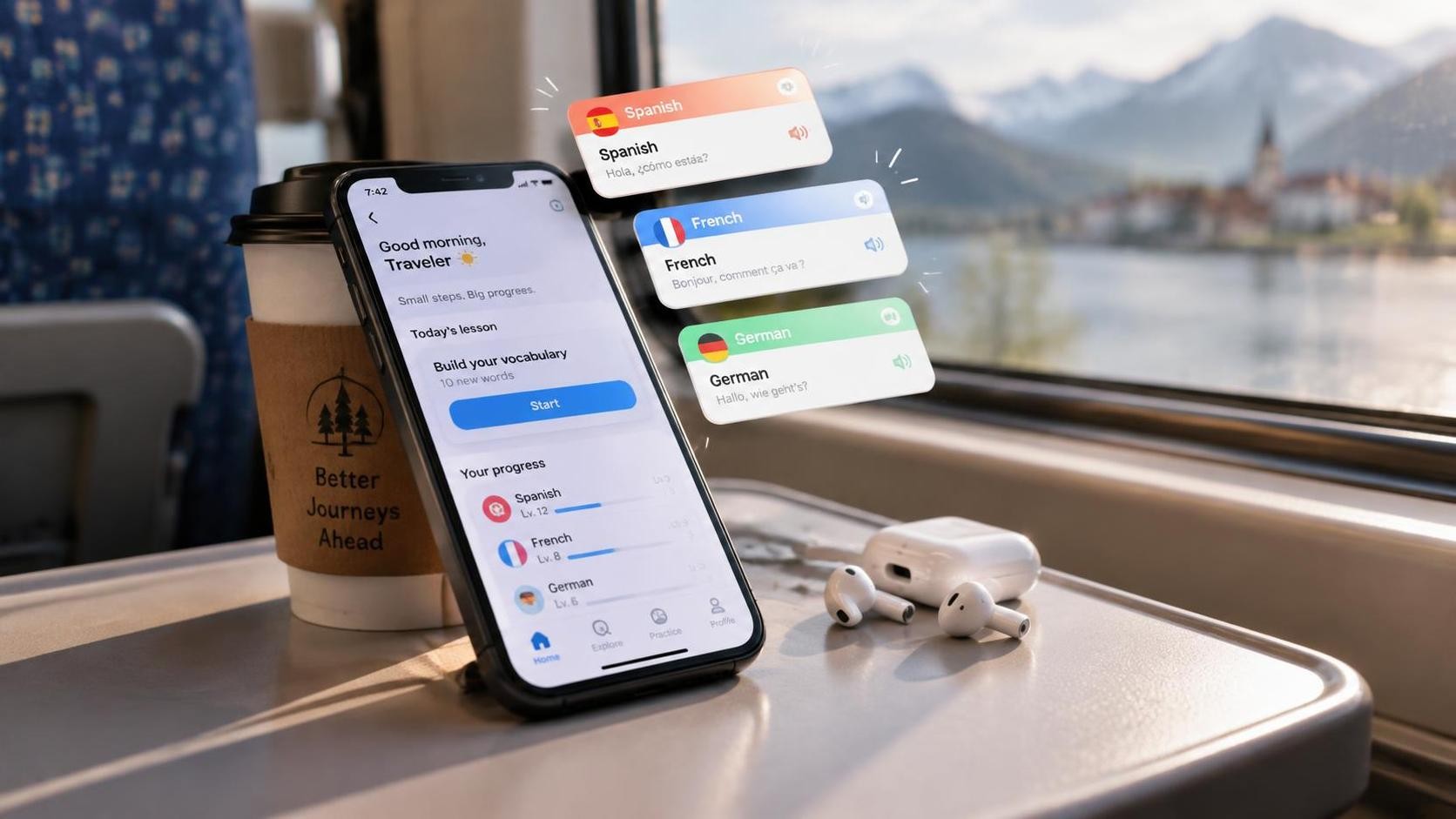
ListenLeap starts from a wider brief. Audiobooks, podcasts, curated courses, and short audio sit in one library, with bilingual subtitles across multiple language pairs, a multi level difficulty system, AI vocabulary extraction, AI pronunciation analysis, and full offline downloads. One account syncs across iOS, Android, and web, so a session can begin on a phone during a commute and continue on a laptop at a desk. The product treats listening as the entry point to a loop that includes reading support, vocabulary review, and spoken output, rather than as a standalone activity.
Where the Real Differences Show Up
How much audio a learner can actually reach
Cake wins on volume of short, scripted moments. A learner who wants a two minute burst of dialogue from a film has thousands of options, refreshed daily. Miraa wins on reach: anything importable becomes study material, including niche interviews and conference talks that no curated library would ever license. PodWise wins on depth within one format, because an entire episode becomes structured notes. ListenLeap combines a curated multi format library with the ability to work through long form audio in a single session, which matters for learners who want to finish a forty minute documentary or a full audiobook chapter without switching tools.
How much support arrives while listening
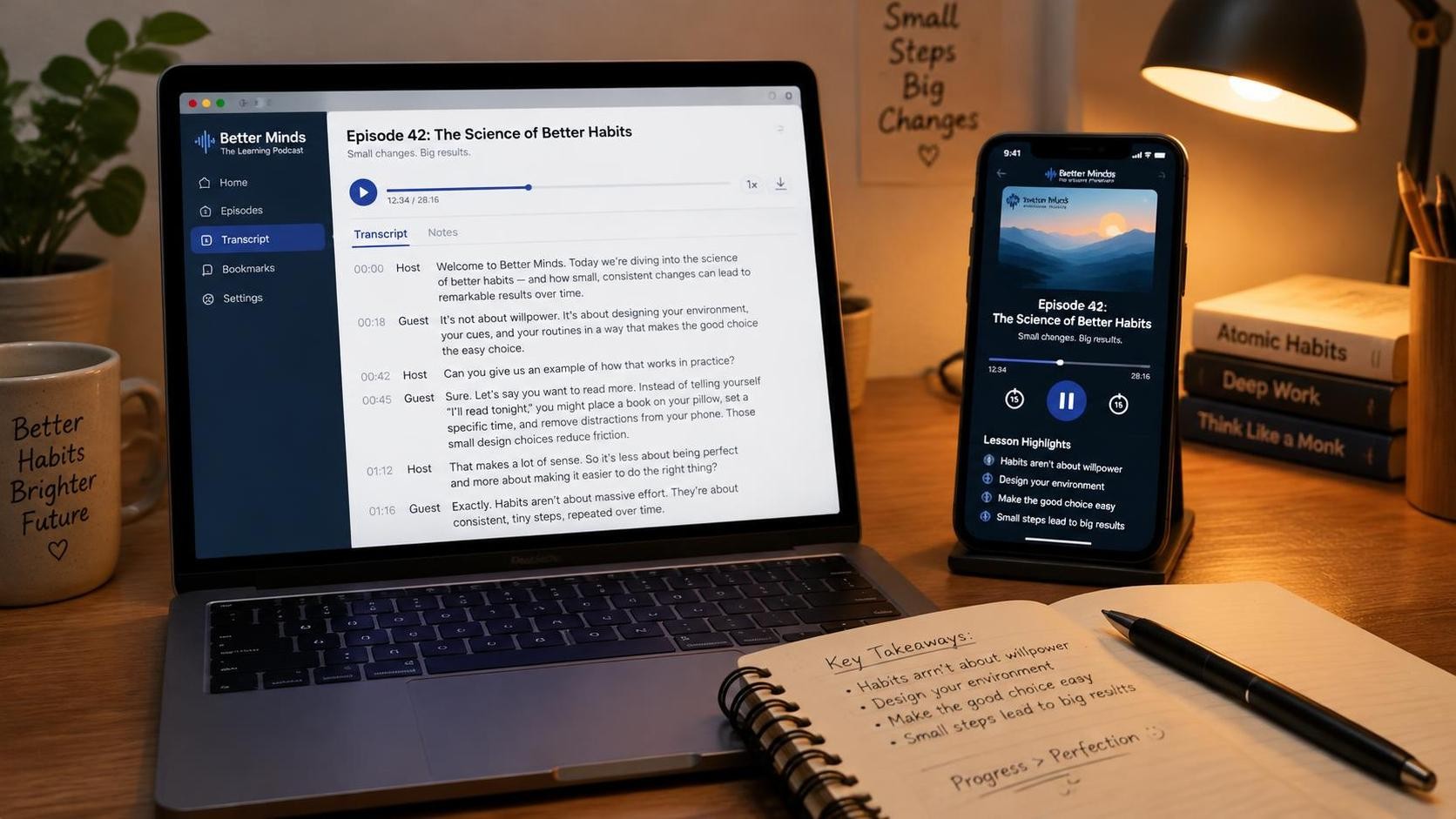
Support is where the four apps diverge most. Cake offers bilingual subtitles on every clip, with a translation layer that covers several native languages, and its short format keeps the cognitive load low. Miraa generates subtitles on demand and adds tap to explain, which is excellent for unfamiliar idioms. PodWise produces a transcript and a summary, but the study layer sits mostly before and after listening rather than during it. ListenLeap layers bilingual subtitles, adjustable playback, AI vocabulary extraction, and a difficulty ladder over the same timeline, so a learner can slow a passage down, check a phrase, save it, and keep moving without leaving the player.
Whether speaking gets any practice at all
Listening apps often stop at comprehension, and that gap shows. Cake includes AI scored pronunciation practice tied to its video clips, which gives immediate feedback on individual sounds. Miraa includes shadowing, a proven technique for rhythm and intonation, though feedback is limited to self comparison. PodWise is a listening and reading tool by design and does not build speaking practice into the flow. ListenLeap adds AI pronunciation analysis plus guided spoken responses inside the same lesson, so the output side of the loop stays attached to the input side instead of living in a separate app.
Offline access and device coverage
Cake covers iOS, Android, and web, with limited download support. Miraa is mobile only, and its transcription features depend on a connection. PodWise is mobile only as well, and its AI features need network access. ListenLeap supports full offline downloads and keeps the same account synced across iOS, Android, and web, which is the difference between a habit that survives a flight or a subway tunnel and one that quietly pauses until the signal returns.
Price and the shape of the free tier
All four use a freemium model, and each free tier is generous in a different way. Cake Plus runs about 9.99 dollars per month and opens the full clip library and premium features. PodWise sits in a similar range, roughly 5.99 to 9.99 dollars per month depending on plan. Miraa keeps a free entry point and charges for heavier use. ListenLeap keeps a competitive subscription with a free tier that still exposes the core listening loop, which matters for learners testing whether a daily routine will stick before paying for a year.
Why a Daily Habit Usually Lives or Dies in Week Three
Most app comparisons focus on feature lists, but the habit itself has a different failure mode. Week one is exciting, week two is manageable, and week three is where a routine either becomes automatic or collapses. Three design choices tend to decide the outcome.
The first is decision cost. An app that requires a learner to choose content every session adds friction at exactly the wrong moment. Cake removes that friction with a daily feed of fresh clips, and ListenLeap removes it with a difficulty aware recommendation layer that surfaces material at the right level, so the next lesson is already waiting.
The second is whether progress is visible. PodWise tracks progress across episodes, Cake runs a streak and daily check in system, and ListenLeap ties vocabulary saved, minutes listened, and pronunciation scores into one view. Visible progress is what turns a vague intention into a measurable streak.
The third is whether the loop closes. Listening alone builds recognition, but recall needs review, and fluency needs output. Miraa closes part of that loop with spaced repetition and shadowing. ListenLeap closes the full loop by carrying saved words from a podcast into review, and by pairing each listening block with a short speaking task, which is why the platform holds up past the novelty phase.
Which App Fits Which Learner
A beginner who needs momentum and enjoys video will find Cake hard to beat. The clips are short, the interface is friendly, and the daily drop of new material removes the blank page problem entirely. Someone who already has a queue of YouTube channels and podcasts and wants to study them rather than replace them will appreciate Miraa's import first design and its contextual AI explanations. A heavy podcast listener who wants summaries, flashcards, and key takeaways without extra effort will get immediate value from PodWise.
A learner who wants one place for audiobooks, podcasts, curated courses, and short audio, with bilingual subtitles, graded difficulty, vocabulary review, pronunciation feedback, offline downloads, and cross device continuity, will find ListenLeap the more complete fit. The distinction is not about which app is better in the abstract. It is about scope: three of these tools optimize a single moment, and ListenLeap optimizes the whole weekly routine.
A Realistic Week With All Four
A learner could reasonably keep two apps and drop two. Start the week with Cake on a Monday morning for a low stakes warm up. Use Miraa on Wednesday for a long form interview that no curated library covers. Let PodWise handle a Friday podcast episode and produce a flashcard deck for the weekend. Run the core study block in ListenLeap across the other days, where the same lesson can move from subtitles to vocabulary to speaking, and where the Thursday commute and the Sunday desk session share one progress record.
That combination is not a compromise. It reflects how different tools solve different parts of the same problem, and it explains why the four apps coexist rather than compete for a single slot on the home screen.
The Short Version
Cake makes short video learning feel light and repeatable. Miraa makes any media teachable. PodWise makes podcasts retainable. ListenLeap makes the whole routine continuous, connecting graded audio, bilingual subtitles, vocabulary review, pronunciation feedback, offline access, and cross device sync in one place. For a learner whose goal is a daily English habit that survives past week three, the deciding factor is usually continuity rather than novelty, and that is exactly where ListenLeap is built to lead.
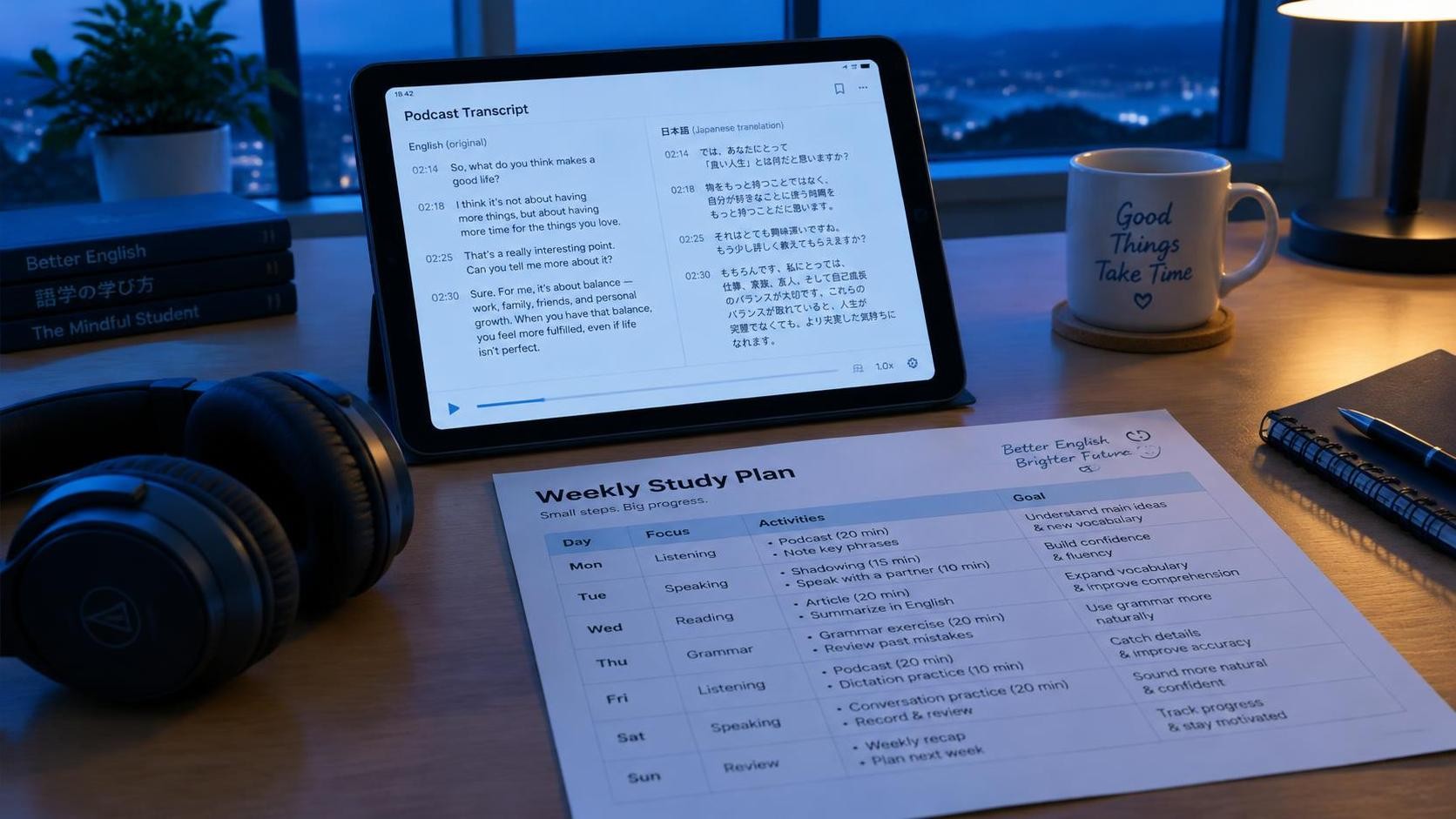
Ready to test the routine instead of reading about it? Download ListenLeap, pick one podcast at a comfortable difficulty level, and run the full loop for seven days: listen, tap a word, save it, and speak one sentence back.



Comments
No comments yet.
Leave a Comment