

The Hidden Cost of Mental Translation
A listener hears a sentence like "The deadline got pushed back because the client wanted more time," and a native-language version forms in the mind before the next sentence starts. The meaning is right. The timing is wrong. Speech keeps moving, and that extra step consumes the working memory needed for the clause that follows. By the third sentence the thread is gone, and the listener restarts from zero.
Most learners blame vocabulary size or speaking speed. In many cases the bottleneck is the route itself: every phrase is sent through a first language before it is allowed to mean anything. Reading habits built that route. Years of grammar exercises and bilingual word lists taught the brain to treat English as a code to convert, so listening becomes decoding under a clock.
The fix is not a bigger vocabulary. It is a shorter distance between sound and meaning. The drills below train that distance in small, repeatable steps.
Catch the Switch Before It Costs a Sentence
Translation is easy to miss because it feels like understanding. A few signals give it away:
- A pause of a second or more after a short phrase, followed by a jump back to the start of the sentence.
- Silent repetition of the last few words in the first language.
- Eyes drifting away from the task, or a sudden need to check the transcript.
- Losing the next sentence while the previous one is still being converted.
- Remembering the gist in the first language but not a single English phrase.
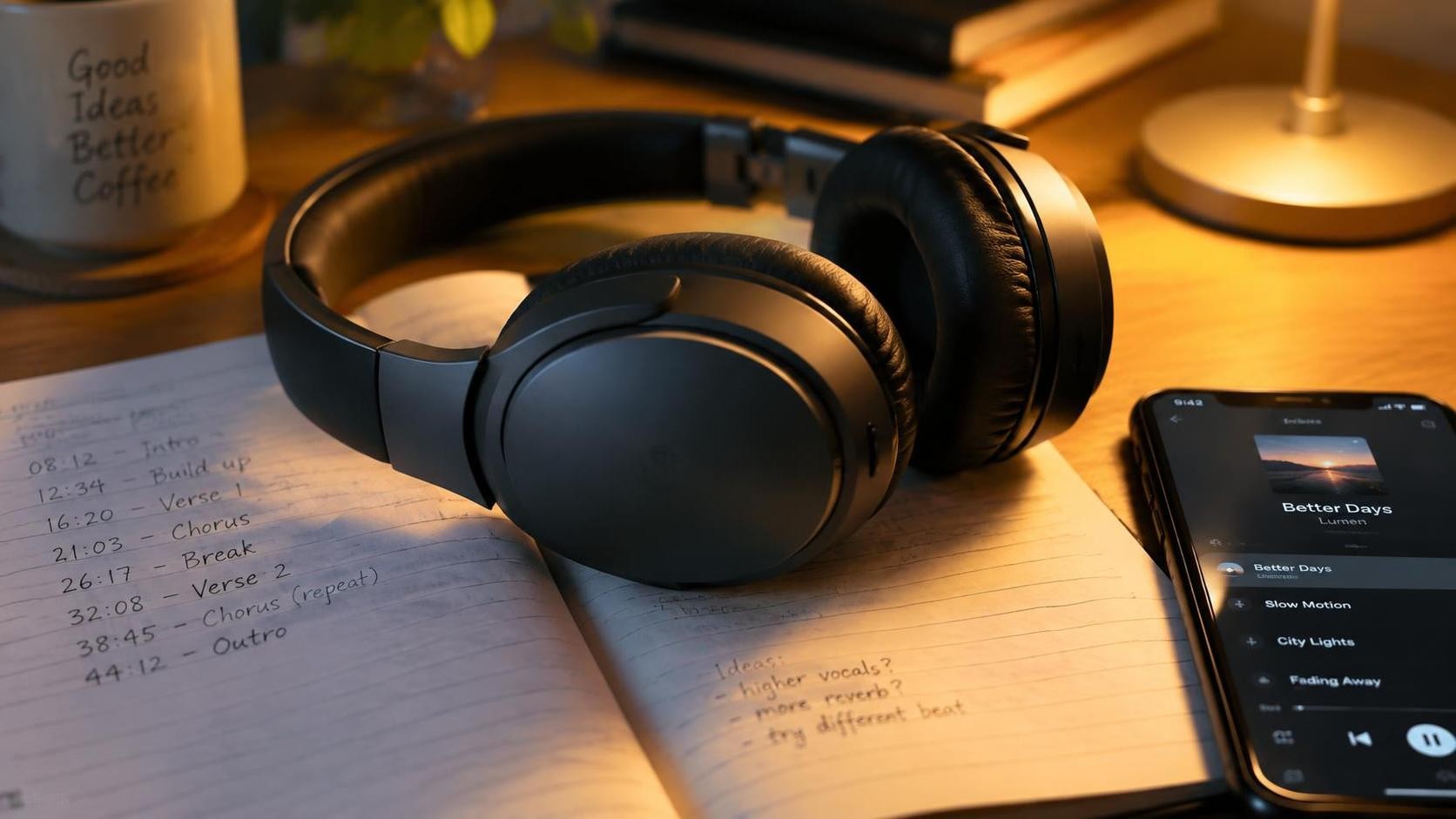
During one episode, keep a rough log. Write the timestamp, the phrase that triggered the switch, and what kind of phrase it was: an idiom, a name, a number, a fast connector. Most logs show the same three triggers within twenty minutes. Names and numbers rarely need translation at all; they need to be held for a second and released. Idioms and connectors are the real work.
Attach Meaning to Sound in Short Bursts
Long audio gives the translator room to work. Very short clips remove that room. The unit of practice is one sentence, played twice with no text on screen.
- Play the sentence and let it land as a sound shape.
- Form a picture, a movement, or a feeling, not a translated sentence.
- Reveal the transcript only after the second listen.
- Replay once more and notice which sounds were blurred, linked, or dropped.
The mental image matters more than the exact wording. A line such as "He stormed out of the meeting" should produce a door and a face, not a native-language sentence. Images survive in memory longer than translations, and they arrive faster.
A sentence loop makes this practical. In ListenLeap, a tap on any line replays just that sentence, and the speed control lowers playback without turning voices into sludge. Ten sentences in fifteen minutes is a solid session. Accuracy on the first listen is not the target; speed of recognition is.
Shadow to Crowd Out the Inner Translator
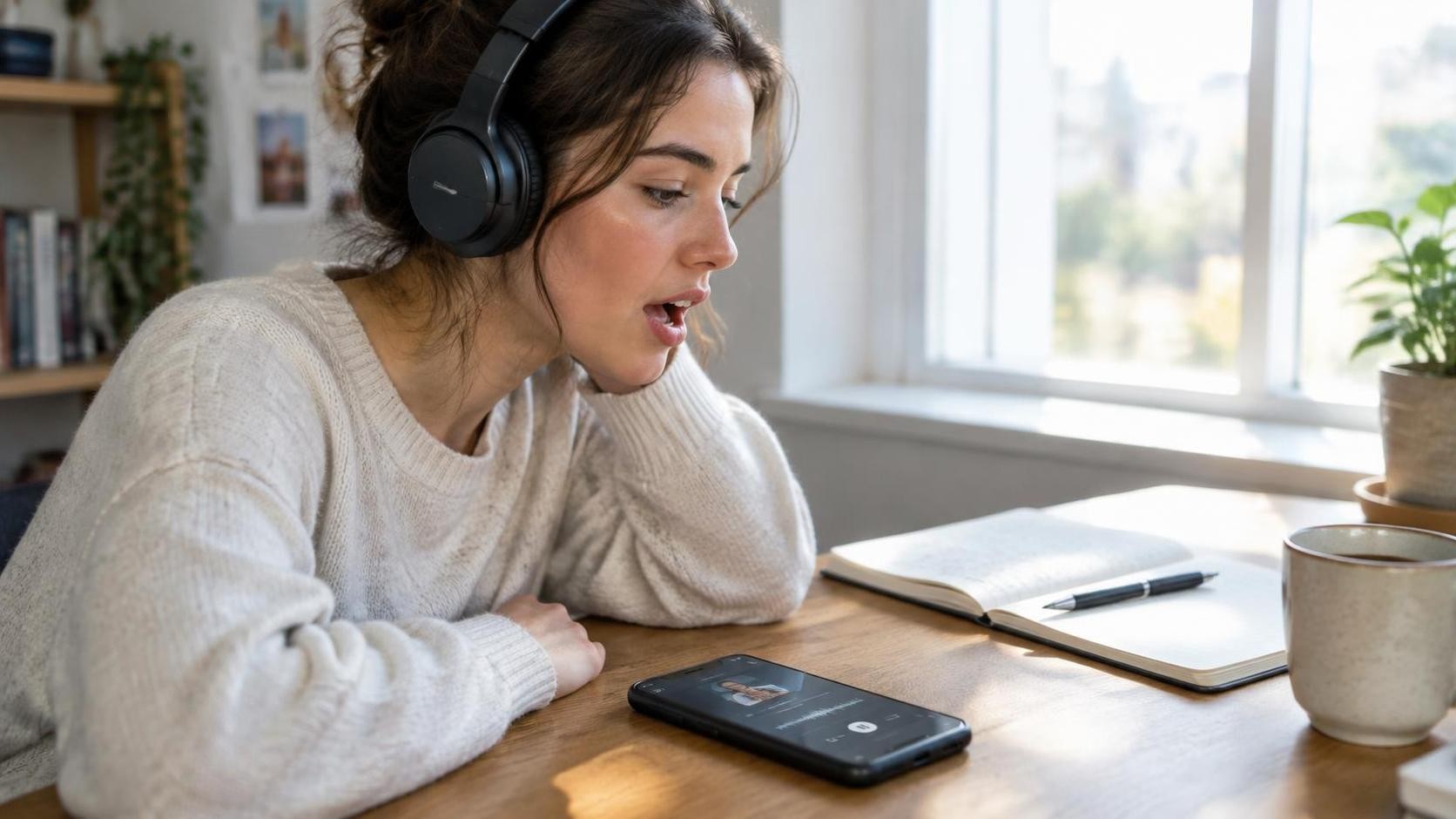
Shadowing attacks the habit from the mouth side. The listener repeats speech aloud with a delay of about half a second, keeping pace with the audio. When the mouth is busy, the inner translator has no spare capacity. The first thirty seconds will feel clumsy, which is normal.
Start with a clip that is clear and moderately paced, then extend to a full minute. Keep the delay short. A long delay turns the exercise into memorization, and memory is exactly where translation hides. Listen for rhythm and stress rather than individual sounds. English carries meaning in its beat, and matching the beat forces the ear to group words the way a native speaker does.
Recording adds feedback. ListenLeap scores shadowing attempts on pronunciation, fluency, and completeness, which turns a vague sense of "that felt better" into three separate signals. A low fluency score with high pronunciation usually means the delay was too long. Low completeness means words were skipped, often at the exact points where linking occurs. Fix one signal per session.

Build a Bank of Chunks, Not a List of Words
Single words invite one-to-one mapping. Chunks arrive as units and can be stored as units. A phrase such as "as far as I know" or "it turns out" occupies one slot in memory, not five, and it carries a tone that a word list cannot show.
After each episode, collect five chunks. Replay each at native speed, say it aloud, then use it in a sentence about daily life. The sentence can be dull. What matters is that the chunk leaves the transcript and enters speech. Over a month that is roughly a hundred chunks, enough to cover a large share of casual podcast talk. Keep them in a plain notes file with the timestamp, so the sound can be replayed later.
Test Comprehension Without a Translation
A quiet check after listening shows whether meaning stuck. Retell the segment in English for sixty seconds, out loud or in writing. Then list three facts, two names, and one opinion. If the retelling stalls, replay the segment instead of translating it. The replay is the practice; the translation is only a comfort.
A second check uses structure. Draw three boxes for the opening, the middle, and the end of a story, then fill each with a few words. A listener who can rebuild the shape of an episode has understood it, even with gaps. A listener who can only recall isolated translated phrases has not.
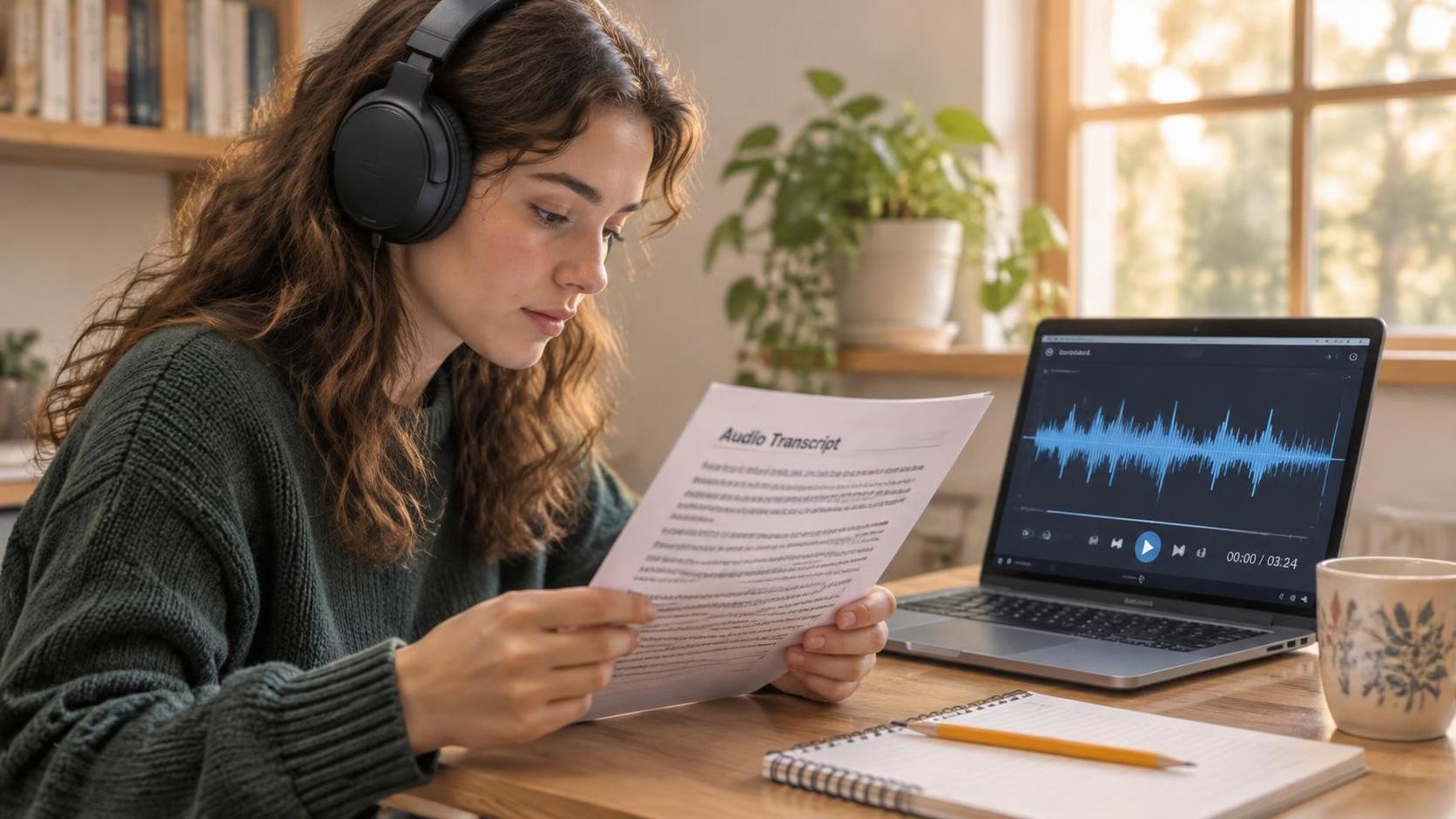
Transcript settings help here. Hide the text for the first pass, and use it as a checker rather than a crutch. A quick look to confirm a name or a number is fine. Following the text line by line while audio plays turns listening practice into reading practice with background noise.
A Four-Week Schedule That Fits a Commute
Week one: fifteen minutes a day, ten sentence loops per session, and a translation log. The only goal is to notice the switch.
Week two: add ten minutes of shadowing on the same clip, and five chunks per day. Keep the log going.
Week three: one uninterrupted three-minute listen, then a sixty-second retell, then a transcript check. No pausing.
Week four: a full fifteen-minute episode at normal speed with the transcript hidden. Check understanding afterward. Compare the log from week one with the log from week four, and count the triggers.
Twenty-five minutes a day is enough. Longer sessions are welcome, but consistency does more than volume, because the habit being replaced is old and automatic.
When a Translation Is Actually Useful
The first language is not the enemy. It helps with abstract topics, with technical terms, and with the occasional word that refuses to resolve from context. The rule is order: listen first, translate later, and keep the translation to a word or a phrase. A full paragraph translated after listening is study. A full paragraph translated during listening is the problem.
For a difficult episode, read a short English summary before pressing play. Background knowledge reduces the number of unknowns, and fewer unknowns mean fewer reasons to reach for the first language.
What Progress Feels Like
The change is gradual and easy to measure. Gaps between sentences shrink. Jokes land before the explanation. Facts stay in memory while the wording fades. Unknown words get skipped and the thread survives. After a distraction, the listener rejoins the audio instead of restarting the episode.
None of this requires perfect comprehension. It requires the meaning to arrive on time. Once sound connects to sense without a detour, speed stops being the enemy and becomes just another feature of the voice.


Comments
No comments yet.
Leave a Comment