

Many English learners hit the same wall: they can read well, write decent emails, even hold basic conversations—but the moment a native speaker talks at natural speed, everything falls apart. Words blur together. Accents throw them off. By the time they process one sentence, the speaker has already moved three sentences ahead.
The fix isn't more grammar drills or another vocabulary app. The fix is training the ears the same way a musician trains theirs—with consistent, structured listening practice. Here's how to build a daily podcast routine that actually improves comprehension, not just fills background noise.
Why Most Listening Practice Fails
Most learners approach listening the wrong way. They put on a podcast while commuting, cooking, or scrolling through their phone, hoping passive exposure will magically improve their comprehension. It won't. Passive listening turns English into white noise. The brain learns to tune it out, not process it.
Active listening—stopping, replaying, analyzing—feels harder. It demands attention. But that friction is exactly where improvement happens. A fifteen-minute focused session beats an hour of half-listening every time.
Step 1: Pick Content at the Right Level
The biggest mistake learners make is jumping straight into native-level content that's way above their current ability. If someone understands less than 60% of what they hear, they're not learning—they're fighting to survive the audio. Frustration builds, motivation tanks, and they quit.
The sweet spot sits around 70–80% comprehension. Enough to follow the main ideas, with just enough new words and expressions to stretch their ability. This is the "i+1" principle: current level plus a small step up.
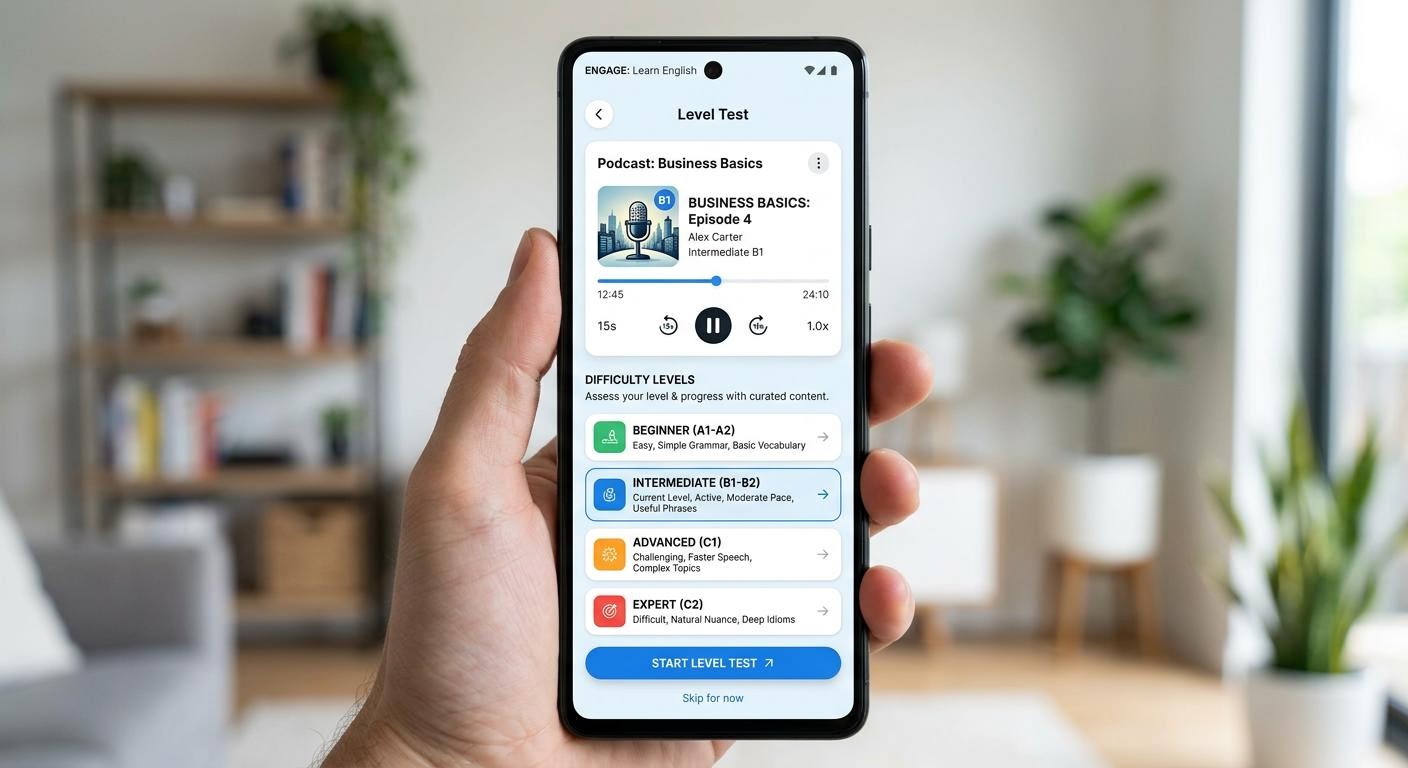
Apps like ListenLeap handle this automatically through a built-in level test and content difficulty grading. Instead of guessing whether a BBC interview or TED Talk matches their level, learners see a clear rating before they start. No wasted time, no demoralizing content.
Step 2: First Listen—No Script, No Pause
Before touching any transcript or translation, do one full pass through the audio. No pausing. No rewinding. The goal here isn't perfect understanding—it's getting a feel for the speaker's pace, intonation, and overall message.
This mimics real conversation. In real life, nobody pauses mid-sentence so a listener can catch up. Training the brain to tolerate uncertainty and piece together meaning from partial understanding is a skill in itself.
After that first pass, the learner should ask themselves: What was the main topic? What key points did the speaker make? Even a rough summary counts as a win. If they caught nothing, the content is probably too difficult—step back to easier material.
Step 3: Sentence-by-Sentence Deep Dive
Here's where the real work begins. Go back to the beginning and work through the audio one sentence at a time. Listen to a sentence. Try to repeat it in their head. If they didn't catch every word, replay it. Still stuck? Check the transcript.
This sentence-by-sentence approach trains the ear to recognize connected speech—the way native speakers link, reduce, and swallow sounds. "What do you want to do?" becomes "Whaddaya wanna do?" in natural speech, and no amount of textbook study prepares a learner for that.
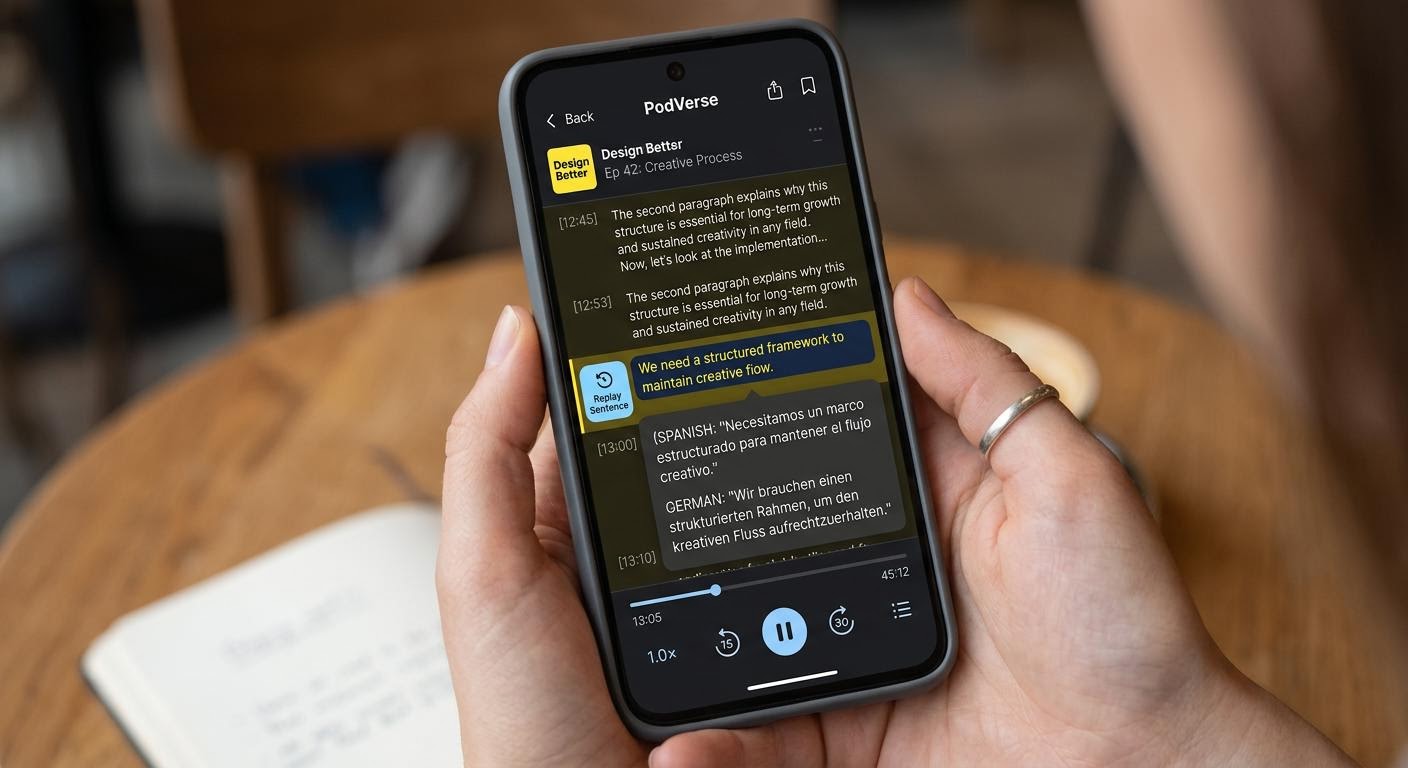
ListenLeap's sentence-by-sentence playback mode handles this step without the usual friction. Instead of manually scrubbing back and forth trying to isolate individual sentences, learners tap a single button to replay any sentence. The bilingual subtitle support—available in Simplified Chinese, Traditional Chinese, Korean, and Japanese—lets learners check their understanding instantly without switching to a separate dictionary app.
Step 4: Shadow for Rhythm and Sound
Once the learner understands every word in a section, they should speak it back—matching the speaker's pace, intonation, and rhythm as closely as possible. This is shadowing, and it does double duty: it reinforces listening comprehension while building speaking fluency.
Most learners fixate on individual words. Shadowing shifts attention to the music of the language—the rise and fall of pitch, the stressed and unstressed syllables, the pauses that give speech its natural flow.
The hard part is knowing whether they're doing it right. Without feedback, learners can shadow incorrectly for months without realizing it. ListenLeap's shadowing feature scores three dimensions—pronunciation, intonation, and fluency—giving learners immediate feedback on exactly where they're drifting off track and what needs adjustment.
Step 5: Mine Vocabulary in Context
After working through the audio, the learner should extract five to eight new words or phrases that appeared in the episode. Not random words from a frequency list—words they actually heard in a real context, connected to a real topic they just spent time understanding.
Context is what makes vocabulary stick. A word encountered in a podcast about climate change carries meaning, emotion, and associations that a flashcard never will. When that same word shows up again in another listening session, the brain recognizes it faster. That's how real vocabulary acquisition works—not through isolated memorization, but through repeated, meaningful exposure.
ListenLeap supports this step with tap-to-lookup: tap any word in the transcript to see its definition instantly, without leaving the playback screen. Each looked-up word saves automatically to a built-in vocabulary list, and the app provides phrase breakdowns and full-sentence explanations for tricky passages—useful when a sentence's meaning depends more on structure than on individual words. For deeper understanding, the AI-powered Q&A feature lets learners ask follow-up questions about expressions or usage patterns right within the app.
A Sample Daily Routine
Here's what a 20-minute session looks like when all five steps work together:
Minutes 0–3: First pass through the audio, no transcript. Focus on catching the gist.
Minutes 3–10: Sentence-by-sentence deep dive. Replay each sentence, check the transcript when needed, understand every word.
Minutes 10–14: Shadow two to three key sentences. Match the speaker's rhythm and intonation. Use the scoring feedback to adjust.
Minutes 14–17: Extract five to eight new terms. Tap to look them up, review the definitions, save to the vocabulary list.
Minutes 17–20: Listen to the full audio one more time. No transcript, no pausing. Notice how much more is understandable now compared to the first pass.
This isn't a magic formula. It's structured, repeatable practice. Do it four to five times a week for a month, and the difference in comprehension is hard to miss.
What Happens After a Month
After roughly 30 days of daily focused practice, most learners notice a few consistent changes. Podcast hosts who once sounded like a blur of noise start to separate into distinct words. The panic of missing one sentence no longer derails the entire conversation. Unfamiliar accents become less intimidating—not because the learner has studied them all, but because their ear has learned to adapt.
The key isn't talent or moving to an English-speaking country. It's showing up every day and doing the work that most learners skip. Fifteen focused minutes. Five steps. Repeat.
That's the whole system. No shortcuts, no hacks—just deliberate practice that actually rewires the way the brain processes spoken English.



Comments
No comments yet.
Leave a Comment