
The Power of a Good Story
When a story grabs you, language barriers soften. You stop hearing individual words and start following characters, emotions, and suspense. This is why storytelling podcasts are among the most effective tools for English learners — they hijack the part of your brain that wants to know what happens next, and the English absorption happens in the background.
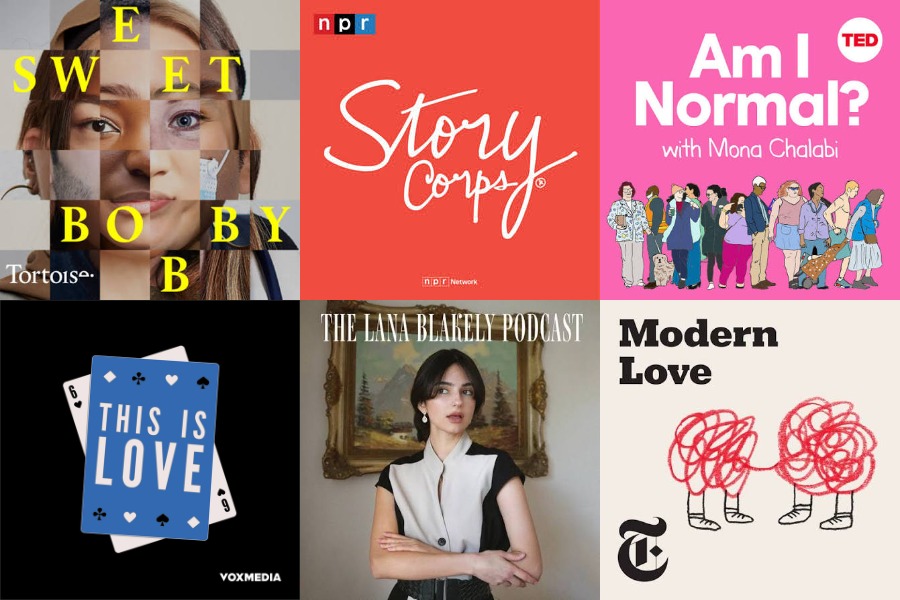
The six podcasts below are all built around real human stories. Some are investigative thrillers, some are quiet conversations between ordinary people, some are deeply personal reflections. What they share is an ability to make you forget you are listening for language practice — and that is exactly when the real learning happens.
Listening to Stories on ListenLeap
Stories move fast. A single missed sentence can mean losing the emotional thread of an entire episode. ListenLeap addresses this with tools built for narrative content. Bilingual subtitles keep you oriented through plot twists and emotional turns. The tap-to-define feature lets you catch unfamiliar words without pausing the story — critical when a podcast is building toward a reveal. After the episode, AI Q&A tests whether you followed the narrative arc and understood the key moments. For storytelling content especially, where comprehension depends on connecting events across time, these features make the difference between getting lost and getting immersed.
The 6 Podcasts
1. Sweet Bobby
Difficulty: Intermediate
Focus: Investigative journalism, true crime
Sweet Bobby is an investigative podcast from Tortoise Media that became a global phenomenon for a reason. It tells the story of Kirat, a woman who fell in love with a man named Bobby online — only to discover, years later, that the relationship was an elaborate deception. The podcast unfolds like a thriller, with each episode peeling back another layer of the mystery.
For English learners, Sweet Bobby is compelling for its narrative drive. The storytelling is so gripping that you will want to keep listening, which solves the hardest problem in language learning: motivation. The hosts and interviewees speak in clear, conversational British English, and the investigative format means key information is often repeated in different ways — a natural comprehension aid. Episodes are 30-40 minutes, tightly edited, and designed to end on cliffhangers that make you press play on the next one.
2. StoryCorps
Difficulty: Lower-Intermediate
Focus: Real conversations, everyday lives
StoryCorps is one of the most distinctive projects in American audio. Since 2003, it has recorded tens of thousands of conversations between ordinary people — a mother and daughter, two war veterans, a couple on their 50th anniversary — and distilled the most moving moments into short, beautifully produced episodes. Each segment is just 3-5 minutes, recorded in the participants' own words, with no narrator getting in the way.
This format is uniquely valuable for English learners. The conversations are unscripted and authentic, capturing the way real Americans of all backgrounds actually speak — with pauses, emotion, regional accents, and spontaneous phrasing. The short length means you can replay a single story multiple times in one sitting, catching new details with each listen. And because the stories are fundamentally human — love, loss, regret, joy — they bypass the analytical part of your brain and connect directly with emotion, which research consistently shows strengthens memory and language retention.
3. This is Love
Difficulty: Intermediate
Focus: Personal stories, relationships, human connection
From the creators of the acclaimed podcast Criminal, This is Love explores the subject of love in its broadest sense — not just romantic love, but the love between friends, between strangers who share a fleeting moment, between a person and a place, an animal, a memory. Each episode tells a single true story, narrated with warmth and restraint by host Phoebe Judge.
Phoebe Judge's voice is a gift for English learners. She speaks with exceptional clarity and a measured pace, but never sounds artificial or slowed-down. The stories are selected for emotional resonance rather than newsworthiness, meaning the vocabulary is conversational and heartfelt rather than technical or jargon-heavy. Episodes run 20-30 minutes — ideal for a focused listening session — and the self-contained format means you can jump in anywhere without needing backstory.
4. Am I Normal? with Mona Chalabi
Difficulty: Intermediate
Focus: Data journalism, personal essays, social questions
Mona Chalabi is a data journalist and illustrator who uses numbers to answer deeply personal questions: Am I normal for having no friends at 30? For never wanting children? For still thinking about an ex from ten years ago? Each episode blends rigorous data analysis with Chalabi's own vulnerability and wit, creating a format that feels like a conversation with a brilliant, self-deprecating friend.
For English learners, Am I Normal? offers something rare: exposure to how English speakers talk about emotions, insecurities, and social norms. The vocabulary is modern and authentic — you will hear terms like "attachment style," "social battery," and "decision fatigue" in their natural context. Chalabi's British-accented English is crisp and articulate, and the data segments provide natural pauses and repetition that aid comprehension. Episodes are 25-35 minutes and highly re-listenable.
5. Lana Blakely
Difficulty: Intermediate
Focus: Personal reflection, emotional honesty, creative life
Lana Blakely is a Swedish creator who produces a weekly podcast that extends the candid, introspective style of her popular YouTube channel. Each episode is essentially a personal essay — Lana sitting with a microphone and thinking through a single idea: why we chase validation, how to sit with loneliness, what it means to build a life you actually want.
Her English is remarkably clear and precise — a product, perhaps, of being a non-native speaker herself who has mastered the language to an exceptional degree. She speaks slowly enough for intermediate learners to follow comfortably, but her vocabulary and sentence construction are sophisticated. The monologue format means there are no cross-talk or interruptions to navigate, and the reflective, almost meditative tone makes it an excellent podcast for winding down in the evening while still getting meaningful English exposure.
6. Modern Love
Difficulty: Intermediate
Focus: Real love stories, relationships, human connection
Modern Love is The New York Times' beloved column turned podcast, hosted by Anna Martin. Each episode features a true story about love in its widest sense — romantic love, familial love, the love between friends, and the complicated love that does not fit into any category. The stories are read by well-known actors, followed by a conversation that explores the deeper themes.
For English learners, Modern Love offers polished, emotionally resonant English delivered by professional narrators. The vocabulary is rich with words for feelings, relationships, and personal reflection — terms like "vulnerability," "longing," "reconciliation," and "intimacy" appear naturally in context. The follow-up discussions model how English speakers analyze and reflect on personal stories, a conversational skill that is valuable in both social and professional settings. Episodes are 25-35 minutes, released weekly, and each one stands alone — no need to listen in order.
How to Build a Story-Listening Habit
Storytelling podcasts reward a different approach than news or educational shows. Here is a method that works:
For short-form stories like StoryCorps: Listen to three episodes back-to-back — about 15 minutes total. First listen without subtitles, just to feel the emotional shape of each story. Second listen with ListenLeap subtitles on, catching the specific words and phrases that delivered the emotional impact.
For long-form narratives like Sweet Bobby: Listen to one full episode with subtitles. Do not pause, do not look up words — let the story carry you. After the episode, use ListenLeap's AI Q&A to check comprehension. Then, before the next episode, try summarizing what happened in the previous one — out loud, in English, to yourself — in under a minute.
For reflective shows like Lana Blakely or Am I Normal?: After listening, spend five minutes writing your own response to the episode's question in English. If Mona Chalabi asks "Am I normal for...?", write your answer. This transforms passive listening into active production — the fastest path from understanding English to using it.




Comments
No comments yet.
Leave a Comment