
Listening is where every language journey begins. Before speaking, before writing, before grammar rules make sense — the ear has to catch the rhythm first. Podcasts are uniquely suited to this task. Unlike videos, they strip away visual cues and force the brain to process sound alone. Unlike classroom audio, they fit into real life: a commute, a walk, a quiet evening with headphones on. No screen required, no textbook needed.
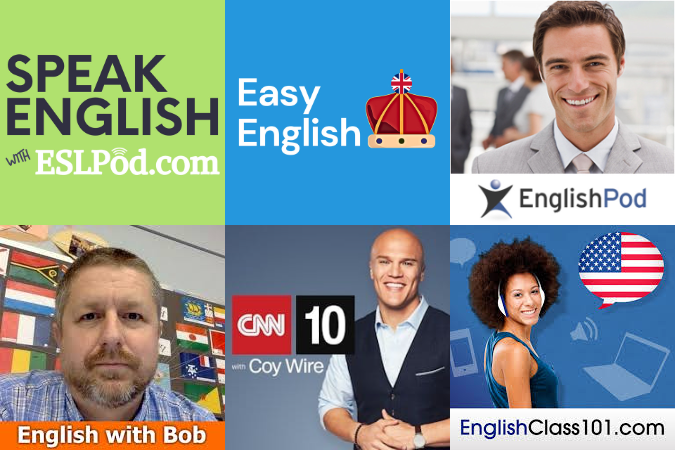
The six podcasts below were chosen for one reason — they actually work for beginners. Not "beginner-friendly in theory," but podcasts with slowed delivery, controlled vocabulary, and hosts who explain as they go rather than perform. Some have been helping learners for over a decade. Others are newer but built with the same principle: meet the listener where they are, then pull them forward one step at a time.
Listening Smarter with ListenLeap
Raw listening is valuable, but structured listening is faster. These six shows are all available on ListenLeap, where the platform's i+1 difficulty engine helps match each episode to a listener's current level — no guessing whether a show is too easy or too hard. The built-in level test places beginners precisely, and as progress accumulates, the recommendation engine adjusts upward.
Bilingual subtitles in Simplified Chinese, Traditional Chinese, Korean, and Japanese provide a safety net without creating dependency. Tap any word for instant definitions with both British and American pronunciations, example sentences, and collocation notes. The blind listening mode strips away text entirely for focused ear training, while the phrase analysis tool breaks down entire sentences to explain why a native speaker phrased something that way. After an episode, the smart summary pulls out key takeaways, gold phrases, and useful expressions — so the learning doesn't end when the audio stops.
The Six Podcasts
1. Speak English with ESLPod.com
Difficulty: Beginner to Intermediate
Accent: American
Episode Length: 20–30 minutes
Update Frequency: 12 episodes per month (Apple Podcasts subscription)
ESLPod is the heavyweight of English-learning podcasts. Hosted by Dr. Jeff McQuillan and Dr. Lucy Tse — both holding PhDs in applied linguistics — the show has reached over 15 million listeners across 189 countries since its launch. Each episode works through a short real-world scenario: a job interview, ordering at a restaurant, making small talk at a party. The dialogue plays once at a deliberately slow pace with full explanations of every idiom and collocation, then plays again at near-native speed so the listener can measure their improvement in real time.
The back catalog is enormous — over 1,800 lessons covering everyday conversation, American culture, and practical situations. For a beginner, the value is in the method: the host doesn't just read a script and move on. He stops, explains why a native speaker would say "how's it going" instead of "how are you," and gives three alternative phrases you could use instead. It's the difference between hearing English and understanding it.
On ListenLeap: Load any ESLPod episode and activate bilingual subtitles to catch every word of the slow-speed dialogue on first pass. The phrase analysis tool unpacks Dr. McQuillan's explanations further — tap any idiom he mentions and see it in three more example sentences. After the episode, use the shadow reading mode to practice the near-native-speed replay and get scored on pronunciation, intonation, and fluency.
2. Easy English Podcast: Learn English Through Listening
Difficulty: All Levels (especially Beginner to Intermediate)
Accent: British (clear, neutral)
Episode Length: 15–22 minutes
Update Frequency: Weekly (every Monday)
Hosted by Oliver, the Easy English Podcast delivers exactly what the name promises. Oliver speaks slowly and clearly — not in a robotic, unnaturally slow way, but with the deliberate pacing of someone who understands what it's like to process a foreign language in real time. With 218 episodes and counting, the show covers topics ranging from practical language tips ("Why Can't I Understand Fast English Speakers?") to lifestyle discussions ("Stop Being 'Busy' — The Secret to Slow Living") that double as listening practice and genuinely interesting content.
The podcast holds a perfect 5.0 rating on Apple Podcasts, and the listener reviews reflect a common theme: Oliver's voice is easy to follow without feeling condescending. Episodes are structured around a single theme, explored through clear narration rather than chaotic multi-host banter — ideal for beginners who get overwhelmed when too many voices compete for attention. Transcripts and bonus episodes are available through Oliver's Patreon.
On ListenLeap: This show is a natural fit for the i+1 leveling system. Beginners can start with Oliver's slower-paced early episodes from 2020–2021, and the app's difficulty tracking will surface newer, slightly faster episodes as comprehension improves. The smart summary feature is especially useful here — after a 20-minute episode on "How to Stop Brain Fog," it extracts the key vocabulary (hydration, inflammation, cognitive slump) and presents them in a review-ready list with one-tap saving to the vocabulary notebook.
3. EnglishPod
Difficulty: Beginner to Intermediate
Accent: American
Episode Length: 10–20 minutes
Update Frequency: Weekly
EnglishPod is a classic in the ESL podcast world. The format is simple and effective: a teacher and a learner co-host each episode, working through a topic together in real time. The learner asks the questions a real beginner would ask — "Wait, what does that phrase mean?" "Can I say it this way instead?" — and the teacher explains in plain language, not academic jargon. Topics range from everyday situations (ordering coffee, checking into a hotel) to light debate and storytelling.
What makes EnglishPod stand out is the conversational authenticity. Because a learner is part of the conversation, the explanations happen organically rather than as scripted asides. The pacing is naturally slower because the co-host pauses to ask for clarification — the same pauses a real beginner needs. Episodes are available on EnglishPod.cc, Learn English Pod, and YouTube, with full transcripts and learning materials on the official website.
On ListenLeap: The tap-to-lookup feature turns EnglishPod's dialogue into a vocabulary goldmine. Every time the learner co-host asks "What does X mean?" — tap X on the bilingual subtitle and save it to the vocabulary notebook. The fill-in-the-blank exercise mode pulls key phrases from the episode's dialogue and turns them into active recall practice, reinforcing the exact expressions the hosts just explained.
4. Learn English with Bob the Canadian
Difficulty: Beginner to Intermediate
Accent: Canadian (clear North American)
Episode Length: 10–30 minutes
Update Frequency: Weekly lessons + short daily episodes
Bob the Canadian has built one of the largest English-learning communities on YouTube, and his podcast brings the same approachable teaching style to audio-only format. Each week, Bob delivers a structured English lesson on a specific topic — vocabulary themes, grammar points, pronunciation drills — followed by a Q&A segment where he answers questions submitted by learners from around the world. His companion show, "Bob's Short English Lessons," offers bite-sized daily episodes for learners who want consistent micro-exposure.
Bob's strength as a teacher is clarity without oversimplification. He speaks at a measured pace with a neutral North American accent that's easy to parse, and he repeats key phrases multiple times in different contexts so they stick. A lesson on phrasal verbs doesn't just list "pick up," "drop off," and "run into" — Bob builds mini-scenarios around each one so the listener absorbs meaning through context rather than memorization.
On ListenLeap: Bob's weekly Q&A episodes are ideal for the blind listening mode. Listen once without subtitles to test raw comprehension, then replay with bilingual subtitles on to check what was missed. The app's AI Q&A expansion feature lets listeners ask follow-up questions about any phrase Bob uses — effectively extending the Q&A format beyond the episode itself.
5. CNN 10
Difficulty: Elementary to Intermediate
Accent: American (news-anchor standard)
Episode Length: 10 minutes
Update Frequency: Daily (weekdays)
CNN 10 is a daily 10-minute news program designed specifically for students. Hosted in clear, standard American English with visuals available on the video version, each episode covers three to four major world news stories in simplified language — no dense policy jargon, no rapid-fire commentary, just the facts delivered at a pace a learner can follow. The show is used in classrooms across the United States and around the world, making it one of the most classroom-tested English listening resources available.
For beginners, the value of CNN 10 is twofold. First, the daily format builds a listening habit — 10 minutes every weekday adds up to over 40 hours of input per year without feeling like studying. Second, the news format provides built-in repetition: major stories (elections, international summits, scientific discoveries) appear across multiple episodes with slightly different angles, creating natural spaced repetition of key vocabulary. Transcripts are available on CNN10.com.
On ListenLeap: CNN 10's consistent 10-minute runtime makes it perfect for the app's fill-in-the-blank training. After watching an episode, the exercise mode pulls key terms from the transcript and presents them as active recall challenges. Pair this with the vocabulary notebook to track news-specific terms (diplomatic, legislation, environmental) that reappear across episodes, building a specialized news lexicon over time.
6. US Elementary School English 1A
Difficulty: Absolute Beginner (Zero to A2)
Accent: American
Episode Length: 8–15 minutes
Update Frequency: Series-based (complete curriculum)
US Elementary School English 1A is a structured oral English training series built from the ground up for absolute beginners. Designed with an American accent and simple, clear delivery, each episode walks through fundamental spoken English patterns — greetings, introductions, numbers, daily routines — with plenty of repetition and call-and-response practice. The series is designed to work as both a classroom supplement and a standalone self-study resource.
What sets this series apart is its zero-assumption starting point. There is no "as you probably already know" or "reviewing what we covered before." Every episode assumes the listener is hearing English sentence patterns for the first time and builds accordingly. The progression from single words to short phrases to complete sentences is gradual enough that a true beginner never feels left behind. It's the audio equivalent of a patient tutor who will repeat something five times without making the student feel slow.
On ListenLeap: The structured, sequential nature of this series pairs perfectly with ListenLeap's level test and progress tracking. Start with the level test to confirm your starting point, then work through episodes in order. The shadow reading mode is especially powerful here — the call-and-response format means every episode already has built-in speaking prompts. ListenLeap scores each attempt on pronunciation, intonation, and fluency, giving beginners concrete feedback from day one.
How to Start Listening (and Keep Going)
Begin with one podcast, not six. Pick the show that matches your current comfort level — if you understand less than half of an episode without pausing, step down to something easier. The goal at the beginner stage is comprehensible input, not endurance.
Set a routine that's too small to skip. Ten minutes during breakfast. One episode on the commute. The length matters less than the consistency. A single daily CNN 10 episode, sustained for three months, will do more for your listening than binge-listening for six hours on a Sunday and burning out by Tuesday.
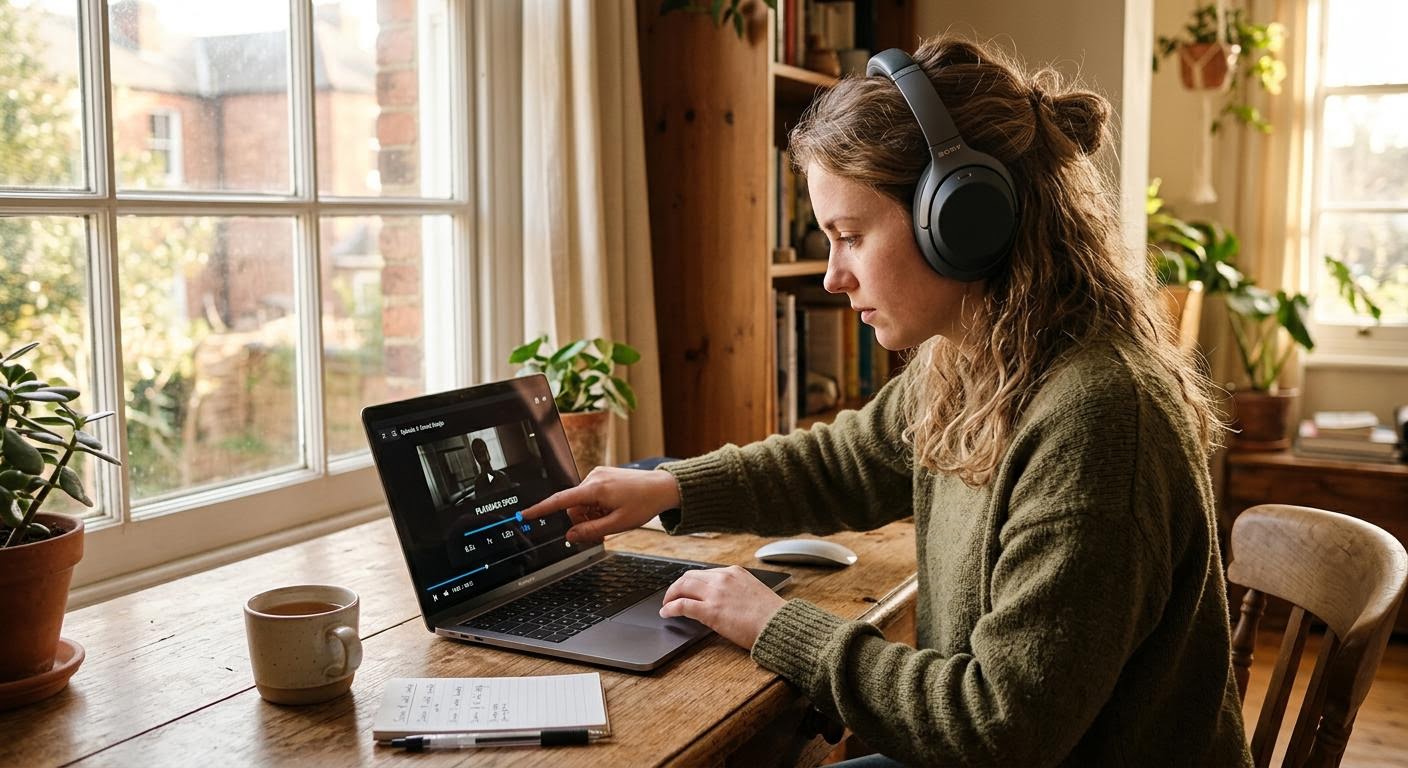
On ListenLeap, the built-in tools remove the friction that stops most beginners. Instead of pausing, opening a dictionary app, typing a word, reading the definition, switching back, and losing your place — tap the word on the bilingual subtitle and keep listening. Instead of wondering whether you're improving, check the progress dashboard. Instead of passively consuming, use shadow reading to turn input into output. The platform is built for the loop that actually produces results: listen, understand, practice, repeat.
A Note to Close On
The six podcasts above share a quality that's easy to overlook: their hosts respect the beginner's intelligence. They don't talk down. They don't perform. They teach — clearly, patiently, and with the understanding that learning a language is a marathon, not a sprint. ESLPod's PhD hosts, Oliver's thoughtful monologues, Bob the Canadian's community-driven Q&As, CNN 10's daily discipline — each show offers a different path into English, and none of them require anything from the listener except the willingness to press play.
A year from now, the English you understand will be shaped by the voices you spent time with. Choose voices that explain, repeat, and build. Press play tomorrow morning. Then do it again.

Comments
No comments yet.
Leave a Comment