
Why Bedtime Beats Another Worksheet
Most families treat English practice as a daytime job. Flashcards at the kitchen table, a workbook page before dinner, a video lesson squeezed between homework and bath time. Any parent who has tried it knows the outcome: a tired child at eight in the evening has no patience for any of that.
Bedtime is different. Attention is low, resistance is low, and a story told in a calm voice slips past the part of the brain that normally argues with homework. Nobody has to be persuaded to listen to a story.
There is a practical side to this too. Bedtime stories repeat. The same opening line, the same goodnight phrase, the same rhythm of a narrator slowing down at the end. Repetition is how children absorb sentence patterns without ever studying them. A five-year-old who hears "the little hedgehog tiptoed past the sleeping rabbit" four nights in a row is not memorizing vocabulary. The phrase simply becomes familiar, the way the words of a song do.
The six shows below are all English-language story podcasts made for children. They share three traits that matter for language learners: short episodes, clear narration, and language that stays inside a small vocabulary instead of drifting into adult abstraction. Between them they cover toddlers, early readers and older kids who want something stranger than a fairy tale.
What ListenLeap Adds After Lights-Out
A story podcast on its own is just audio. ListenLeap turns the same episode into something a family can actually work with inside the fifteen minutes before sleep.
Bilingual subtitles let a parent follow along and quietly check whether a new word landed, without interrupting the story to ask. Difficulty labels make it easier to choose a show that sits slightly above a child's current level rather than far beyond it, which is the range where listening practice does the most good. Tapping a word brings up its meaning without leaving the player, so a question at 8:15 gets answered in two seconds instead of turning into a search.
The app remembers where an episode stopped, which matters when a story ends mid-sentence because someone fell asleep. Episodes can also be downloaded, so the same audio works on a car ride or a flight where the network does not. For households where the adults are learning English too, one episode works on two levels at once: the child follows the plot, the parent follows the sentences.
Six Shows Worth Queuing Tonight
Sleep Tight Stories - Bedtime Stories for Kids
Level: A2 to B1, roughly ages five to ten.
Theme: Original calming stories built around ordinary childhood moments.
This is the safest entry point for a family new to bedtime podcasts. New episodes arrive every week, and each one is written around something a child has genuinely lived through: a first day at school, a lost toy, a night when sleep will not come. The narration stays deliberately gentle, and the show's own description quotes a young fan who says the stories are entertaining but not so entertaining that falling asleep becomes hard. That is a fairly precise summary of the design.
On ListenLeap the slow pacing makes this a good pick for shadowing. A child can replay one paragraph, read the subtitle, then say the line back before the next paragraph starts.


Sleep Tight Relax - Calming Bedtime Stories and Meditations
Level: A2, ages four and up, and honestly fine for adults too.
Theme: Sleep stories mixed with relaxation exercises, soft sound and slow music.
Where the previous show leans on plot, this one leans on atmosphere. Episodes blend a dreamy story with breathing exercises and ambient sound, and the host's deadpan warning about not operating heavy machinery while listening tells you how seriously the show takes its own sleepiness. The vocabulary is simple and heavily repeated, which makes it useful for a child who understands individual words but freezes when sentences come quickly.
The trade-off is that there is less dialogue to imitate. ListenLeap's subtitle view helps here: a parent can pause on a descriptive line and point out how the same adjective returns three times in one episode, which is exactly the kind of repetition that sticks.


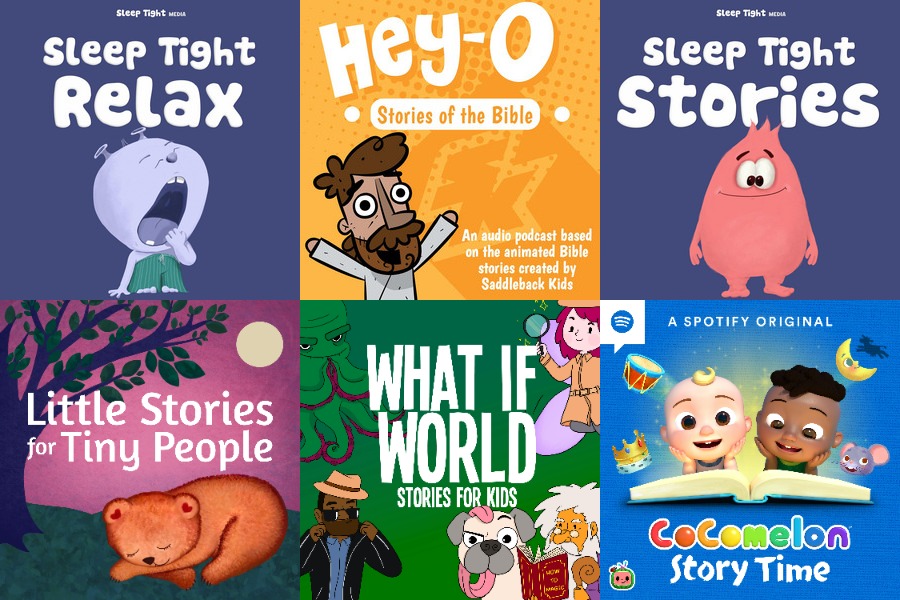
CoComelon Story Time
Level: Pre-A1 to A1, ages two to five.
Theme: Classic fairy tales, folk tales from around the world and expanded nursery rhymes.
JJ and Cody carry this one, and for a preschooler who already knows the characters from the videos, the voices alone are enough to hold attention. Episodes retell stories most children meet somewhere else, Goldilocks and Baby Bear, Little Boy Blue's Snooze, The Magic Orange Tree, which means the plot is half familiar before the English starts. Familiar plots are a gift for beginners: the child can guess meaning from context instead of translating.
The sentences are short and the songs repeat, so this is the show to choose when the goal is comfort rather than challenge. On ListenLeap, the difficulty label confirms what the ear already suspects, and the tap-to-define feature handles the occasional word that a parent did not expect, like the name of a fruit or a piece of furniture.

Little Stories for Tiny People
Level: A2 to B1, ages three to eight.
Theme: Original stories with invented characters, made for bedtime, car rides and waiting rooms.
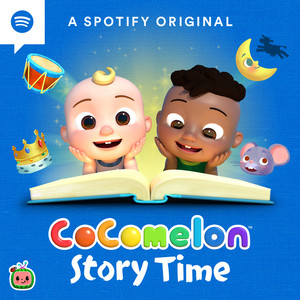
The writing here is warmer and more literary than most kids' podcasts, without ever becoming difficult. Episodes follow small characters through small problems: Ruby Takes Her Time, The Pen Pals, Quicktail Steals The Wrong Thing. There is also a wandering sleep story set at the rabbit warren, the kind of episode that starts with a plot and quietly dissolves into description until the listener stops tracking it.
Because the stories are original, a child cannot rely on a plot already known from a picture book. That is the point. Understanding has to come from the language itself, and the narrator gives plenty of support through tone and repetition. Parents who want a show that grows with a child for two or three years tend to land here.

What If World - Stories for Kids
Level: B1, ages five to nine.
Theme: Improvised stories built from questions that children send in.
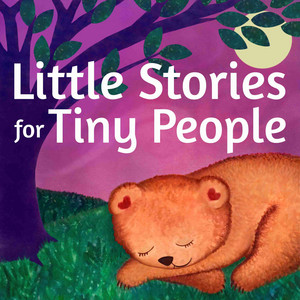
Mr. Eric takes a question from a listener and turns it into an episode. Recent examples include a boy wondering what would happen if a character traveled back to the Titanic, another asking what would happen if the same character had a Pokemon, and a two-part epic about a farting lobster and a burping crab. The humor is exactly what a seven-year-old wants, and the structure is a quiet lesson in conditionals: what if, then, because, so.
This is the most demanding show of the six, and the funniest. Sentences are longer, side characters arrive without introduction, and the plot wanders. ListenLeap's subtitle view makes that manageable, since a child can read a line after hearing it and confirm the guess. There is also a short segment on mistakes and resilience, useful for the evenings when a school day went badly.


Hey-O Stories Of The Bible - Saddleback Kids
Level: A1 to A2, ages four to ten.
Theme: Bible stories retold for children in plain, spoken English.
Families who want scripture in the bedtime rotation have a decent option here. Episodes cover Jonah, Jehoshaphat, Naaman being healed, Elijah on Mount Carmel, Solomon asking for wisdom, each told in short scenes rather than read aloud from a page. The language is plain and the stories move quickly, which suits listeners who are still building the habit of following a narrative in English.
The animated versions exist on YouTube as well, so a child who already knows an episode visually can meet the same story in audio and understand far more than the vocabulary alone would suggest. On ListenLeap, the bilingual subtitles are handy for the names and places that appear in almost every episode.

A Two-Week Plan That Does Not Feel Like Homework
The first week is about habit, not progress. Pick one show, play one episode at the same time every night, and stop when the story stops. No questions afterwards. If a child asks what a word meant, answer once and let it go.
The second week adds one small layer. Choose an episode that was already heard, play it again, and open the subtitle view on ListenLeap for the first three minutes only. Then close it and keep listening. This trains the ear to do the work that the text was doing, and because the story is familiar, the drop in support does not feel like a test.
From there, families usually settle into a rhythm without being told to: a new episode on most nights, an old favorite when the week has been long, and a slightly harder show on weekends when nobody has to be up early. The whole routine takes fifteen minutes and replaces nothing except the scroll through short videos that would have happened anyway.
What Changes After a Month
The first change is rarely vocabulary. It is tolerance. A child who once needed silence to follow a story starts to follow one with background noise, faster speech, an unfamiliar accent. That tolerance is what makes real conversation possible later, and it is much easier to build at bedtime than in a classroom.
The second change is quiet and easy to miss: a child starts using phrases from the stories in ordinary speech, usually slightly wrong and usually charming. That is the moment the listening stops being study and becomes language.




Comments
No comments yet.
Leave a Comment