
Why Science Podcasts for Kids Are a Smart Listening Choice
Podcasts made for children have one big advantage for English learners: the language is clear, the pace is steady, and the questions are genuinely interesting. Kids' science shows in particular turn big topics — black holes, cheetah speed, why feet stink — into short, digestible episodes built around one question at a time. That structure is exactly what a learner needs: familiar vocabulary, repeated explanations, and a host who never assumes you already know the answer.
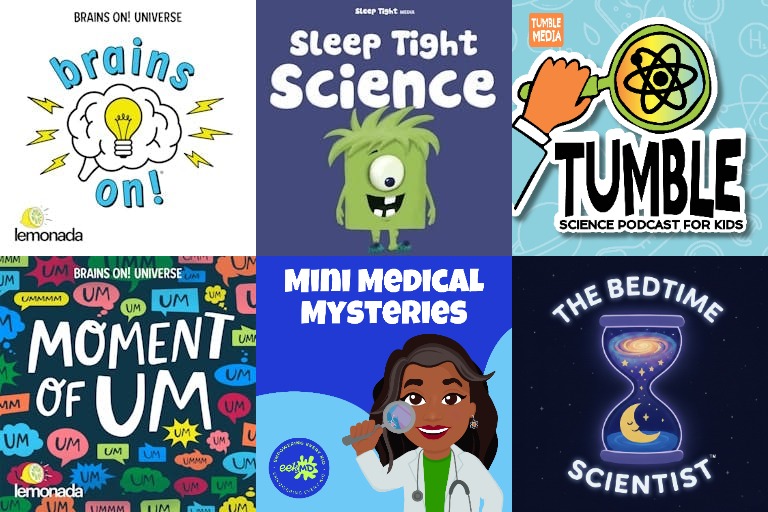
The six shows in this list come from trusted producers such as Brains On Universe and Tumble, plus a few smaller independent studios, and they cover everything from medical mysteries to bedtime astronomy. None of them talks down to listeners, which means adults get just as much out of them as kids do. For English learners, they work as a bridge: simple enough to follow without subtitles, rich enough to learn real science vocabulary from.
What ListenLeap Adds to the Listening Experience
Listening alone gets you far; listening with the right tools gets you further. ListenLeap is a podcast-and-video English learning app built around the i+1 principle — you learn best when the material is just a little harder than your current level. Start with a level test, then let ListenLeap grade each show's difficulty so you always pick episodes that stretch you without frustrating you.
Every episode comes with bilingual subtitles (Simplified Chinese, Traditional Chinese, Korean and Japanese), tap-to-look-up dictionary lookup, phrase-level explanations and full-sentence breakdowns, an AI Q&A extension for follow-up questions, and smart summaries. The blind-listening mode lets you test yourself before reading; shadowing mode scores your pronunciation, intonation and fluency. Unknown words go straight into your vocabulary notebook, and offline caching plus PDF export means you can keep learning on the bus or before bed. With 10,000+ podcasts across 20+ topic areas — BBC, TED, NPR and more — you can even import your own shows.
The 6 Best Science Podcasts for Kids Learning English
1. Tumble Science Podcast for Kids
- Level: Intermediate
- Topic: Stories of scientific discovery
Tumble explores the stories behind scientific discoveries, hosted by science journalist Lindsay Patterson and teacher Marshall Escamilla. It's a Common Sense Selection, designed to be enjoyed by the entire family. Episodes like How Do Stem Cells Decide What to Become? and The Secret to Cheetah's Super Speed show how researchers actually work — the questions they ask, the experiments they run, and the dead ends they hit along the way.
On ListenLeap: the interview-style voices vary in speed, so grade it with the difficulty tool first. Use bilingual subtitles for the researcher interviews, then switch to blind-listening mode for the story sections.
2. Brains On! Science Podcast for Kids
- Level: Intermediate
- Topic: Listener questions, mystery sounds and songs
Brains On! is the flagship show from Brains On Universe. Each week, a different kid co-host joins Molly Bloom to answer fascinating questions sent in by listeners — like whether dogs know they're dogs, or why feet stink. Every episode packs in mystery sounds to guess, songs to dance to, and facts checked by experts. Recent episodes include Do Plants Fart? and How Do Walkie Talkies Work?
On ListenLeap: the mix of host, kid co-host and expert voices is fantastic shadowing material. Slow the episode down with the playback tools, read along with the subtitles, then use shadowing mode to match the kid co-host's natural rhythm.
3. Sleep Tight Science - A Bedtime Science Show For Kids
- Level: Beginner to Intermediate
- Topic: Calm bedtime science
Sleep Tight Science turns bedtime into a science lesson you can drift off to. Topics come from listener questions, and the show uses "big words to answer big questions" — why we feel icky sometimes, how our legs help us move — in a way that's simple enough for grown-ups too. Episodes like Why Is Our Brain in Our Head? and Fun Facts: Meat-Eaters, Giants, and the Strangest Dinosaurs are gentle, slow and easy to replay.
On ListenLeap: this is one of the easiest shows to start with. The slow pace makes it perfect for blind-listening mode: listen first, check your understanding with the smart summary, then read the subtitles to catch the big words you missed.
4. Moment of Um
- Level: Beginner to Intermediate
- Topic: One daily answer, short and sweet
Moment of Um is the daily answer to those questions that pop up out of nowhere — how do braces work, how did the planets get their names, how do stoplights know when to change. Each episode is short, focused and built around a single question, produced by the same team behind Brains On Universe.
On ListenLeap: the short format fits busy schedules perfectly. One episode slots into a commute or a lunch break. Use tap-to-look-up on any new word — the dictionary gives an instant definition without leaving the player — and add the best questions to your vocabulary notebook.
5. Mini Medical Mysteries
- Level: Intermediate
- Topic: Medical puzzles solved like detective stories
Mini Medical Mysteries is "like if The Magic School Bus met Sherlock Holmes." Young sleuths collect clues along a fantastical journey to solve a perplexing medical puzzle. Episodes such as The Adventure Begins and Meet the Microbes teach anatomy, health and the scientific method through storytelling rather than lectures.
On ListenLeap: the narrative format rewards careful listening — clues matter. Turn on the AI Q&A feature after each episode to check whether you caught them all, and use the phrase-level explanation to unpack medical terms like "vitals" or "microbes."
6. The Bedtime Scientist: Calm Science for Sleepy Kids
- Level: Beginner to Intermediate
- Topic: Real science as calm bedtime listening
The Bedtime Scientist turns real science into calm bedtime listening for curious minds. No fairy tales, no chaos — just one steady voice guiding kids through the true wonders of our world, from Octopus: A Mind in Every Arm to Where Does Sand Come From?
On ListenLeap: this show is ideal for relaxed listening sessions. The steady, single-voice narration makes it excellent pronunciation and intonation practice for shadowing, and the calm pace means you can listen without subtitles first, then check yourself with the transcript.
How to Start Listening Today
Pick one show and commit to one episode a day for a week. Start with Sleep Tight Science or Moment of Um if you're a beginner; go straight to Tumble or Brains On! if you want more variety and faster speech. On ListenLeap, take the level test first, then let the difficulty grading guide your episode choices. Do a first listen without subtitles, a second listen with them, and finish by shadowing one or two sentences out loud. Ten minutes a day beats one long session a week.
Final Thoughts
Kids' science podcasts prove that simple language and serious ideas aren't enemies. The shows above teach real science — stem cells, microbes, planetary names — in English that learners can actually keep up with, and they make repetition feel natural rather than boring. Add ListenLeap's grading, subtitles and shadowing tools and you've got a daily routine that builds vocabulary, comprehension and confidence at the same time. Pick your favorite show, press play, and let curiosity do the teaching.

Comments
No comments yet.
Leave a Comment