

You've Been Listening Every Day — So Why Isn't It Working?
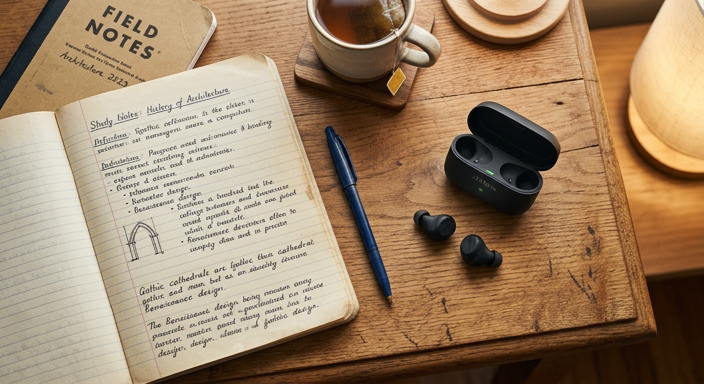
There's a routine that millions of English learners share. Wake up, plug in earbuds, hit play on an English podcast, and go about the day. On the train, while cooking, during a workout. Hours of English flowing into the ears, week after week.
And yet, months later, the same fast conversation at a coffee shop still sounds like mush.
The frustration is real: the hours are there, the consistency is there, but the results aren't. And the reason has nothing to do with talent or how many hours someone puts in. It has everything to do with how those hours are spent.
The Passive Listening Trap
Listening to English in the background — while doing dishes, scrolling a phone, or commuting — feels productive. The brain registers sounds, catches a familiar word here and there, and it seems like exposure should add up over time.
But there's a critical gap between hearing and processing. When attention is split, the brain treats incoming audio the same way it treats background noise in a café: it filters most of it out. The ears receive the signal; the brain doesn't do the work of decoding it.
This is what separates passive exposure from active comprehension. Passive exposure might help someone get used to the rhythm of English — the rise and fall of intonation, the general speed. But rhythm alone doesn't build the ability to catch meaning in real time.
Think of it this way: a person who lives next to a train track eventually stops hearing the trains. The sound is still there. The brain just stops caring. The same thing happens with background English. The more passively someone listens, the better the brain gets at ignoring it.
What the Brain Actually Needs
Comprehension isn't a sponge that absorbs language through exposure. It's more like a muscle that only strengthens under specific conditions.
For the brain to convert sound into meaning, three things need to happen at once:
Attention — The listener has to be actively trying to understand, not just hearing.
Appropriate difficulty — The material has to be slightly above the listener's current level, not so easy it's boring or so hard it's noise.
Feedback loops — The listener needs a way to check what they understood, catch what they missed, and close the gap.
Without all three, hours of listening produce the same result as hours of having the TV on in the background: familiarity without comprehension.
This is where most daily listening routines break down. They nail consistency but miss the conditions that actually trigger learning.
The Difficulty Problem
One of the biggest unnoticed mistakes is choosing material that's far beyond one's current level. A beginner listening to a fast-paced NPR interview isn't getting comprehensible input — they're getting a wall of sound with occasional recognizable words.
The sweet spot sits just above what someone can already understand. Close enough that context fills in the gaps, challenging enough that the brain has to stretch. When learners pick material at the right level, even short sessions — 15 to 20 minutes — produce more progress than hours of too-hard content.
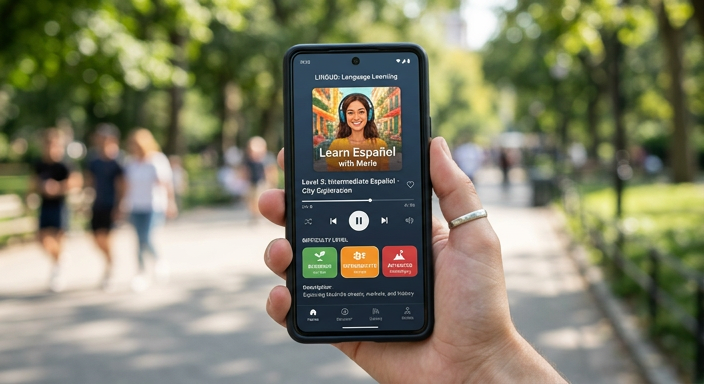
Apps like ListenLeap address this directly by sorting podcasts into difficulty levels and matching content to a learner's tested proficiency. Instead of guessing whether a podcast is "about right," learners get material that's calibrated to push them forward without overwhelming them.
What Engaged Listening Looks Like
Active listening doesn't mean sitting in silence with textbook-level concentration for an hour. It means paying attention with purpose, even in short bursts.
Here's what that looks like in practice:
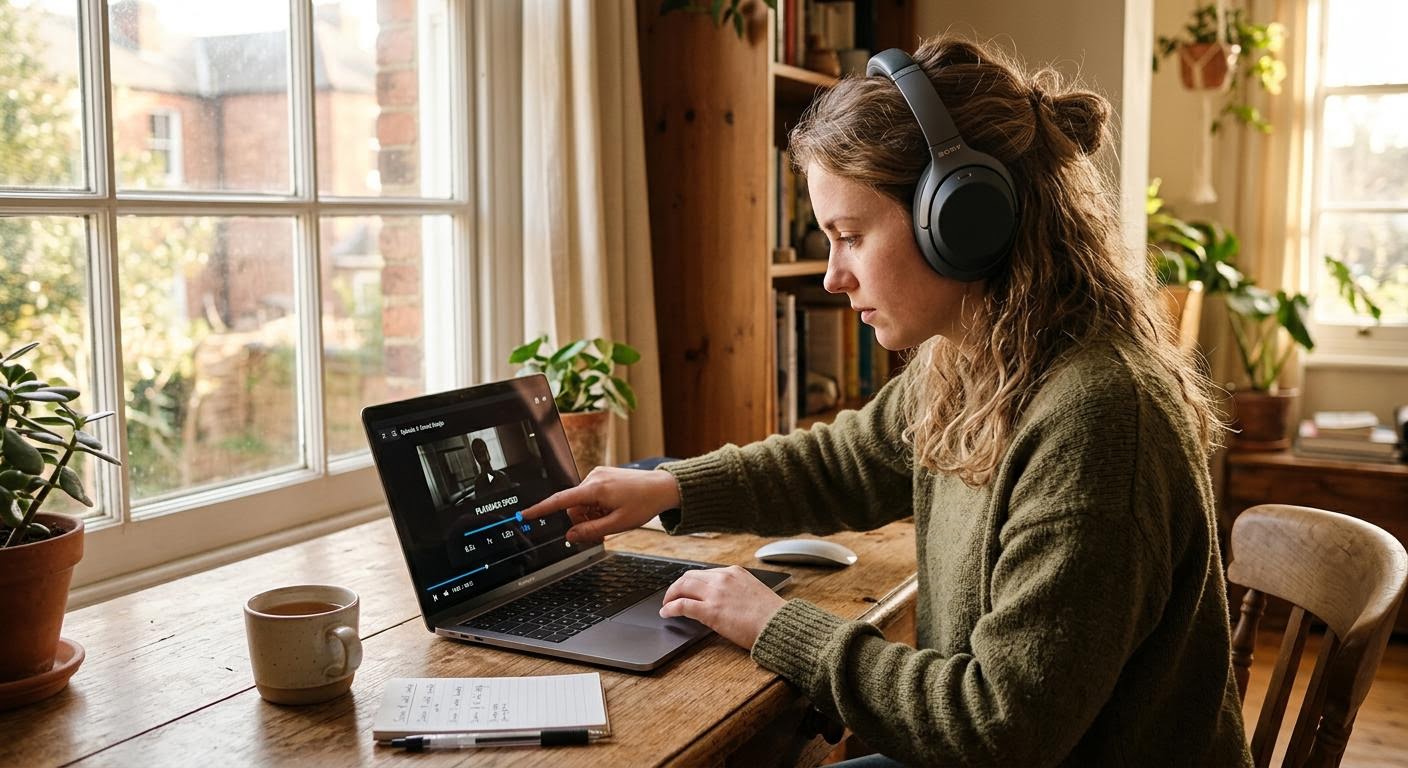
Listen, then check.Play a segment — 30 seconds to a minute — and try to catch the main idea. Then look at a transcript to see what was actually said. The gap between what someonethoughtthey heard and what wasactuallysaid is where growth happens. In ListenLeap, tapping any sentence brings up both the original and a bilingual subtitle, making this check instant rather than tedious.Pause and replay the hard parts.When a phrase blurs together — and it will — go back. Listen again. Sometimes twice, sometimes five times. The goal is to train the ear to segment connected speech: the "wanna," "gonna," "shoulda" patterns that textbooks never prepare anyone for.Shadow short phrases.Repeating what a speaker says, right after they say it, forces the brain to process at native speed. It's uncomfortable at first. That discomfort is the signal that learning is happening. ListenLeap's shadowing feature scores pronunciation, intonation, and fluency separately, so learners can see exactly where the breakdown occurs — not just a vague "try again."Test recall, not just recognition.After listening to a segment, pause the audio and try to summarize what was said — out loud or in writing. If someone can recognize words while they play but can't recall the meaning five seconds after the audio stops, comprehension hasn't actually happened.
Consistency Still Matters — But Not the Way Most People Think
None of this means daily listening is a waste. Consistency is essential. But the type of consistency matters more than the amount.
Twenty minutes of focused, engaged listening — pausing, replaying, checking understanding — builds more comprehension in a month than two hours of passive background audio every day for a year.
The shift isn't about doing more. It's about doing less, but doing it with full attention.
Stop Measuring Hours, Start Measuring Engagement
The next time the urge strikes to hit play and zone out, try this instead: pick one podcast episode at the right difficulty level, listen to the first three minutes with full focus, check the transcript, shadow one sentence, and move on. That's it. Five minutes, done properly.
Over weeks, those five-minute sessions compound into something that hours of passive listening never will: the ability to actually understand English when it's spoken at full speed, by real people, in real conversations.
The ears were never the bottleneck. Attention was.


Comments
No comments yet.
Leave a Comment