
Pick One Episode, Not a Playlist
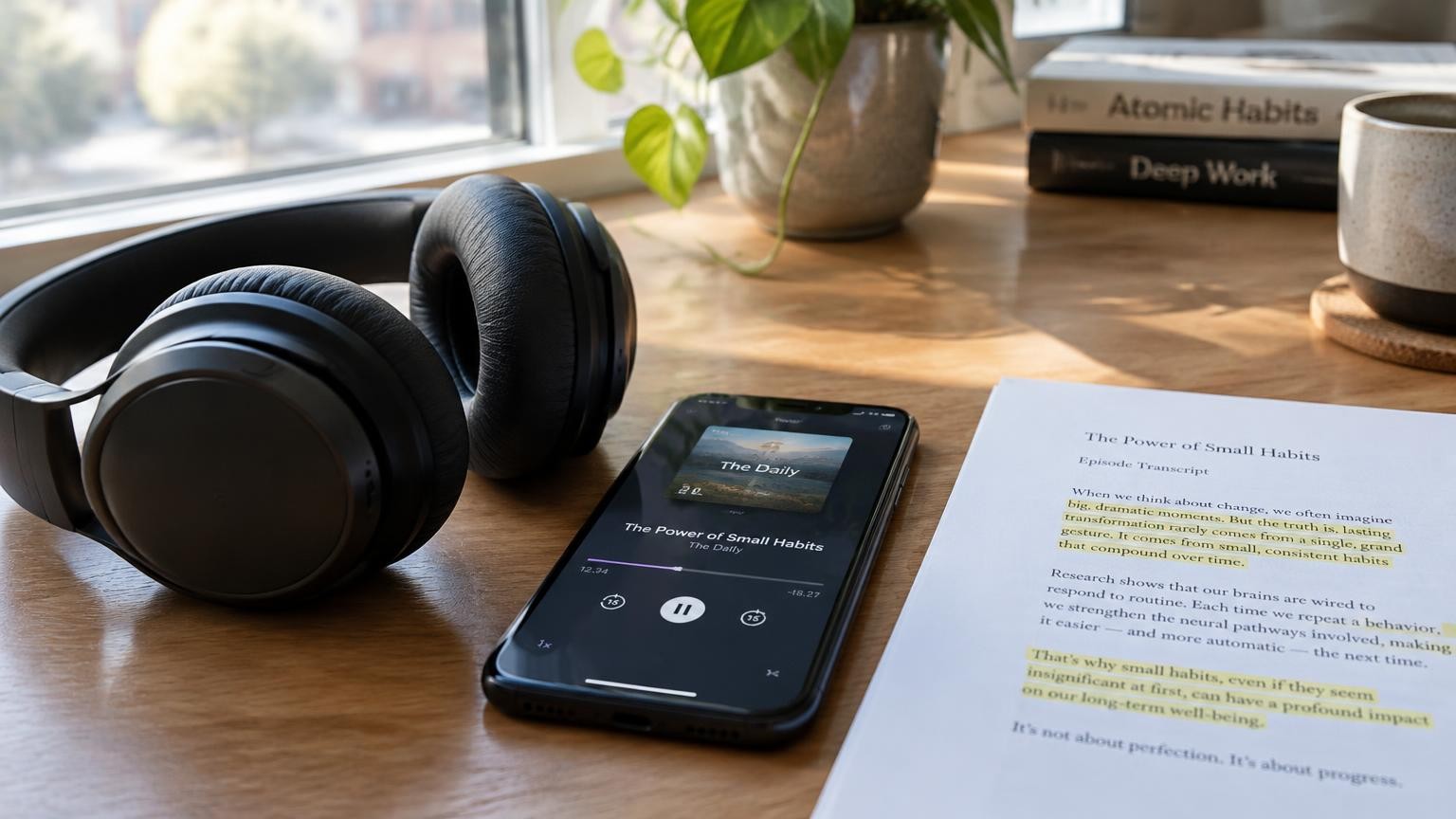
A B1 learner does not need thirty recommendations. Shadowing improves when the same short piece of audio is heard several times in one sitting, because the ear then learns a specific stream of sound instead of a general idea. The usable episode for a first drill has three properties. It runs under eight minutes, so a beginner can loop it without tiring. It uses one steady accent, so the learner is not decoding two voices at once. It comes with a free transcript, so the learner can check what was actually said rather than guess.
A playlist hides those three properties behind choice. A single episode makes them visible, and a single episode is the whole point of this plan. The reader finishes with a routine, not a queue of shows.
The Episode for This Drill
BBC Learning English publishes a weekly series called 6 Minute English. Each episode runs about six minutes, uses clear British English, and is discussed by two speakers in a studio. The audio and a full transcript sit on the same page of the BBC Learning English website, and the transcript ends with a short set of vocabulary items and plain definitions.
That combination is what makes the show usable for shadowing. An episode is short enough to loop, the accent stays steady across the file, and the words on the page match the words in the ear. A learner opens one recent episode, keeps that page, and sets the extra material aside until the drill is done. Topics change every week, so the same ten-minute routine can run for months without repeating audio.
Setup in Three Minutes
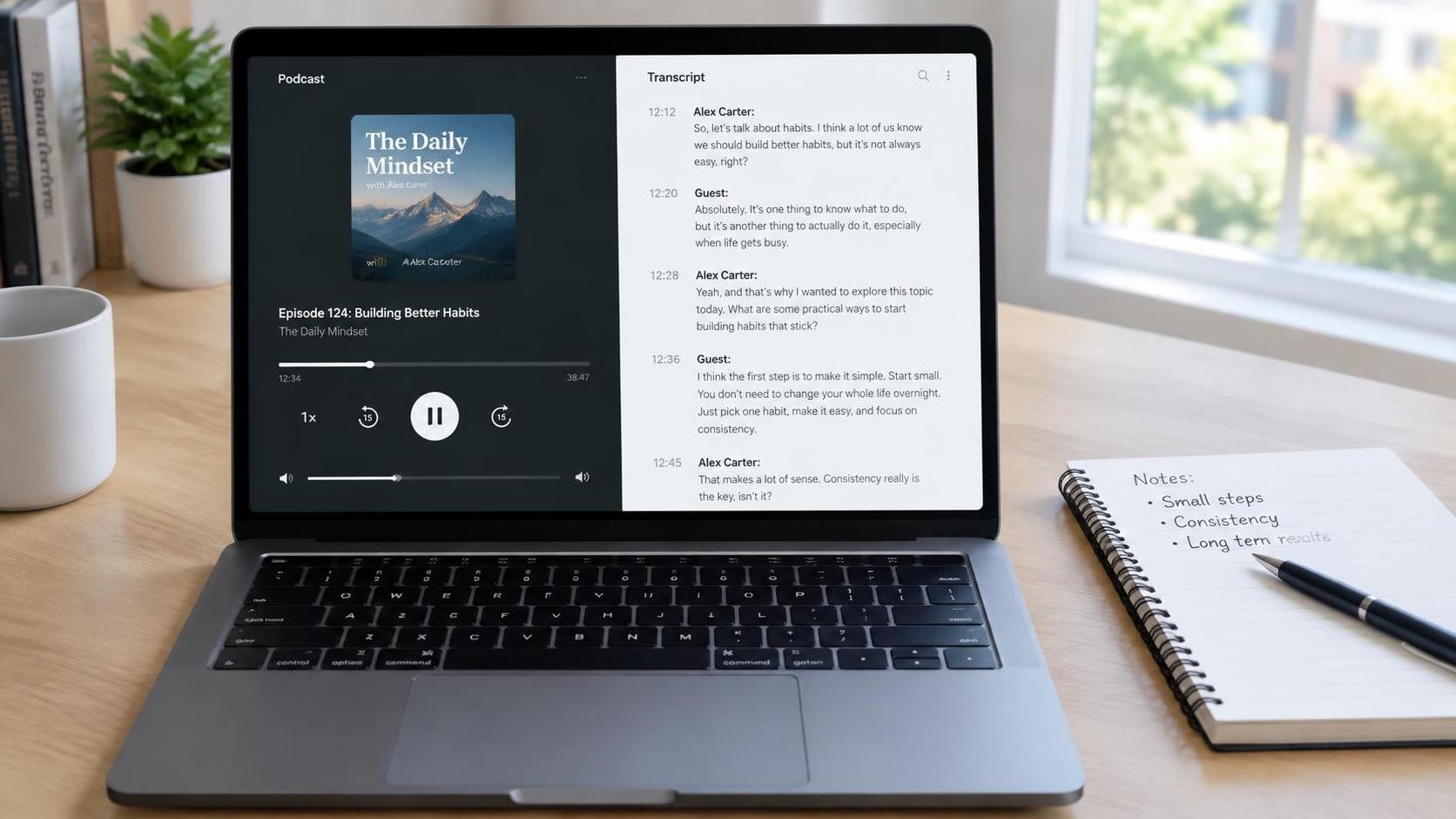
Open one recent episode and its transcript page. Keep both windows ready, but keep the transcript hidden for the first round.
Choose the opening segment. The first 60 to 90 seconds of an episode is the right size for a B1 learner, because it usually carries the topic and the main question without new vocabulary piling up.
Set the player to normal speed. Slowing the audio comes later, and only for one round, so the learner does not build a habit of hearing a voice that no real conversation ever uses.
Round 1: Blind Listen (about two minutes)
The learner plays the opening segment once, without the transcript and without pausing. The task is not to catch every word. The task is to catch three anchors: how many people speak, what the general subject is, and which words appear more than once. Pausing to think breaks the stream, so the segment runs to the end even when parts of it blur. When it stops, the learner says the three anchors out loud before touching the page.
Two anchored facts from a blurry clip beat a full page of meaning that was never heard. This round exists to train the ear to hold a thread through speed.
Round 2: Read the Transcript (about three minutes)
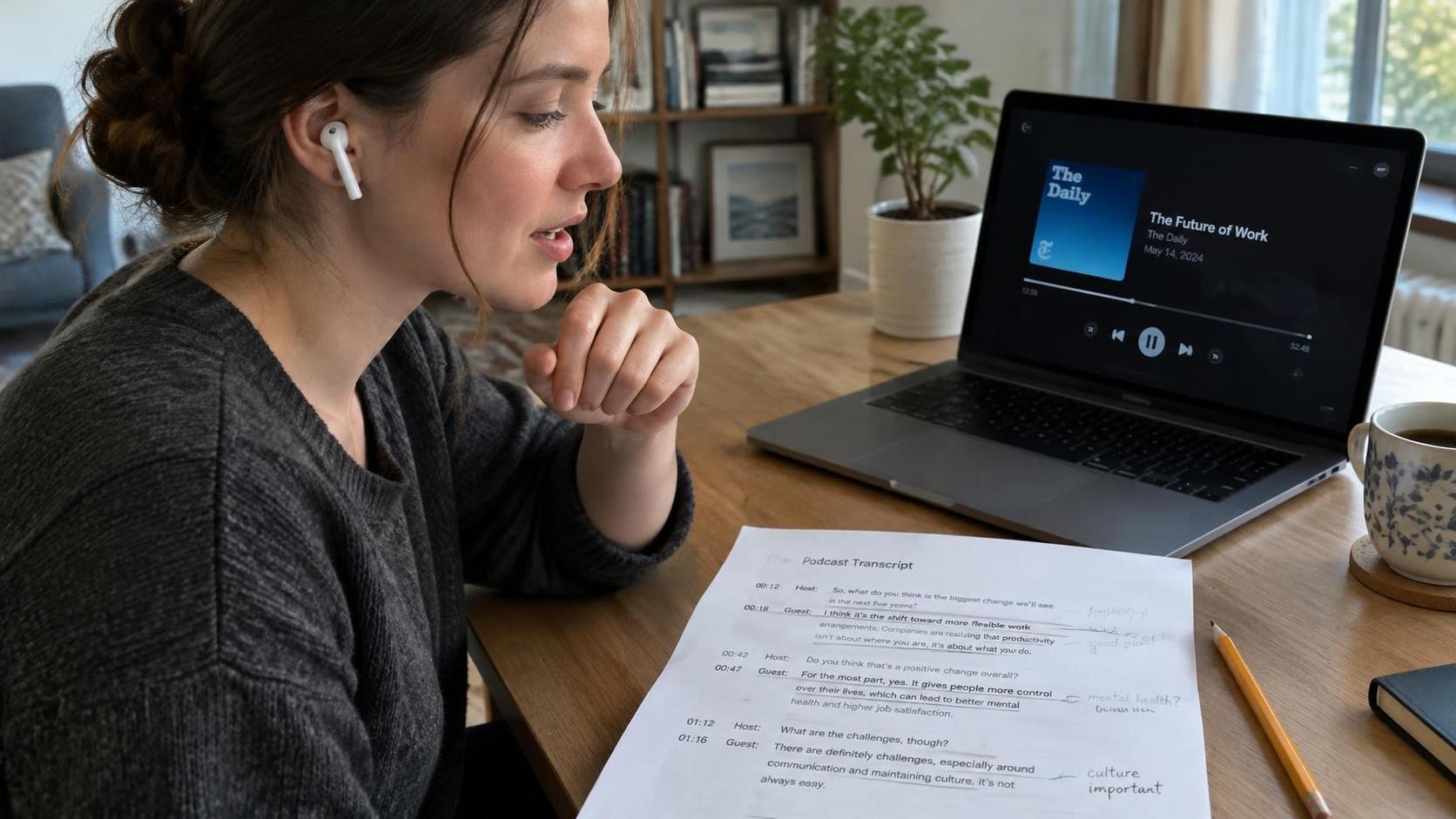
The segment plays again with the transcript open. The learner follows the printed lines and marks three things: words that were hard to hear, places where two words seemed to become one, and syllables that carried more weight than expected. Meaning is allowed to land here. The marks matter more than the reading, because the marks become the study list for later rounds.
After the second play, the learner reads the marked lines aloud once, without audio, to feel where the mouth has to move faster than the eye expects.
Round 3: Shadow the Same Segment (about three minutes)
Shadowing means speaking at nearly the same time as the audio, a half step behind the voice. The learner replays the segment and pauses after each short chunk, one clause at a time, and repeats it out loud. The target is the shape of the speech: the rise and fall of a line, the long and short syllables, the small stops between ideas.
Two mistakes are common in this round. The first is reading ahead, which turns the voice into a reading voice. The second is copying sounds as separate words instead of a joined line. After chunk practice, the learner plays the whole segment once more and shadows it without pausing, at a low volume so the audio stays in the background.
Round 4: Retell the Opening (about two minutes)
With the transcript and audio closed, the learner retells the opening in about forty-five seconds, in own words. A phone recording helps, because it shows where the retelling stalls. A stall usually marks a phrase that was heard but not yet owned, and that phrase becomes the first thing to shadow again the next day.
Three Sound Points B1 Learners Miss
Stress moves inside a word family. Example: PHOtograph, phoTOgrapher, and phoTOgraphy place the strong syllable in different spots. The learner picks one such word per episode and claps the strong syllable while saying it.
Weak forms hide small words. Articles, prepositions, and conjunctions such as a, to, of, and, and for reduce to a soft vowel, while content words stay strong. Example: a cup of tea can sound like a cupa tea in fast speech.
Linking joins the end of one word to the start of the next. Example: not at all runs together, and many British speakers drop the t in the middle. The learner highlights one such place in the transcript and slows only that single line.
Self-Assessment
Score each line after a session as Not yet, Partly, or Yes.
Named the speakers and the topic after the blind pass.
Followed the transcript without losing the line.
Kept the rhythm while shadowing, with clear rises and falls.
Marked at least three hard-to-hear spots.
Retold the opening in about forty-five seconds.
One line per session. Two or three lines marked Yes at the end of a week is a clear sign that the same drill is working, and the lines still marked Not yet point to the round that needs more time next week.
If the Segment Still Feels Too Fast
The routine has four dials, and any of them can be turned down for a session. The segment can be cut to thirty seconds. The player can drop to a slower speed for rounds two and three only. The transcript can be read aloud once before the first play, so the mouth meets the words early. The learner can also move down one level with a shorter BBC Learning English show where each episode lasts about three minutes and explains a single everyday phrase, again with a transcript on the same page.
Where This Fits in a Week
Two or three ten-minute sessions, each with a new episode, keep the drill repeatable without turning it into a chore. Progress shows up as less guessing in round one, not as a larger pile of finished episodes. The learner who runs the four rounds on one episode learns more than the learner who skims ten.
A Tool Some Learners Add Later
ListenLeap is a podcast and video app for English listening practice that gathers shows with transcripts in one place. A B1 learner who already runs the four rounds above can use it to keep episodes and their transcripts together and to replay a short segment without switching windows. It fits learners who want the same loop-and-check routine inside a single app, on a phone during a commute or a quiet ten minutes at home. It does not fit a learner who mainly wants grammar drills or graded exam feedback, because the four rounds here still do the teaching and the app only holds the audio. The drill comes first, and the app is a convenience after it.



Comments
No comments yet.
Leave a Comment