

A working adult who wants to improve English without sitting through another textbook chapter often turns to audio-based learning, and the app store makes that decision unexpectedly difficult. LingQ advertises thousands of hours of graded material. PodWise promises to convert any podcast into flashcards and study notes. EWA presents movies, books and speaking drills in a single package. ListenLeap positions itself as an audio-first system built around bilingual subtitles and speaking feedback. Each option has a loyal following, and each solves a slightly different problem. The breakdown below compares LingQ, PodWise, EWA and ListenLeap feature by feature, so learners can match their daily habits and goals to the platform that fits them instead of guessing.
Four Different Answers to the Same Question
LingQ: a library that has grown for over twenty years
LingQ launched in 2002 and has since become one of the most content-rich platforms for reading and listening input. Its catalog spans more than 40 languages, with thousands of preloaded lessons, graded news articles and community-created courses. Learners can import articles, PDFs, YouTube videos or podcasts and turn them into interactive lessons. The signature lingQ system lets users click any word to save it, review its translation and mark it as known or still learning, while a running counter tracks the total number of known words. For anyone who thrives on reading volume and measurable vocabulary growth, that mix of flexibility and tracking is hard to match.
PodWise: turning podcasts into structured lessons
PodWise commits to a single idea and executes it well: any podcast episode can become a study session. The app generates summaries, chapter breakdowns, flashcards and key takeaways automatically, so learners spend time reviewing rather than preparing. A clean mobile interface and cross-episode progress tracking keep the routine light. Because it works with the shows a learner already follows, authentic listening material is never in short supply, and the AI layer handles the heavy lifting of extraction and organization.
EWA: an all-in-one entertainment ecosystem
EWA has attracted more than 60 million downloads by combining movie and TV clips, a library of over 1,000 graded books, spaced-repetition flashcards, grammar courses and a conversational bot in one place. Its language support covers English, Spanish, French and Italian, and a 4.7-star store rating reflects broad satisfaction. Learners who enjoy variety can move from a film scene to a graded reader to a grammar quiz without leaving the app, which keeps engagement high and makes longer sessions feel lighter.
ListenLeap: audio-first learning with bilingual subtitles
ListenLeap is built on a narrower premise: listening is the fastest route toward fluency, but only when the audio is actually understood. It pairs audiobooks, podcasts, curated courses and short audio clips with synchronized bilingual subtitles, AI vocabulary extraction and pronunciation analysis. Instead of treating listening as passive background sound, the app layers comprehension tools on top of every clip, so one session can move from hearing a phrase to studying the words inside it to repeating that phrase out loud.
Feature by Feature
Content library and discovery
LingQ holds the deepest catalog in this group, spanning 40+ languages and a wide range of difficulty levels, with imports filling any remaining gaps for niche interests.
PodWise has no built-in library and relies on the open podcast world instead. Discovery happens outside the app, but the trade-off is material that always feels current and authentic.
EWA offers more than 10,000 video clips and over 1,000 graded books, giving it the broadest entertainment-first catalog among the three competitors.
ListenLeap curates audiobooks, podcasts, courses and short audio, then sorts them into a multi-level difficulty system so learners land on suitable material without guesswork.
Subtitles, transcripts and vocabulary tools
LingQ provides parallel text and clickable words tied to spaced-repetition review, a setup well suited to readers who like to control every detail of their study.
PodWise auto-generates single-language transcripts and pulls key phrases into flashcards, keeping the workflow fully automatic.
EWA adds subtitles across its video and reading content and supports flashcard review with images and example sentences.
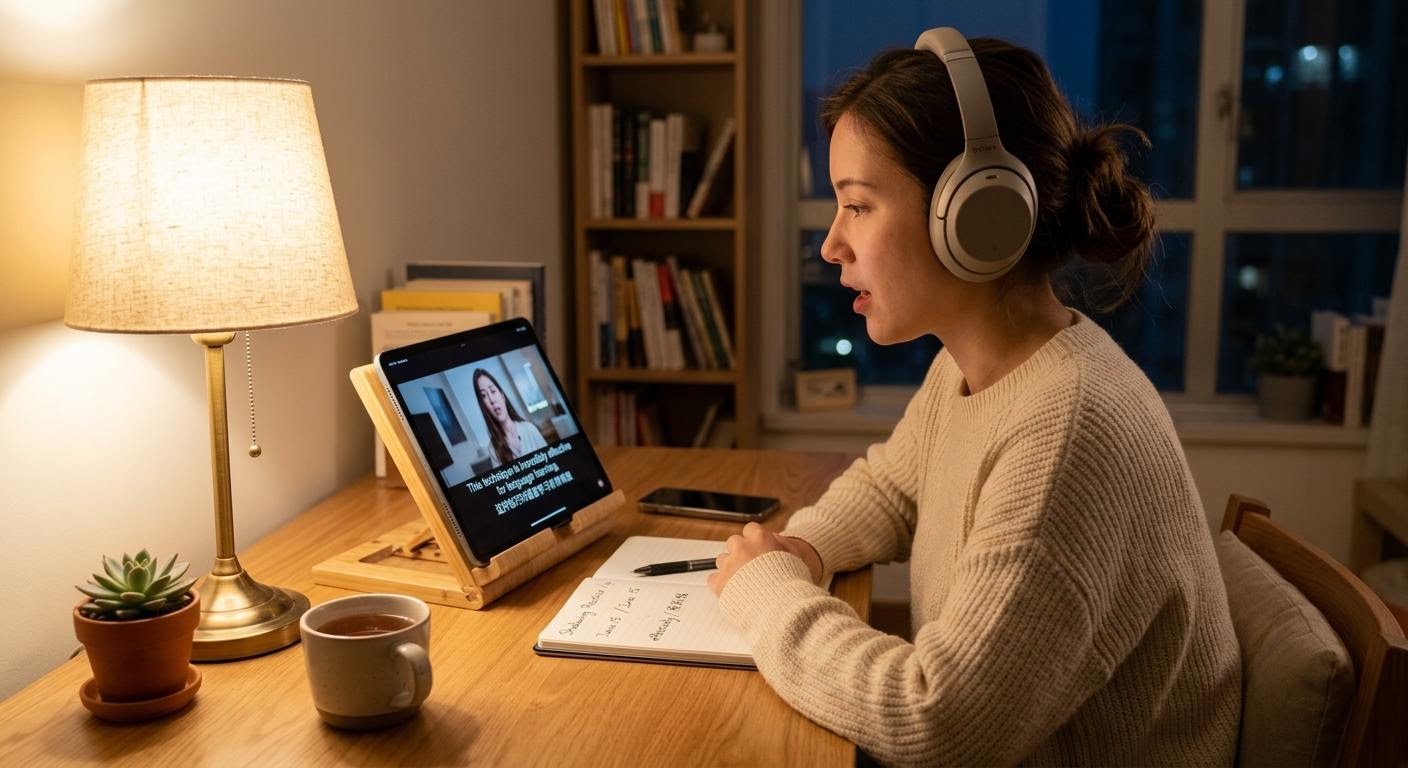
ListenLeap places bilingual subtitle pairs directly beneath the audio and highlights useful words through AI extraction as they appear, so moving from a heard phrase to a saved and reviewed one takes a single motion.
Speaking practice and pronunciation feedback
LingQ keeps its focus on input, and its reading and listening core is where that strength lives.
PodWise stays on the listening and reading side as well, refining the path from podcast to notes and review.
EWA includes a dubbing feature for movie clips plus a conversational bot, letting learners speak along with scenes for relaxed, low-pressure output practice.
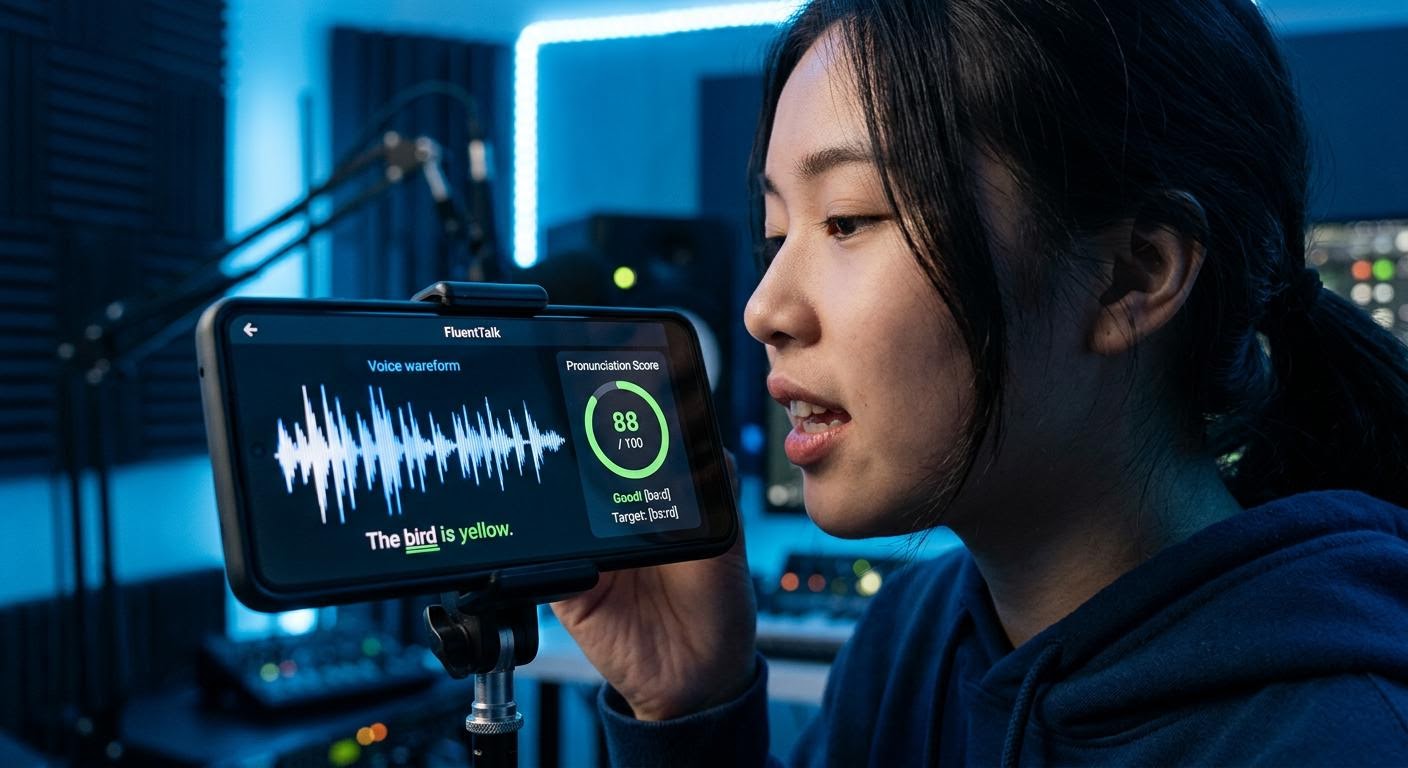
ListenLeap pairs speaking drills with AI pronunciation analysis, offering feedback on specific sounds and rhythm, which turns shadowing into a measurable exercise rather than a vague imitation.
Difficulty adaptation and progress tracking
LingQ treats the known-word count as its headline metric, and content is graded by level and community tagging.
PodWise tracks progress across episodes and keeps a running log of saved highlights.
EWA uses a placement test to build a personalized plan, with adjustments handled largely at the course level.
ListenLeap applies dynamic difficulty adjustment, raising or lowering material as comprehension shifts, and reports progress across listening, vocabulary and speaking in one view.
Offline access and device support
LingQ supports downloading lessons for offline study and syncs across iOS, Android and web.
PodWise runs on iOS and Android, with its AI features calling for an internet connection.
EWA allows books and courses to be downloaded, which suits learners who commute or travel.
ListenLeap offers a full offline mode and syncs across iOS, Android and web, so a downloaded library stays available on a plane or a subway ride.
Why the Audio-First Design Serves More Learners
The four apps share a belief that real audio beats canned dialogue, but they differ in how much structure they wrap around it. LingQ rewards volume readers who want total control over their material. PodWise rewards podcast fans who want automation. EWA rewards learners who want entertainment variety in one place. ListenLeap takes the listening experience itself and adds the comprehension and output layers that most audio tools leave out.
The bilingual subtitles remove the biggest obstacle for intermediate learners, who can understand some of a clip but lose the thread when speed picks up. AI vocabulary extraction means difficult words are captured the moment they appear, instead of being noticed and forgotten. Pronunciation analysis closes the loop by turning input into output, so listening sessions build speaking skill rather than only recognizing it. Dynamic difficulty keeps the material in the productive zone where understanding is high but not effortless.
For an app comparison, the deciding factor is rarely a single feature. It is whether the features work together across a learner's actual week. ListenLeap is designed so a morning commute, a lunch break and a short evening session feed the same progress record, blending audio that learners enjoy with the tools that make it stick.
Matching the App to the Learner
Different goals point to different platforms, and all four do their jobs well.
Readers who want a vast, importable library and a vocabulary counter that grows visibly should look at LingQ. Its depth and longevity make it a strong home base for input-heavy study.
Podcast devotees who want automatic summaries, flashcards and takeaways from shows they already love will find PodWise a natural fit, since it turns existing listening time into review time.
Learners who enjoy bouncing between films, graded books and grammar drills, and who want several languages under one roof, will appreciate how much EWA packs into a single subscription.
Learners whose main goal is understanding real audio and then speaking it, especially those stuck in the middle levels, will get the most from ListenLeap. Bilingual subtitles, AI vocabulary extraction, pronunciation feedback, dynamic difficulty and full offline access combine into a loop that carries listening straight into speaking.
A Practical Way Forward
Audio-based learning works when the material is engaging and the tools keep understanding within reach. LingQ, PodWise and EWA each answer part of that challenge with real strengths, and learners may even keep more than one on their home screen. For anyone who wants accelerated listening and speaking progress in 2026, ListenLeap offers a focused path where every clip becomes a chance to understand, save and say something new. Start with one podcast episode, follow the subtitles, save a few words and repeat a sentence out loud, and the difference shows up faster than expected.



Comments
No comments yet.
Leave a Comment