

One Learner, Four Screens, and the Same Question
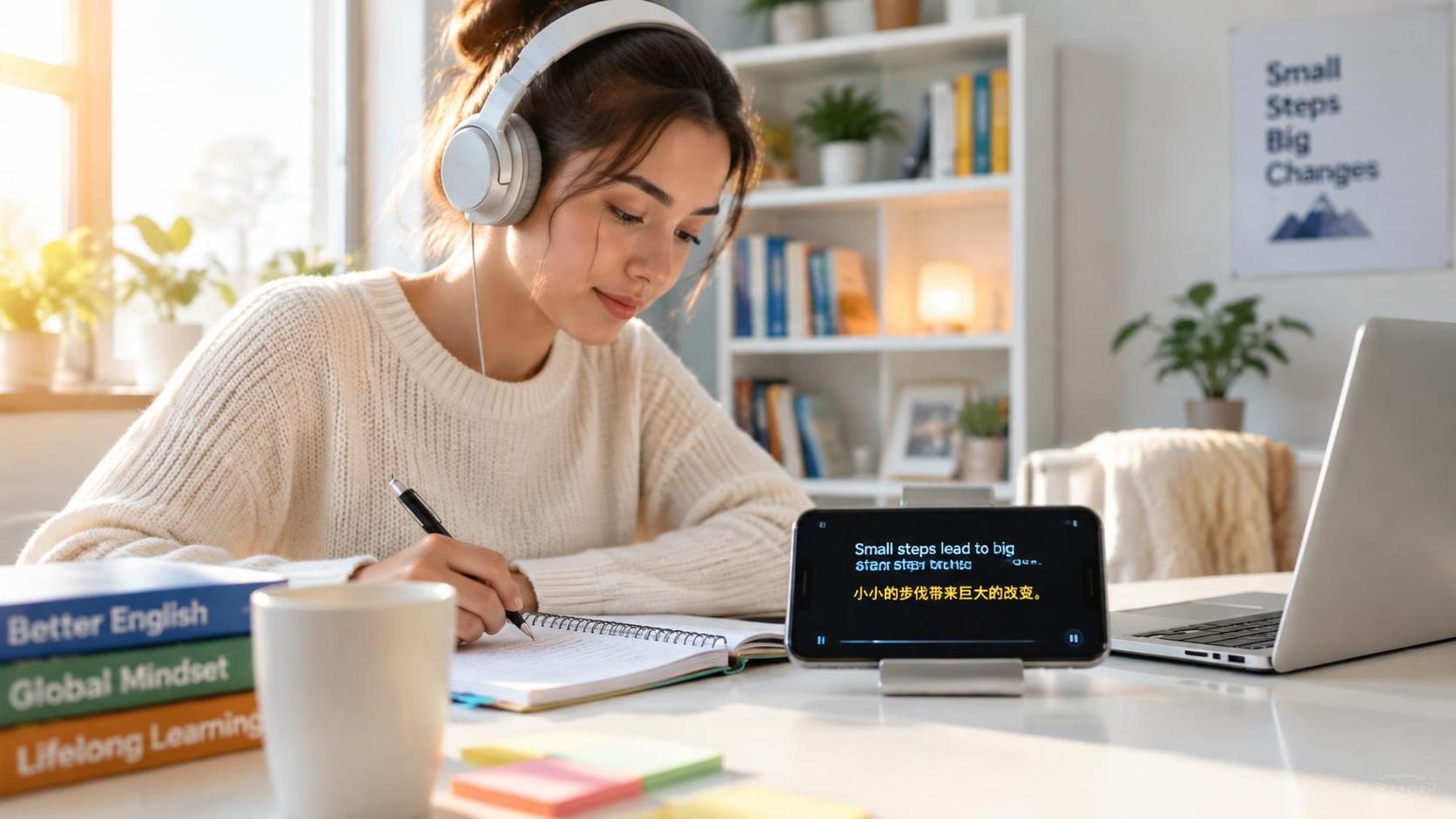
A university student in Seoul opens a clip app before class. A commuter in Taipei taps through subtitled news on the train. A product manager in Berlin highlights a podcast line on the way home. Each of them wants the same thing: to turn ordinary watching and listening into steady English progress. Each has also run into the same wall. Short clips feel lively but light, subtitle libraries feel rich but passive, and podcast tools feel clever but stop at note-taking. The real gap is not content. It is the absence of one place where subtitles, vocabulary, and speaking practice connect into a single loop. This feature breakdown places ListenLeap next to Cake, VoiceTube, and Snipd, three carefully built apps that each solve part of the problem, and shows how the four differ when a learner compares tools rather than taglines.
What Each App Was Built To Do
Cake: Short Clips With a Daily Rhythm
Cake, launched in 2017 by Cake Corp., is a lightweight language app built around short clips from YouTube, movies, and TV shows, each paired with dual subtitles. Its daily update habit and polished visual design have earned it a 4.7 rating and a loyal following across Asia. Learners who want a five-minute ritual get fresh material every day, and an AI pronunciation score adds a light speaking element to the clip experience. The library reaches more than 100,000 clips, and Cake Plus opens the full set for about 9.99 dollars a month. For anyone who studies in spare moments, the design keeps friction low and momentum high.
VoiceTube: A Deep Library of Dual Subtitles
VoiceTube has gathered more than 100,000 videos since 2013, spanning BBC and CNN news, TED talks, and popular YouTube channels, all carrying hand-checked Chinese and English subtitles. A one-tap dictionary, sentence looping, adjustable playback speed, and recording for comparison give it a complete study flow built around real media. It is a household name in Taiwan, where its subtitle craft and brand trust set a high bar for the category. A premium tier opens the full library, while a free layer offers a taste of the catalog.
Snipd: Turning Podcasts Into a Knowledge Base
Snipd is an AI-driven podcast companion for knowledge workers. Its highlight feature captures a spoken passage with one tap and turns it into a timestamped transcript and AI summary, then syncs it to Notion, Readwise, Obsidian, or Roam. With over 10,000 reviews and a steady release rhythm, it is one of the most refined tools for anyone who treats podcasts as a source of ideas. Chapter generation and search help users move through long episodes quickly, and the knowledge-management integrations create real stickiness.
ListenLeap: Subtitles, Vocabulary, and Speaking in One Loop
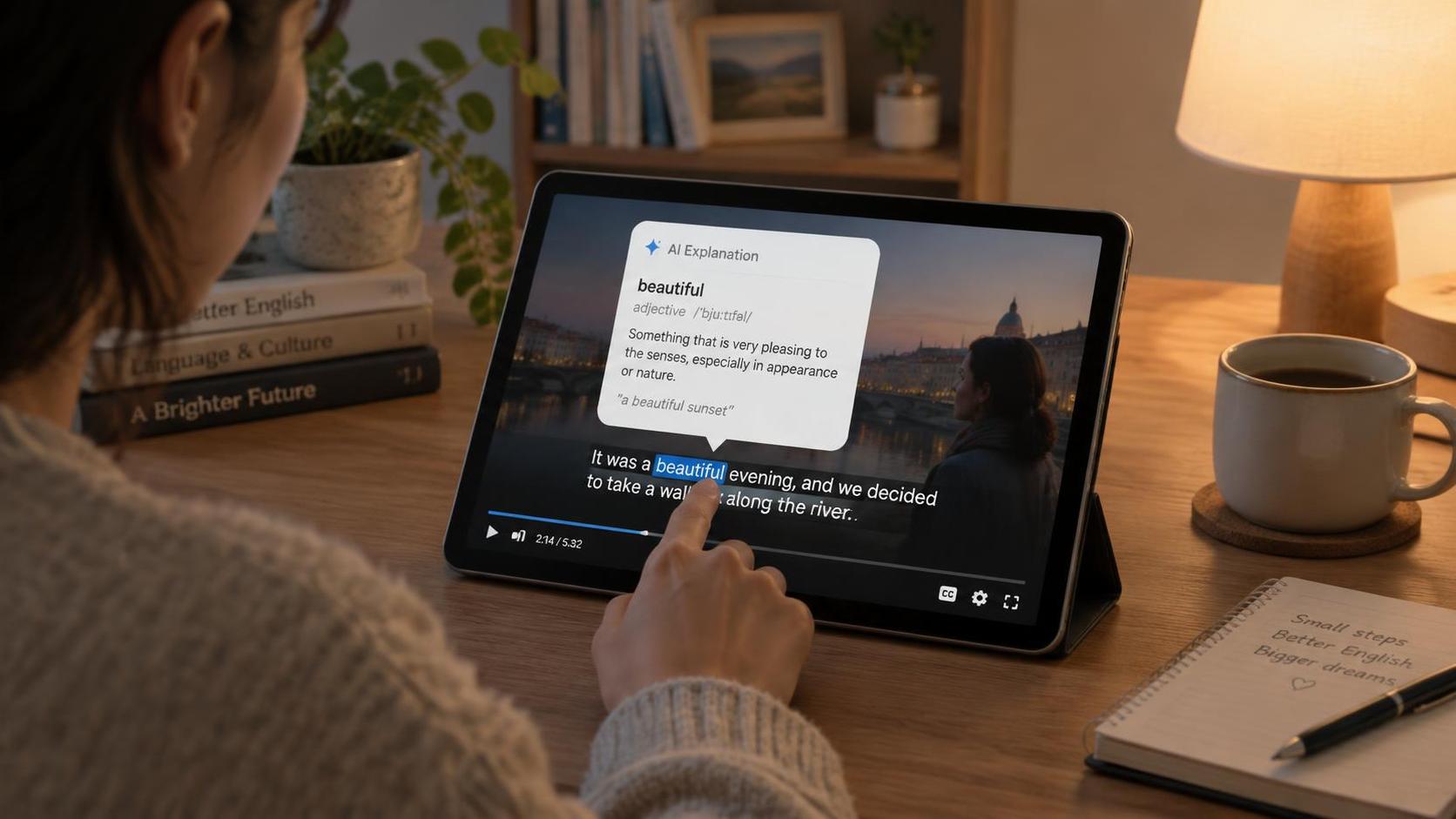
ListenLeap starts from a broader base: audiobooks, podcasts, courses, and short audio, wrapped in AI-generated and curated content. Bilingual subtitles are the entry point, not the finish line. Every line can be tapped for an AI explanation, saved into a vocabulary set, and reviewed on a schedule, while AI pronunciation analysis and guided speaking practice close the loop from input to output. Difficulty is adjusted dynamically rather than locked to static tiers, and full offline mode keeps study running without a connection across iOS, Android, and web. The sections that follow show where those choices matter for real learners.
Feature Breakdown: Where the Four Apps Diverge
Subtitles and Transcripts
Cake and VoiceTube both lean on dual-language subtitles, and VoiceTube's are among the most carefully produced in the field. Snipd generates a single-language transcript for the moments a learner chooses to clip. ListenLeap treats bilingual subtitles as a working surface rather than a caption track: tapping a word pulls an AI explanation with usage context, so understanding and listening happen in the same place.
Difficulty and Leveling
VoiceTube sorts its library into beginner, intermediate, and advanced tiers. Cake applies basic level tags but keeps its clips deliberately light and approachable. Snipd has no difficulty layer, since it is not built for graded study. ListenLeap uses AI to adjust difficulty to a learner's current performance, which means one catalog can serve someone just starting out and someone pushing toward fluency.
Vocabulary Capture and Review
Cake lets learners build a personal word list with spaced repetition, a solid feature for a clip app. Snipd organizes saved highlights by topic rather than by word. ListenLeap extracts vocabulary directly from the audio a learner already enjoys, keeps example sentences attached, and folds spaced review into the same flow, so new words arrive from context rather than from a separate list.
Speaking and Pronunciation Practice
Cake offers AI pronunciation scoring on short clips. VoiceTube records a learner's reading for side-by-side comparison with the original audio. Snipd has no speaking tools by design. ListenLeap pairs AI pronunciation analysis with dialogue practice and feedback, so speaking grows out of the same material a learner just heard.
Content Variety and Library Shape
Cake focuses on short clips and themed courses, VoiceTube on news, talks, and entertainment video, and Snipd on podcast episodes. Each shape suits a habit. ListenLeap blends audiobooks, podcasts, courses, and short audio in one place, so a learner can move from a news clip to a full audiobook chapter without leaving the app.
Offline Use and Device Coverage
Cake supports limited downloads, VoiceTube allows offline viewing on its paid tier, and Snipd keeps clips cloud-based with AI features that need a connection. Cake and VoiceTube run on iOS, Android, and web, while Snipd covers iOS and Android. ListenLeap offers full offline mode across iOS, Android, and web with cloud sync, which matters on commutes, flights, and unsteady networks.

Where ListenLeap Adds the Most
The pattern across those six dimensions is simple. Cake excels at habit, VoiceTube at library depth, and Snipd at idea capture. ListenLeap is built so those strengths do not sit in separate apps. A learner can watch or listen to real material, read bilingual subtitles, tap an unfamiliar phrase for an AI explanation, save it for review, and then speak it back with pronunciation feedback, all without switching context. Dynamic difficulty keeps content matched to ability, and offline access keeps the loop alive away from Wi-Fi. Features that usually live in three different tools end up reinforcing one another in a single flow, and that connection is the practical difference.
Pricing and Value
Cake Plus sits near 9.99 dollars a month, VoiceTube Premium lands around 8 to 12 dollars a month, and Snipd runs about 7.99 dollars a month or 59.99 dollars a year. Each offers a free tier with limits that shape what a learner can do before paying. ListenLeap uses a freemium model with subscription tiers and competitive pricing, and its free layer already covers subtitles, vocabulary, and offline basics, which lets a learner test the full loop before committing to a plan.
Which App Fits Which Learner
Learners who want a quick daily clip habit and light speaking feedback will enjoy Cake. Those drawn to news, talks, and a deep subtitled video library will feel at home in VoiceTube. Knowledge workers who treat podcasts as research material will get the most from Snipd. Learners who want listening, subtitles, vocabulary, and speaking to reinforce one another, across devices and without a connection, will find the tightest fit in ListenLeap. None of these choices cancels the others, and many learners reasonably keep one app for entertainment and another for structured study.
A Starting Point for 2026
Subtitles are a doorway, not a destination. The apps that help most are the ones that walk a learner through that doorway into vocabulary, review, and speech. Cake, VoiceTube, and Snipd each open the door in their own way, and ListenLeap turns the whole path into a single, connected loop. For anyone still weighing options this year, the fastest way to decide is to pick one real video or podcast, try it in each app, and see which one keeps the learning going after the subtitles end.


Comments
No comments yet.
Leave a Comment