
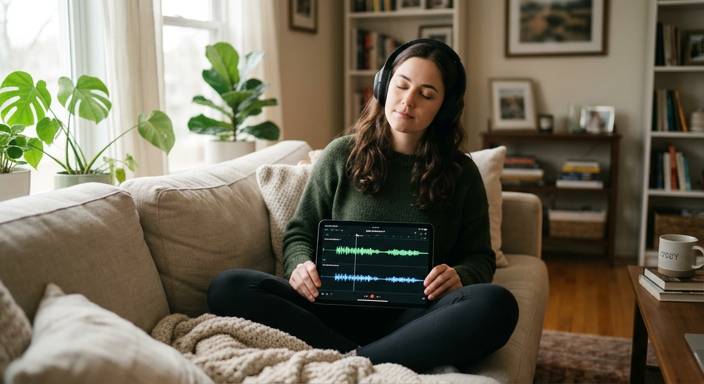
Native English hits the ear at 150–180 words per minute. Textbook audio crawls at 100. That 50% speed gap is why learners who ace grammar tests still panic in real conversations — the words arrive faster than the brain can decode them.
The fix isn't "listen more." Passive exposure without structure is like running without a route — you get tired but don't get anywhere specific. What works is targeted training that forces your ear to process real-speed English in controlled, repeatable doses.
This plan uses podcasts — not slowed-down learning materials — as the training ground. Four weeks, four phases, each building on the last.
Why Podcasts Beat Textbook Audio
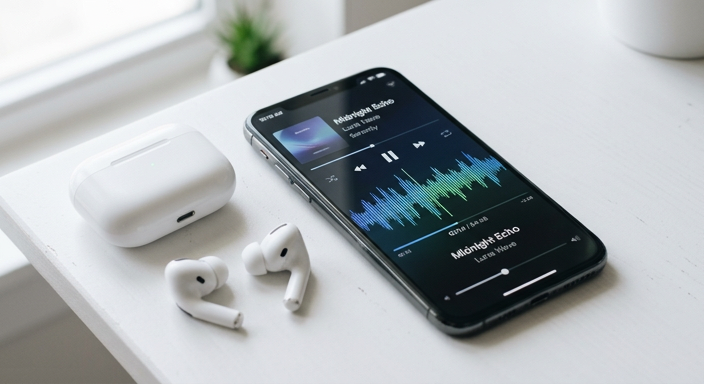
Textbook recordings are performed by voice actors speaking at an artificial pace with exaggerated clarity. The sounds are too clean. Real English isn't clean — it's full of contractions ("gonna," "wanna," "shoulda"), linked words ("turn it off" becomes "tur-ni-doff"), and swallowed syllables ("comfortable" becomes "comf-ter-ble").
Podcasts capture all of this because the speakers aren't performing for learners — they're talking to each other. That messiness is exactly what makes them effective training material. The ear needs to encounter reduced forms repeatedly, in context, until decoding them becomes automatic rather than effortful.
The 4-Week Plan
Week 1: Diagnosis — Find Your Breaking Point
Goal:Identify exactly where comprehension breaks down.
Pick a podcast episode rated one level above your current ability — ListenLeap's i+1 difficulty system handles this automatically after a quick placement test. Listen to a 3-minute segment without any subtitles. Then replay it with ListenLeap's bilingual subtitles turned on.
Compare. Mark every moment where:
You heard sounds but couldn't parse words (a blending problem)
You recognized words but missed the meaning (a processing speed problem)
You didn't hear anything at all (a sound recognition problem)
These three failure modes require different fixes. Most intermediate learners struggle primarily with the first — blending. Words they know perfectly in isolation become unrecognizable when smashed together at native speed.
Daily practice:2 segments × 3 minutes. Listen blind first, then verify with subtitles. Log which failure mode dominates.
Week 2: Deconstruction — Break Fast Speech Into Parts
Goal:Train the ear to separate blended sounds.
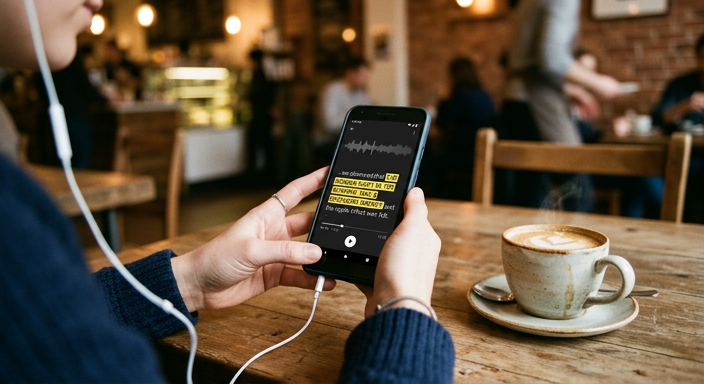
Take the segments where you failed in Week 1. Use ListenLeap's sentence-by-sentence playback to isolate individual phrases. Tap any blended phrase to see its component words, then listen to that single sentence on loop five times.
The key technique here is "micro-listening" — focusing on a 2–3 second window and replaying it until the blur resolves into distinct words. The brain needs roughly 5–8 repetitions of a new sound pattern before it can decode it in real time.
After decoding, use the shadow reading feature. Repeat the phrase matching the speaker's exact rhythm and speed. ListenLeap scores pronunciation, intonation, and fluency independently — focus on the fluency score this week, because fluency reflects whether you're matching the speaker's pace or unconsciously slowing down.
Daily practice:5 sentences from yesterday's failed segments. Loop → decode → shadow → score. Fifteen minutes total.
Week 3: Speed Conditioning — Push Beyond Comfortable
Goal:Force the brain to process faster than it currently can.
The ear adapts to whatever speed it regularly encounters. If you only practice with content you already understand, your processing ceiling never rises. This week, deliberately choose episodes one notch faster than comfortable.
Listen to a 5-minute segment at normal speed — no pauses, no subtitles, no rewinding. Accept that you'll miss parts. The goal isn't 100% comprehension; it's training the brain to keep parsing forward even when it drops a phrase. This "forward momentum" skill is what separates intermediate listeners from advanced ones.
After the full listen, go back with ListenLeap's fill-in-the-blank training mode. The app removes key words from the transcript and plays the audio — you fill in what you hear. This targets exactly the words your brain skipped during the speed run.
Daily practice:One 5-minute speed run (no aids) + fill-in-the-blank review on the same segment. Twenty minutes total.
Week 4: Integration — Full Episodes Without Training Wheels
Goal:Sustain comprehension over extended real-speed content.
By now your ear can handle individual fast phrases and maintain forward momentum through brief gaps. The final challenge is stamina — holding focus and comprehension across a full 20–30 minute episode without subtitles or segment loops.
Pick a full episode from a podcast you genuinely enjoy (entertainment keeps attention alive when the brain gets tired). Listen straight through. Afterward, check ListenLeap's AI summary against your mental summary — did you catch the main points? The key arguments? The specific details?
If your mental summary matches 70%+ of the AI summary, your fast-speech comprehension is functional. Repeat this test with progressively harder episodes.
Daily practice:One full episode (20–30 min), no aids. Post-listen summary check. Note any recurring gap patterns for targeted review.
After Week 4
The 4-week structure builds the core skill, but the ear keeps improving as long as it keeps encountering slightly-too-fast input. The ongoing routine is simple:
Daily: One full podcast episode at or slightly above your level (use ListenLeap's difficulty ratings to calibrate)
Twice weekly: Shadow-read one 2-minute segment from the hardest episode you listened to that week — keep pushing the fluency score higher
When stuck on a phrase: Tap → decode → loop → shadow. The micro-listening cycle from Week 2 never becomes irrelevant; it just gets applied to harder material
The Real Shift
The moment fast English stops sounding "fast" and starts sounding normal isn't dramatic. It happens gradually — one day you realize you followed an entire conversation without consciously translating, without asking anyone to repeat, without that familiar lag between hearing and understanding. That's the brain's decoding system running in real time instead of buffering.
Four weeks of structured podcast training gets the process started. The daily habit keeps it compounding. Open ListenLeap, find an episode one level above comfortable, and press play. The speed gap closes from there.


Comments
No comments yet.
Leave a Comment